.
Reading another article on how the Government is thinking of reforming Stamp Duty on Housing, I thought I would reiterate comments in a previous post, which think is a good, logical solution to stamp duty that would open up the housing market
–
The Current Stamp Duty Landscape: Barriers to a Free Market
–
Stamp duty has long been a sticking point for homeowners, buyers, and movers across the UK. While intended to generate government revenue, the present regime often acts as a block on the very dynamism needed for a healthy property market. In previous discussions, I highlighted the specific hurdles this tax creates—especially for the older generations, who, if able to move more freely, could release much-needed homes in popular areas for growing families.
–
The rigidity of the current stamp duty regime means that those looking to downsize or relocate, perhaps to quieter, rural areas or simply to homes that better suit their needs, are often dissuaded by the financial penalty of an upfront, often considerable, stamp duty bill. Similarly, the tax can freeze out those who would otherwise consider moving for work or life changes, as they are faced with repeated payments for making necessary moves. Ultimately, this stifles the natural flow of the market, trapping people in homes that may no longer fit their circumstances.
–
The New Proposal: An Ongoing Annual Tax
–
One recently floated proposal suggests replacing the upfront stamp duty with an ongoing annual property charge—specifically, a tax of 0.54% per year applied to the value of any property over £500,000, but only on the amount exceeding that threshold. While this might seem progressive on the surface, it carries its own set of challenges and inequities.
–
For one, this policy would disproportionately impact homeowners in the south of England, and especially in London, where property values regularly exceed the £500,000 mark even for relatively modest homes. By contrast, those in the north—myself included—are far less likely to be affected, simply due to the regional disparities in house prices. While this may seem like a boon for those of us outside the capital, the principle of fair taxation is paramount. A tax should be equitable, not geographically arbitrary.
–
A New Stamp Duty Approach: Tax the Move, Not the Home
–
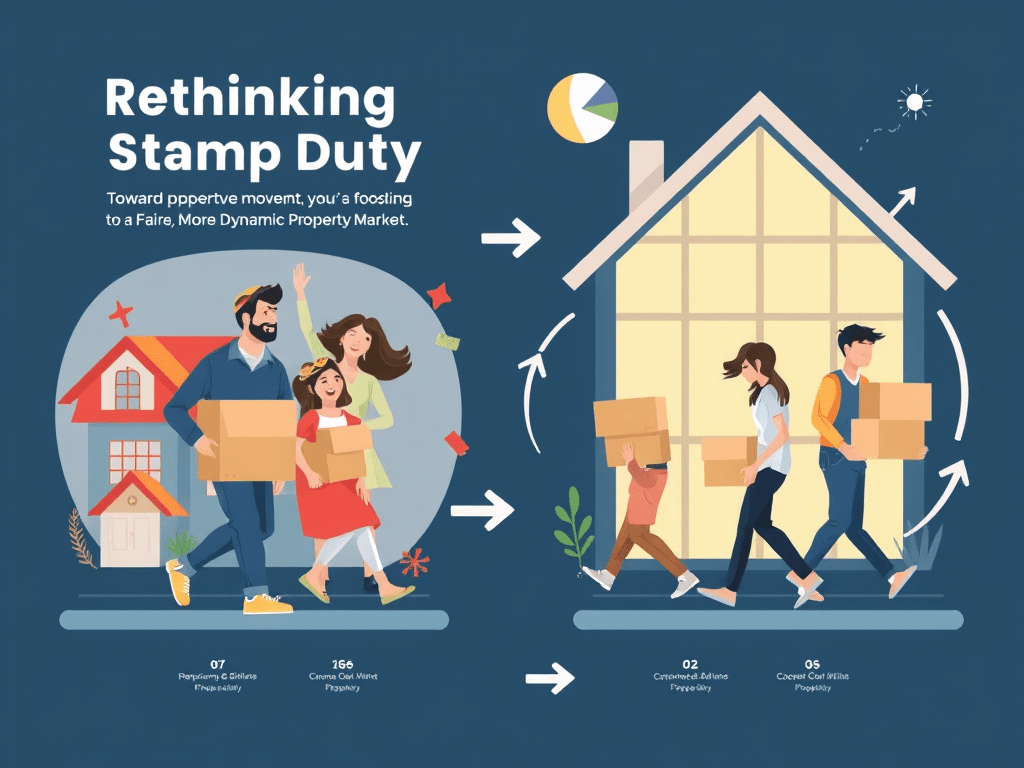
To address these issues and unlock the property market’s potential, I propose a more dynamic, just, and effective approach: a stamp duty that applies only to the difference between the value of the property you sell and the one you buy.
- If you “move up the ladder”—buying a more expensive home than the one you’re leaving—you pay stamp duty on the increase.
- If you move sideways (buying at a similar price) or downsize (buying cheaper), you pay no stamp duty at all.
- The tax would only kick in for homes over £250,000, helping first-time buyers and those with lower-priced properties avoid the tax entirely.
–
A suggested rate of 5% applied to the difference would, in my view, generate at least as much, if not more, revenue for the government—precisely because it would remove the current chokepoints that suppress transaction volumes.
–
Breaking Down the Benefits
- Encourages Downsizing: Older homeowners, no longer deterred by hefty stamp duty bills, would be freer to move to homes that suit their changing needs, releasing larger family homes into the market for the next generation.
- Supports Mobility: Those whose careers require frequent moves would not be unfairly penalised by paying stamp duty multiple times on properties of similar value. Instead, tax would only apply when they actually “trade up.”
- Boosts Market Fluidity: Removing these artificial blockers would likely increase the number of property transactions, stimulating the market and supporting related industries from removals to renovations.
- Fairness Across Regions: By taxing only the value gained in a move, rather than the absolute price, the system becomes less vulnerable to regional price disparities. Taxpayers in high-value areas are not automatically penalised, and those in lower-value regions are not left out of the conversation.
- First-Time Buyer Relief: Setting the threshold at £250,000 protects those entering the market for the first time, while ensuring the focus remains on higher value, higher-impact transactions.
–
Practical Example
Consider a family moving from a £500,000 house near a school to a £500,000 bungalow in the countryside. Under the current regime, they might pay as much as £15,000 in stamp duty—simply to move from one home of equal value to another. Under my proposal, they would pay nothing, as the change in value is zero. Alternatively, someone buying a second home for £500,000 without selling another property would pay 5% on £250,000 (the amount over the £250,000 threshold), amounting to £12,500.
–
Conclusion: Unlocking the Market for All
In summary, a stamp duty system based on the difference between what you sell and what you buy offers a fairer, more efficient, and economically sensible solution to the UK’s property tax puzzle. It encourages mobility, supports families at every stage of life, and reduces artificial barriers that clog up the market. Most importantly, it treats taxpayers across regions with greater equity.
–
As the government considers the next phase of property tax reform, I urge policymakers to prioritise approaches that reward movement rather than punish it, ensuring that stamp duty is a catalyst for, rather than a barrier to, a more vibrant and accessible housing market for all.
 If it was up 2 me
Leave a comment