
Category: National Insrance

  • Pay Increases vs Inflation in 2025: Who Really Benefits?

    Pay Increases vs Inflation in 2025: Who Really Benefits?

    A Critical Look at Government Claims and the Real Economic Impact

    Introduction

    In 2025, the government has asserted that rising pay combined with falling inflation is a win-win for everyone. However, a closer examination reveals a more complicated picture. With average pay rises of 6.6% in the public sector and 4.2% in the private sector, set against an October inflation rate of 3.6%, it is vital to assess whether these increases genuinely benefit workers, and to explore the broader implications for the economy.

    Advertisements

    Pay Rises in 2025: Public vs Private Sector

    The figures for 2025 paint a tale of two economies. Public sector workers have seen average pay increases of 6.6%, while their private sector counterparts have received an average 4.2% rise. At first glance, both groups may appear to be better off – their nominal pay packets have grown compared to the previous year.

    However, these headline numbers do not tell the full story.

    Inflation Context: The October 2025 Rate

    Inflation, the general rise in prices, stood at 3.6% in October 2025. This means that, on average, the cost of goods and services increased by 3.6% over the previous year. For a pay rise to deliver a real-terms increase in living standards, it needs to outpace inflation. Anything less, and workers may find their extra income is simply absorbed by higher prices.

    The Impact of Tax, National Insurance, and Pensions

    Most workers do not receive the full benefit of their pay increases. Standard deductions include income tax (20%), national insurance contributions (8%), and typical pension contributions (5%). Combined, these deductions reduce the headline pay rise by around 33%. In effect, only two-thirds of any pay increase actually reaches workers’ pockets.

    For example, a £1,000 nominal pay rise leaves just £670 after deductions. This significant reduction means that even a pay rise which appears healthy on paper may not be enough to keep pace with rising costs, especially for those in the private sector where increases are already more modest.

    Advertisements

    Public vs Private Sector: Who Gains, Who Loses?

    Once deductions and inflation are taken into account, the real-terms situation becomes clear. Private sector workers, with an average 4.2% pay rise, see their increase reduced to roughly 2.8% after deductions. Since this is lower than the 3.6% inflation rate, their real income has actually fallen – their pay does not stretch as far as it did last year.

    Public sector workers, on the other hand, fare slightly better. Their 6.6% average pay rise, reduced by one third, results in about a 4.4% net increase. After accounting for inflation, public sector workers enjoy a real-terms pay rise of around 0.8%. This is only possible because public sector pay is directly funded by the government, which can make policy decisions to support higher wage settlements.

    The Employer National Insurance Factor

    For private sector employers, pay rises are not just a matter of higher wages. They must also pay employer national insurance contributions on increased salaries, adding further costs. This additional expense can lead employers to restrict pay rises, limit hiring, or even reduce jobs. As a result, the private sector faces a double squeeze: rising costs and limited ability to pass on pay increases that match inflation.

    Economic Consequences: Shrinking Private Sector, Public Sector Pressures

    The uneven distribution of pay rises has wider economic implications. If private sector pay lags behind inflation, workers’ purchasing power drops, which can suppress consumer spending and slow economic growth. Fewer jobs or lower pay in the private sector also mean less tax revenue and higher welfare costs for the government.

    Conversely, sustained above-inflation pay rises in the public sector, funded by the government, raise questions about long-term sustainability. With public finances already under pressure, continued high wage settlements and generous pension commitments could strain budgets, potentially leading to higher taxes or cuts in services elsewhere.

    Summary and Conclusion

    The government’s claim that rising pay and falling inflation benefit everyone does not bear out under scrutiny. In 2025, private sector workers are losing out in real terms, as their take-home pay increases lag behind inflation after deductions. Public sector workers are better protected, but only because government funding has enabled pay rises that outpace inflation – a situation that may not be sustainable in the long run. We cannot keep increasing taxes on the private sector to cover the public sector. You will end up with no workers.

    The knock-on effects include increased pressure on private sector employers and potential job losses, alongside growing fiscal challenges for the public sector. In reality, the benefits of rising pay and falling inflation are unevenly distributed, and both employees and policymakers must recognise the complexity behind the headline figures if they are to make informed decisions about the country’s economic future.
     

    Advertisements

      Leave a comment

    • Minimum Wage Increases: A Hidden Tax on Businesses?

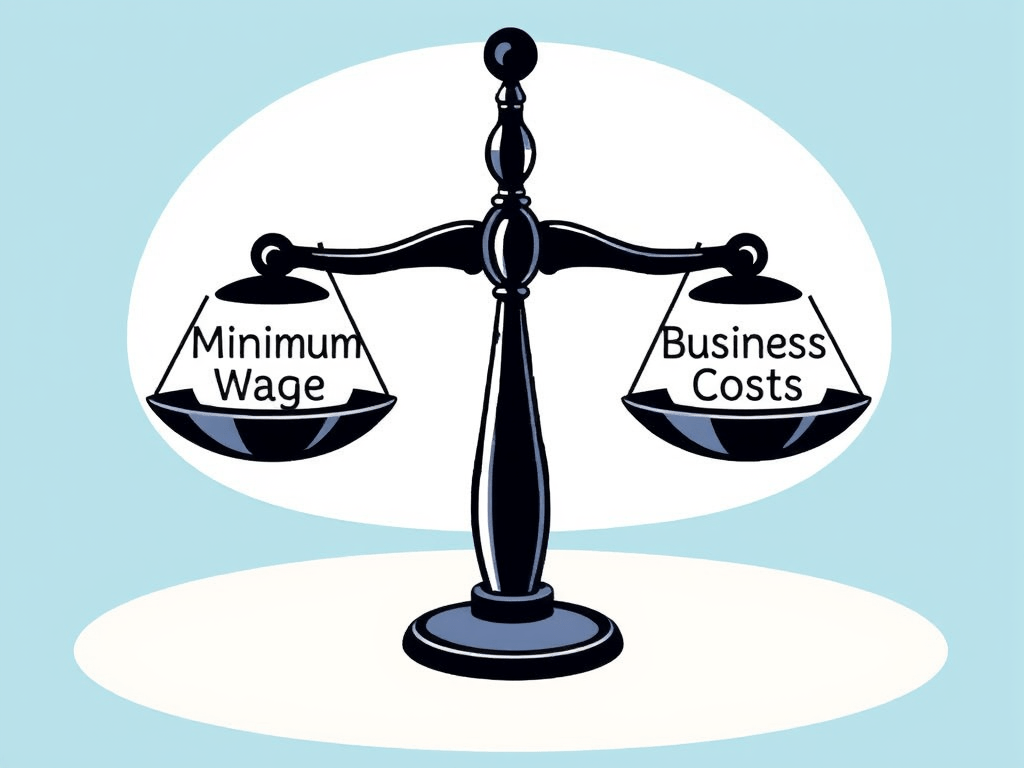
      Minimum Wage Increases: A Hidden Tax on Businesses?

      Analysing the Fiscal, Economic, and Policy Consequences of Recent Wage Mandates

      Introduction

      The minimum wage has long been a focal point of economic policy debates, with proponents arguing for its role in reducing inequality and critics warning of potential unintended consequences. Recent changes to the minimum wage structure and broader fiscal policies have reignited discussion over whether raising the minimum wage effectively operates as a tax hike on businesses. This article critically examines this argument, focusing on recent budget changes, the role of key policymakers, detailed wage increases, the true cost to employers, and the wider economic implications. The analysis is designed for business owners, policymakers, and the general public seeking an objective understanding of the issue.

      Advertisements

      Budget Changes and Policy: The Role of Rachel Reeves

      In the latest budget cycle, significant changes have been introduced affecting the financial landscape for businesses. Rachel Reeves, as Chancellor of the Exchequer, has played a pivotal role in shaping these policies, which include not only direct business tax increases but also indirect fiscal pressures through mandated wage hikes. The argument posits that by increasing the statutory minimum wage, the government imposes additional costs on employers, which function similarly to a tax: they are compulsory, unavoidable, and accrue to the benefit of the public purse through increased tax and National Insurance receipts.

      Details of Wage Increases: Over 21s and Under 21s

      Recent legislative changes have seen the minimum wage for workers over the age of 21 rise from £12.21 to £12.71 per hour, representing a significant year-on-year increase. For those under 21, the minimum wage has increased from £10.00 to £10.85 per hour, an increase of 8.5%.While these figures are intended to ensure a living wage and reduce income disparities, the immediate effect is a substantial increase in employment costs for businesses across sectors, particularly those with a high proportion of lower-waged staff.

      The True Cost to Businesses: Breakdown of Additional Employment Costs

      Advertisements

      For businesses, the cost of employing staff at the new minimum wage levels extends beyond the hourly rate. Employers are responsible for additional expenses such as National Insurance contributions, pension auto-enrolment, and, in some cases, apprenticeship levies. The cumulative impact of these direct and indirect costs can be substantial, particularly for small and medium-sized enterprises (SMEs). For example, a business employing 50 staff over the age of 21 on minimum wage will see annual wage costs increase by over £50,000, once employer contributions and associated costs are factored in. These increased costs mirror the financial burden of a direct tax hike, as businesses have little choice but to absorb them, reduce staffing levels, or pass costs onto consumers.

      Government Revenue Impact: Taxes, National Insurance, and Fiscal Effects

      One of the less-discussed consequences of rising minimum wages is the corresponding increase in government revenues. Higher wages translate into greater income tax and National Insurance contributions, both from employees and employers. This influx of revenue can help fund public services and reduce budget deficits. However, it also raises questions about the balance between social objectives and the financial viability of businesses, especially when wage increases are not matched by productivity gains or economic growth.

      Broader Economic Consequences: Unemployment, Reduced Revenues, and Increased Benefit Spending

      The broader economic effects of mandated wage increases are complex. Critics argue that higher employment costs may lead to reduced hiring, job losses, or a shift towards automation, particularly in sectors with thin profit margins. This can result in higher unemployment, lower overall business revenues, and increased government spending on unemployment benefits and social support. While the intention is to lift incomes, the risk is that abrupt or substantial wage hikes without corresponding economic growth may backfire, harming both businesses and workers in the long term.

      Growth vs. Mandated Increases: The Case for Growth-Driven Wage Policy

      There is a compelling argument that wage increases should be driven by sustainable economic growth rather than government mandates. When wages rise as a result of increased productivity and business expansion, the cost is offset by higher output and profitability. In contrast, mandated wage hikes can distort labour markets and impose additional burdens on businesses that are not matched by increased economic activity. A growth-driven approach encourages investment, innovation, and organic wage progression, aligning the interests of workers, employers, and the government.

      Advertisements

      Conclusion

      The recent minimum wage increases, viewed through a fiscal lens, can be seen as a form of indirect taxation on businesses. While the social objectives behind such policies are laudable, the true costs to employers, the increase in government revenues, and the potential for adverse economic consequences warrant careful consideration. Sustainable wage growth is best achieved through robust economic expansion and productivity improvements, rather than compulsory cost increases. Policymakers must weigh the benefits of higher wages against the risks of reduced employment opportunities and increased fiscal pressure on businesses, ensuring that future policies foster a healthy, dynamic economy for all stakeholders.


      Leave a comment

      Leave a comment

    • Rachel Reeves’ Licensing Oversight: Why the Focus Needs to Shift to Bigger Issues

      Rachel Reeves’ Licensing Oversight: Why the Focus Needs to Shift to Bigger Issues

      Advertisements

      Examining the Real Challenges Facing Britain Beyond Political Point-Scoring

      Rachel Reeves, the Shadow Chancellor, has found herself under scrutiny in recent days for failing to obtain a selective licence while letting out her house during her stay at Number 11. This incident, though perhaps an administrative oversight by her letting agent, has sparked a media and political storm. It is worth considering both the significance of her mistake and whether the attention it receives is proportionate, especially when set against the backdrop of the more pressing problems facing the country.

      Rachel Reeves’ Licensing Oversight

      The law requires landlords to obtain the appropriate selective licences when letting out property in certain areas. Rachel Reeves’ failure to comply with this regulation, regardless of whether it was her agent’s fault, constitutes a breach for which she should be held accountable. Just as an individual cannot plead ignorance if they fail to pay their TV licence, politicians are not above the law and must face the same penalties as ordinary citizens. If a fine is due, it should be paid, and the matter put to rest.

      However, critics have seized on this issue, making political hay rather than focusing on Reeves’ performance in her official capacity. Questions about whether she has paid the correct tax, stamp duty, or council tax are fair, but the intensity of the reaction from opposing parties raises the question of priorities. Is this truly the best use of Parliament’s time and energy?

      Advertisements

      Political Distraction: Missing the Bigger Picture

      The spectacle of politicians pouncing on minor infractions detracts from the serious issues that affect everyday Britons. Instead of fixating on individual mistakes, the opposition—and indeed all parties—should turn their attention to the broader challenges that impact quality of life across the country. Let us explore some of these pressing problems in detail.

      1. Boat Crossings: Weather as the Only Deterrent

      Illegal boat crossings across the Channel remain a contentious issue. So far this year, the most effective deterrent to these crossings appears to have been unfavourable weather conditions rather than government policy. This highlights a critical failure to introduce robust, humane, and effective measures to address the root causes of migration and manage the UK’s borders. Without a comprehensive strategy, the government risks ceding control to circumstance rather than policy, leaving both migrants and local communities in a state of perpetual uncertainty.

      2. The “Two In, One Out” Policy: A Questionable Approach

      The government’s “one in, one out” policy is not a solution to the countries problems as previously highlighted. It didn’t take a rocket scientist (I am not a Rocket Scientist) to predict that it was only a matter of time that those being deported would return on a Small Boat.

      3. Next Month’s Budget: Redefining the Working Class

      With the upcoming Budget, there is growing concern over the government’s definition of “working people,” now apparently set at those earning under £48,000 per year. This threshold risks excluding many who work overtime, hold multiple jobs, or strive to provide for their families. By narrowing the definition, the government could alienate middle-income earners who feel the squeeze of rising costs but do not qualify for targeted support. A more nuanced understanding of economic hardship is needed to ensure that policies address the realities of modern working life.

      4. Mounting Benefit Bills

      Britain’s welfare system is under immense strain, with benefit bills continuing to rise. This trend reflects both an increase in the cost of living and the persistent challenges faced by vulnerable populations. The debate surrounding benefits often devolves into arguments about dependency, but the underlying issues—such as low pay, insecure employment, and high housing costs—require thoughtful solutions. Reform efforts must focus on creating pathways out of poverty rather than simply cutting costs.

      5. Mounting Unemployment and Hidden Figures

      Official unemployment figures may not tell the whole story. There is growing suspicion that some individuals are counted as disabled rather than unemployed, masking the true scale of joblessness. In addition, the cost of Employers’ National Insurance (NI) is viewed by many as a deterrent to hiring, particularly within small businesses. For the working class, these factors combine to make stable employment harder to secure and sustain, undermining economic recovery and social cohesion.

      6. NHS Waiting Times and Systemic Strain

      The National Health Service (NHS) is facing unprecedented pressures, with waiting times at Accident & Emergency (A&E) departments reaching unacceptable levels. Personal experiences reveal that while frontline staff remain dedicated and compassionate, there are glaring issues with system coordination and management. As winter approaches, the situation is likely to deteriorate further, placing patients at risk and staff under unbearable strain. Addressing these challenges requires investment, innovation, and a willingness to rethink how healthcare is delivered.

      Advertisements

      +

      Conclusion: Refocus on What Matters

      Rachel Reeves’ licensing oversight deserves to be addressed in accordance with the law, but it is not a matter that warrants days of political grandstanding. The real work of opposition—and indeed government—should be to tackle the substantive issues that affect millions of Britons every day. From border security and regulatory reform to the cost of living, unemployment, and the future of the NHS, these are the challenges that demand our leaders’ attention. Only by focusing on what truly matters can politics begin to serve the people, rather than itself.

    • The Labour Government’s BRIT Card Proposal:Tackle immigration or Government Oversight

      The Labour Government’s BRIT Card Proposal:Tackle immigration or Government Oversight

      Labour’s proposed ‘BRIT Card’ aims to establish a mandatory digital ID for UK workers to combat illegal employment and immigration. However, concerns about costs, privacy, and effectiveness undermine public trust. Alternatives, such as enhancing the national insurance system and targeted enforcement, may offer more efficient solutions without significant disruption or expense.-

      -Analysing the Merits, Risks, and Alternatives to Mandatory Digital ID Cards

      Introduction: Labour’s BRIT Card and Its Stated Aims

      Recently, Labour leader Keir Starmer announced plans for a mandatory ‘BRIT Card’ identity card, intended to curb illegal working and deter illegal immigration. This digital ID would become a prerequisite for lawful employment in the UK, forming the centrepiece of Labour’s efforts to demonstrate robust control over the labour market and immigration system.

      While the government suggests that the proposal seeks to address long-standing concerns over illegal employment, the public are not convinced.

      Furthermore, there is significant questions regarding cost, effectiveness, privacy, and the necessity of a new ID system and what is  the true purpose.

      Current Identification Landscape in the UK

      At present, individuals in the UK can prove their identity and right to work using a variety of documents: passports, driving licences, biometric residence permits, and national insurance numbers. While most UK adults possess at least one of these forms of ID, a small yet notable minority—often the most vulnerable—do not.

      The government’s rationale for a universal digital ID is that it would eliminate ambiguity and standardise right-to-work checks. However, this overlooks the utility of existing IDs for the vast majority and the administrative burden on those without any such documentation.

      Passports and driving licences already function as widely accepted photo IDs, but they come with their own barriers: the cost of obtaining or renewing them can be prohibitive for low-income individuals, and not everyone drives or travels abroad. National insurance numbers, meanwhile, are essential for employment but currently lack a photo or biometric component, which limits their utility as a standalone proof of identity.

      Financial and Administrative Costs

      Implementing a new, mandatory identity system is no trivial expense. Previous government estimates for similar schemes, such as the scrapped ID card project of the 2000s, ran into billions of pounds. Even with advances in digital technology, initial outlays for infrastructure, IT systems, and public outreach would be substantial. Ongoing maintenance, cybersecurity, and support for those struggling with digital access would further increase costs. It is likely that the taxpayer would bear the brunt of these expenses, raising questions about value for money in a period of fiscal restraint.

      There are also indirect costs to consider: employers would need to update recruitment processes, train staff, and potentially invest in new verification technology. For individuals, especially those unfamiliar with digital systems, navigating registration could prove daunting.

      Advertisements

      Implementation and Effectiveness: Will the BRIT Card Work?

      The effectiveness of the BRIT Card hinges on comprehensive registration and consistent enforcement. Everyone of working age—citizens and migrants alike—would need to register, provide biometric data, and keep their details up to date. Yet, experience with government digital projects suggests that achieving universal compliance is highly challenging. Those liable to work illegally may simply avoid the system or find ways to circumvent it, such as using forged documents or working in the informal economy.

      Moreover, determined employers who currently flout right-to-work checks may be equally adept at sidestepping a new ID regime. The deterrent effect, therefore, risks being limited unless accompanied by a step-change in enforcement resources and penalties.

      Privacy, Digital Exclusion, and Data Security Concerns

      Centralising sensitive personal data in a single digital ID system raises profound privacy risks. The more data collected—biometric, personal, employment—the greater the consequences if that data is breached. Past incidents, both in the UK and abroad, demonstrate that no system is immune to hacking or accidental leaks.

      Digital exclusion is another pressing issue. Significant numbers of people—especially older adults, those with disabilities, or individuals lacking internet access—could struggle to register or maintain their digital ID. Ensuring equitable access would require costly support services and alternative registration methods, potentially undermining the efficiency arguments for a digital-first approach.

      Finally, there is the risk of ‘scope creep’: once a digital ID exists, the temptation to use it for other purposes—such as accessing public services, policing, or even voting—may grow, raising further civil liberties concerns.

      Advertisements

      Comparison to Existing Laws and Penalties

      UK employers are already legally obliged to check employees’ right to work, with substantial fines and potential criminal sanctions for non-compliance. The Home Office provides guidance and maintains a list of acceptable documents. While enforcement is sometimes criticised as patchy, the legislative framework is well-established. The BRIT Card, therefore, represents a new administrative layer rather than a fundamental legal shift.

      Crucially, the existing system allows for a degree of flexibility that could be lost with a rigid, one-size-fits-all digital ID requirement. For those with complex or unusual immigration circumstances, or those whose documents are in the process of being renewed, this could create real hardship.

      An Alternative: Enhancing the National Insurance System and Targeted Enforcement

      Rather than create an entirely new identity infrastructure, a more proportionate solution could involve modernising the existing national insurance (NI) system. By incorporating a secure photo ID or biometric element into NI numbers, the government could strengthen right-to-work checks without duplicating documentation requirements. Such an enhancement would leverage a system already embedded in the employment process and familiar to employers and workers alike.

      This approach should be paired with targeted, intelligence-led enforcement focusing on high-risk sectors and repeat offenders, instead of blanket bureaucracy. Investment in digital verification tools for employers and regular audits would further bolster compliance, while avoiding the pitfalls of a universal digital ID.

      What would this cost. Well, I would set up a task force of 400 HMRC investigators to chase down illegal workers which I estimate would cost £30million.  Both the individual and the employer would be fined. If they only found 5 illegal worker each and the employer was fines £15000 (the current law allows up to £45k for the first offence), this would cover the cost. However, since it is suggested, there are over 500,000 illegal workers in the UK, there is a potential of £22 Billion to recover.

      I personally would start the fine at £10,000 for businesses and £2500 for individuals. The reason for this is the smaller business would go out of business with a £45k fine, but £10k should be enough of a deterrent. Remember, both the employer and the employee are doing something illegal.

      Those foreign nationals without any right to stay would be sent home.


      Personal Perspective: A Flawed Solution in Search of a Problem?

      Labour’s BRIT Card proposal appears to be a politically expedient response to anxiety over immigration and illegal working. However, the costs—financial, administrative, and personal—seem disproportionate to the likely benefits. The risks to privacy and the spectre of digital exclusion cannot be ignored, especially when existing systems can be strengthened at lower cost and with less disruption.

      Public trust in government data handling is already fragile, and the creation of a new, centralised identity database risks eroding it further. Rather than pursue a grand new scheme, the government would do better to focus on pragmatic reforms to the national insurance system and smarter, more targeted enforcement.


      Advertisements

      Leave a comment

    • Reforming Pension Tax Relief for Fairness in the UK

      Reforming Pension Tax Relief for Fairness in the UK

      A critical look at the current system and proposals for a more balanced approach

      Tax credits offered on pension contributions are a cornerstone of retirement planning in the UK. The system is designed to incentivise individuals to set aside funds for their later years, with the added benefit of growing these savings in a tax-advantaged environment. While the principle is broadly applauded, the reality of how tax relief is distributed raises important questions of fairness, effectiveness, and sustainability. In this article, I explore the current structure, highlight what I see as its imbalances, and propose a series of reforms aimed at fostering a pension system that is fairer, simpler, and fit for purpose in the 21st century.

      The Current System: How Tax Credits for Pensions Work

      For the majority of savers, pension tax relief is granted ‘at source’—meaning that for every £80 a basic rate taxpayer contributes, the government adds £20 to make a total pension contribution of £100. Higher and additional rate taxpayers are entitled to claim back additional relief through their tax return: for a higher rate (40%) taxpayer, the total tax relief climbs to £40 per £100 contributed, and for additional rate payers, even higher.

      This means that for someone who contributes £600 to their pension fund, and who pays tax at the basic rate (20%), the government tops up their pension by £150, resulting in a total contribution of £750. By contrast, a higher earner can claim a refund that takes their £600 contribution up to £1,000—a £400 uplift, representing 66.6% of their own money, compared to 25% for the basic-rate taxpayer. This reflects the fact that higher earners pay more tax, but also creates a significant disparity in the value of the government’s support.

      A Question of Fairness

      This disparity has long been a subject of debate. The current structure means that those who are already well-off receive the largest tax subsidies for saving—an outcome that may seem at odds with the goals of a progressive tax system. While it is true that higher earners contribute more in tax overall, the pension system arguably magnifies their advantage.

      Consider that a higher-rate taxpayer could receive £400 in tax relief for every £600 they contribute, while a basic-rate taxpayer receives just £150 for the same contribution. Over a working lifetime, this difference is compounded, especially when combined with the power of investment growth and the ability of higher earners to contribute larger sums to their pensions.

      The Annual Allowance and High Earners

      Currently, there is a cap—known as the ‘annual allowance’—on the amount that can receive tax relief each year, set at £40,000. If someone were able to contribute the full £40,000, the basic rate tax relief would amount to £8,000, while a higher-rate taxpayer could claim up to £16,000 in relief.

      Salary sacrifice schemes add further complexity. These arrangements allow both employer and employee to make pension contributions before tax and National Insurance is deducted, resulting in both parties saving on NI contributions. For example, if employer and employee contribute a combined £40,000 via salary sacrifice, there is no income tax, and the employer saves 15% in National Insurance, while the employee saves their own NI contributions. This mechanism, which is especially attractive for high earners, further widens the gap between those at the top and bottom of the earnings ladder in terms of government-supported savings.

      The Power and Pitfalls of Compounding

      One of the greatest advantages of starting pension savings early is the impact of compound returns. Money invested in a pension grows not just from the returns on the original investment, but also from reinvested gains over time. This means that the earlier someone starts saving, the larger their pot is likely to be in retirement—even without making larger contributions.

      However, it is also true that for many people, earnings are lower earlier in their careers, and significant pension contributions become possible only as incomes rise. Thus, it is not merely the mechanics of tax relief, but the interaction between earnings, contributions, and compounding returns that shapes retirement outcomes.

      Advertisements

      Towards a Fairer System: Proposals for Reform

      Given that pension tax relief is, in effect, a form of public expenditure—costing the Treasury billions each year—there must be reasonable limits. Otherwise, there is a risk that these generous incentives primarily serve those who need them least, while failing to promote adequate pension saving among those on lower or middle incomes.

      Recognising the imbalances, I propose several reforms to the current system, with the twin aims of encouraging early and sustained pension saving while ensuring that the benefits of government support are more evenly distributed.

      1. Flat-Rate Tax Relief

      Rather than linking the rate of pension tax relief to an individual’s marginal income tax rate, I propose a flat rate of 25-30% for all taxpayers. This would mean everyone receives the same percentage uplift on their contributions, making the system simpler and fairer. Basic-rate taxpayers would receive a higher subsidy than they do today, while higher earners would see a reduction, but still benefit from a meaningful incentive to save.

      • Example: At a 30% flat rate, a £1,000 contribution attracts £300 in tax relief, regardless of income.

      2. Addressing Salary Sacrifice and Employer Contributions

      The current system allows significant savings via salary sacrifice, especially for companies and high earners. To address this, I would introduce an employer National Insurance charge of 12.5% on all sums paid into a pension via salary sacrifice. Simultaneously, I propose reducing the general employer NI rate from 15% to 12.5%. This would help to neutralise the cost for employers overall while removing an unintended subsidy favouring the highest earners. This will help simplify the national insurance system and for those who employ lower earners, would encourage job creation.

      3. Eliminating the £100k “Tax Trap”

      Currently, individuals lose their tax-free personal allowance on income between £100,000 and £125,140, resulting in an effective marginal tax rate of 60%. I would remove this taper, restoring universal access to the personal allowance and ensuring that everyone is treated the same by the tax system, regardless of their income.


      4. Lifetime Cap on Tax-Privileged Pension Benefits

      I suggest introducing a “lifetime tax relief allowance” for pensions, capped at £300,000 in today’s terms. Over a working life, this would allow an individual to receive up to £300,000 in government-funded tax relief, not an insignificant sum. This is based on a good target of a £1 million pension pot (30% of which would be tax relief), which is more than sufficient for a comfortable retirement for most people. Removing the current lifetime allowance on the pension pot itself would ensure that those who wish to save more can do so, but without further subsidy from the taxpayer.

      5. Reforming Inheritance Rules for Pensions

      I propose reinstating the ability to pass up to £1 million of pension wealth to one’s children free of inheritance tax, provided it is used to fund a pension for them. Any pension assets above this amount or not taken as a pension would be taxed at 20% upon death if not taken as a pension. This recognises the contribution of tax relief to the pension’s growth while ensuring a reasonable transfer of wealth.

      6. Fairness for Families and Partners

      Upon drawdown, I would allow pensioners to split their income with a spouse or long-term partner, recognising the reality that many partners (often women) take time out from the workforce to raise children or care for relatives, resulting in smaller pensions. The current system does not allow for easy redistribution of pension income within households, despite both partners often contributing equally to family finances.

      Balancing Generosity with Sustainability

      It is important to emphasise that pension tax relief is fundamentally a taxpayer-funded benefit. While incentivising pension savings is essential for both individuals and society, the system must not become a vehicle for the wealthy to accumulate disproportionate advantage at public expense. By setting clear and reasonable limits, applying relief at the same rate for everyone, and simplifying the rules, the system can be made more transparent and more inclusive.

      Conclusion: A Balanced Policy for the Future

      A reformed system, as outlined above, would preserve the incentive for all individuals to save for their retirement while reducing the disparities that currently favour higher earners. It would also recognise the shared responsibilities of employers, employees, and society as a whole in providing for old age, while ensuring the system remains affordable and sustainable in the long run.

      In summary, my proposals would:

      • Introduce a flat, universal rate of pension tax relief (25–30%)
      • Remove the £100k tax trap
      • Cap lifetime tax relief at £300,000 per individual
      • Adjust employer National Insurance to prevent salary sacrifice loopholes, while lowering the overall rate
      • Allow fairer inheritance of pension wealth up to £1 million
      • Permit spouses and long-term partners to share pension income upon drawdown

      These changes would create a pension system that is simpler, fairer, and more equitable—one that rewards early and consistent saving, supports families, and reflects the principles of a modern welfare state.


      Leave a comment

    • April 2025 Employers’ National Insurance Changes: A Critical Analysis and Alternative Approach

      April 2025 Employers’ National Insurance Changes: A Critical Analysis and Alternative Approach

      How the Latest NI Reforms May Undermine Economic Growth, and What Should Be Done Instead

      Introduction

      From April 2025, UK employers face a significant shake-up in their National Insurance (NI) obligations. The government’s new policy will see the employer NI rate rise from 13.8% to 15%, while the threshold for employer contributions drops from £9,100 to £5,000 per year. This change, introduced despite pre-election assurances from the Labour Party against NI hikes, has sparked debates across the business and economic landscape. In this blog, I will critically examine the impact of these reforms, explore the projected financial implications, and offer an alternative path forward—one that better supports employment and economic expansion.

      The Policy Change: What’s Actually Happening?

      The two-pronged NI reform includes:

      • An increase in the employer’s NI rate from 13.8% to 15%—raising the cost for every pound earned above the threshold.
      • A dramatic reduction in the threshold at which employers begin to pay NI, from £9,100 to £5,000 per year—meaning many more jobs will now attract employer NI contributions.

      These measures will affect virtually every UK business, from small enterprises already struggling with rising costs, to larger firms with substantial payrolls. For many employers, this represents a double hit: higher rates, and a wider base of employee earnings subject to NI. The government’s stated aim is to boost Treasury revenue, but at what cost?

      Advertisements

      Promises Made and Broken: The Political Context

      It is impossible to ignore the political context surrounding these changes. Before the last general election, the Labour Party repeatedly promised not to increase National Insurance. Yet, the government has now implemented a policy that could be interpreted as a stealth tax on employment itself.

      Some will argue that the state needs revenue to fund public services, particularly in a time of fiscal pressure. Yet the method and timing of this change have raised alarms—not least because the increased burden falls squarely on the shoulders of employers, potentially undermining job creation and business growth at the very moment when the economy most needs them.

      Financial Impact: Where Will the Money Go?

      The government estimates the NI reform will raise between £23.8 and £25.7 billion over five years. However, this headline number requires a closer look. After accounting for the increased cost of public sector employer contributions—effectively money moving from one government pocket to another—the net revenue gain drops to between £19.1 and £20.6 billion over five years.

      But the story doesn’t end there. The rise in employer NI contributions will reduce company profits, which in turn means less corporation tax will be paid—potentially reducing government tax revenue by a further £5 billion over the same period. The real net gain, therefore, may be closer to £15 billion over five years, or just £3 billion per year.

      Is this the economic boost the government claims, or a short-sighted grab that risks long-term damage?

      The Cost to Business: Jobs and Investment at Stake

      By making it more expensive to employ staff, especially lower-paid workers, these changes could force many businesses to freeze hiring, cut jobs, or even reduce wages. At a time when the UK already faces significant economic headwinds—high inflation, flatlining productivity, and global competition—this policy risks compounding, rather than resolving, existing problems.

      Let’s put the numbers into perspective:

      • Reversing the NI changes would leave £4 billion with businesses—capital that could be used for investment, wage growth, or job creation.
      • This reversal could, by some estimates, save or create up to 160,000 jobs at an average salary of £25,000 per year.
      • Each of these jobs would bring in an estimated £3,977 per person per year in additional tax and NI, equating to £636 million annually.
      • Lower unemployment would reduce benefit payments by around £320 million, and increased consumer spending would generate another £160 million from VAT and other taxes.

      These calculations suggest that supporting business growth could deliver greater tax revenue, lower welfare costs, and stronger economic performance than a blunt NI hike.

      Unemployment and Economic Opportunity

      The UK has around 11 million people aged 16 to 64 not in work, including 1.6 million officially unemployed (about 4.4%). Policies should incentivise businesses to hire, not put up barriers. If employment could be nudged up—reducing the unemployment rate from 4.4% to 4%—this could create another 160,000 jobs and generate a further £1.1 billion for the Treasury.

      Instead, by increasing the tax on employment, the government is risking higher joblessness and missed opportunities for economic inclusion, particularly in sectors that already face labour shortages, such as construction.

      Advertisements

      Skills, Construction, and the Jobs of Tomorrow

      Where would new jobs come from if government policy encouraged, rather than discouraged, hiring? Construction is a prime example. The UK is facing a shortfall of skilled tradespeople, and ambitious targets—such as building 1.5 million new homes in five years—depend on training new workers and supporting apprenticeships.

      Yet, current policy seems at odds with these aims. Instead of investing in technical colleges and training, the government risks closing education facilities or failing to provide the infrastructure needed for workforce development.

      Employers need certainty and incentives to invest in people, not new taxes on every additional job.

      Alternative Approaches: Raising Revenue the Right Way

      If the aim is to raise government revenue, there are more balanced and honest methods than bluntly increasing employer NI. My alternative proposal would be:

      • Reversing the employer NI increase, keeping rates at 2024/25 levels—releasing £4 billion annually back into business.
      • Recognising that businesses seek growth, not simply profit, and that economic expansion itself will widen the tax base.
      • Incrementally improving tax revenue through job creation, reduced unemployment benefits, and higher consumer spending.
      • If further revenue is needed, modestly increase Employee NI for higher earners (for example, increasing rates from 2% to 4% on earnings above £50,000).

      Such a targeted approach would reverse the blanket NI reduction offered by the previous government. While it would mean higher contributions for those earning over £100,000, it would avoid penalising job creation and support a more progressive tax structure.

      The Smoke and Mirrors of Tax Politics

      Recent years have seen headline cuts to Employee NI—from 12%, to 10%, to 8%—with little change to personal allowances. Politicians have trumpeted tax cuts while allowing fiscal drag and stealth taxes to do much of the heavy lifting. It is time for greater transparency and honesty with the electorate.

      The reality is that everyone may have benefited from lower NI rates, but the distribution was regressive: the highest earners saved most, and the gap between rich and poor has widened. Asking higher earners to pay a little more, while supporting employment for all, is fairer and more economically sound.

      Summary and Conclusion

      In summary, if it were up to me, I would:

      • Reverse the Employers NI changes to encourage more hiring and job creation.
      • Raise Employee NI on higher earners, essentially reversing the previous government’s NI reductions for those on over £50,000 per year, so that only those earning over £100,000 are worse off than in 2023/24.
      • This approach could add £3-4 billion to government revenue and support the creation of up to 320,000 new jobs.

      Economic history shows that growth, not punitive taxation, is the best way to fund public services and support prosperity. The government should prioritise policies that incentivise employment, invest in skills, and create opportunities—rather than resorting to measures that risk stalling the recovery and undermining the UK’s long-term economic health.

      The debate over National Insurance is more than a technical tax discussion; it is about the future of the UK’s economy, the fate of millions of workers, and the principles of fairness and honesty in public policy. Let us hope that policymakers choose the path of growth, opportunity, and transparency in the years ahead.

      Leave a comment