Category: pensions

  • Reforming Pension Tax Relief for Fairness in the UK

    Reforming Pension Tax Relief for Fairness in the UK

    A critical look at the current system and proposals for a more balanced approach

    Tax credits offered on pension contributions are a cornerstone of retirement planning in the UK. The system is designed to incentivise individuals to set aside funds for their later years, with the added benefit of growing these savings in a tax-advantaged environment. While the principle is broadly applauded, the reality of how tax relief is distributed raises important questions of fairness, effectiveness, and sustainability. In this article, I explore the current structure, highlight what I see as its imbalances, and propose a series of reforms aimed at fostering a pension system that is fairer, simpler, and fit for purpose in the 21st century.

    The Current System: How Tax Credits for Pensions Work

    For the majority of savers, pension tax relief is granted ‘at source’—meaning that for every £80 a basic rate taxpayer contributes, the government adds £20 to make a total pension contribution of £100. Higher and additional rate taxpayers are entitled to claim back additional relief through their tax return: for a higher rate (40%) taxpayer, the total tax relief climbs to £40 per £100 contributed, and for additional rate payers, even higher.

    This means that for someone who contributes £600 to their pension fund, and who pays tax at the basic rate (20%), the government tops up their pension by £150, resulting in a total contribution of £750. By contrast, a higher earner can claim a refund that takes their £600 contribution up to £1,000—a £400 uplift, representing 66.6% of their own money, compared to 25% for the basic-rate taxpayer. This reflects the fact that higher earners pay more tax, but also creates a significant disparity in the value of the government’s support.

    A Question of Fairness

    This disparity has long been a subject of debate. The current structure means that those who are already well-off receive the largest tax subsidies for saving—an outcome that may seem at odds with the goals of a progressive tax system. While it is true that higher earners contribute more in tax overall, the pension system arguably magnifies their advantage.

    Consider that a higher-rate taxpayer could receive £400 in tax relief for every £600 they contribute, while a basic-rate taxpayer receives just £150 for the same contribution. Over a working lifetime, this difference is compounded, especially when combined with the power of investment growth and the ability of higher earners to contribute larger sums to their pensions.

    The Annual Allowance and High Earners

    Currently, there is a cap—known as the ‘annual allowance’—on the amount that can receive tax relief each year, set at £40,000. If someone were able to contribute the full £40,000, the basic rate tax relief would amount to £8,000, while a higher-rate taxpayer could claim up to £16,000 in relief.

    Salary sacrifice schemes add further complexity. These arrangements allow both employer and employee to make pension contributions before tax and National Insurance is deducted, resulting in both parties saving on NI contributions. For example, if employer and employee contribute a combined £40,000 via salary sacrifice, there is no income tax, and the employer saves 15% in National Insurance, while the employee saves their own NI contributions. This mechanism, which is especially attractive for high earners, further widens the gap between those at the top and bottom of the earnings ladder in terms of government-supported savings.

    The Power and Pitfalls of Compounding

    One of the greatest advantages of starting pension savings early is the impact of compound returns. Money invested in a pension grows not just from the returns on the original investment, but also from reinvested gains over time. This means that the earlier someone starts saving, the larger their pot is likely to be in retirement—even without making larger contributions.

    However, it is also true that for many people, earnings are lower earlier in their careers, and significant pension contributions become possible only as incomes rise. Thus, it is not merely the mechanics of tax relief, but the interaction between earnings, contributions, and compounding returns that shapes retirement outcomes.

    Advertisements

    Towards a Fairer System: Proposals for Reform

    Given that pension tax relief is, in effect, a form of public expenditure—costing the Treasury billions each year—there must be reasonable limits. Otherwise, there is a risk that these generous incentives primarily serve those who need them least, while failing to promote adequate pension saving among those on lower or middle incomes.

    Recognising the imbalances, I propose several reforms to the current system, with the twin aims of encouraging early and sustained pension saving while ensuring that the benefits of government support are more evenly distributed.

    1. Flat-Rate Tax Relief

    Rather than linking the rate of pension tax relief to an individual’s marginal income tax rate, I propose a flat rate of 25-30% for all taxpayers. This would mean everyone receives the same percentage uplift on their contributions, making the system simpler and fairer. Basic-rate taxpayers would receive a higher subsidy than they do today, while higher earners would see a reduction, but still benefit from a meaningful incentive to save.

    • Example: At a 30% flat rate, a £1,000 contribution attracts £300 in tax relief, regardless of income.

    2. Addressing Salary Sacrifice and Employer Contributions

    The current system allows significant savings via salary sacrifice, especially for companies and high earners. To address this, I would introduce an employer National Insurance charge of 12.5% on all sums paid into a pension via salary sacrifice. Simultaneously, I propose reducing the general employer NI rate from 15% to 12.5%. This would help to neutralise the cost for employers overall while removing an unintended subsidy favouring the highest earners. This will help simplify the national insurance system and for those who employ lower earners, would encourage job creation.

    3. Eliminating the £100k “Tax Trap”

    Currently, individuals lose their tax-free personal allowance on income between £100,000 and £125,140, resulting in an effective marginal tax rate of 60%. I would remove this taper, restoring universal access to the personal allowance and ensuring that everyone is treated the same by the tax system, regardless of their income.


    4. Lifetime Cap on Tax-Privileged Pension Benefits

    I suggest introducing a “lifetime tax relief allowance” for pensions, capped at £300,000 in today’s terms. Over a working life, this would allow an individual to receive up to £300,000 in government-funded tax relief, not an insignificant sum. This is based on a good target of a £1 million pension pot (30% of which would be tax relief), which is more than sufficient for a comfortable retirement for most people. Removing the current lifetime allowance on the pension pot itself would ensure that those who wish to save more can do so, but without further subsidy from the taxpayer.

    5. Reforming Inheritance Rules for Pensions

    I propose reinstating the ability to pass up to £1 million of pension wealth to one’s children free of inheritance tax, provided it is used to fund a pension for them. Any pension assets above this amount or not taken as a pension would be taxed at 20% upon death if not taken as a pension. This recognises the contribution of tax relief to the pension’s growth while ensuring a reasonable transfer of wealth.

    6. Fairness for Families and Partners

    Upon drawdown, I would allow pensioners to split their income with a spouse or long-term partner, recognising the reality that many partners (often women) take time out from the workforce to raise children or care for relatives, resulting in smaller pensions. The current system does not allow for easy redistribution of pension income within households, despite both partners often contributing equally to family finances.

    Balancing Generosity with Sustainability

    It is important to emphasise that pension tax relief is fundamentally a taxpayer-funded benefit. While incentivising pension savings is essential for both individuals and society, the system must not become a vehicle for the wealthy to accumulate disproportionate advantage at public expense. By setting clear and reasonable limits, applying relief at the same rate for everyone, and simplifying the rules, the system can be made more transparent and more inclusive.

    Conclusion: A Balanced Policy for the Future

    A reformed system, as outlined above, would preserve the incentive for all individuals to save for their retirement while reducing the disparities that currently favour higher earners. It would also recognise the shared responsibilities of employers, employees, and society as a whole in providing for old age, while ensuring the system remains affordable and sustainable in the long run.

    In summary, my proposals would:

    • Introduce a flat, universal rate of pension tax relief (25–30%)
    • Remove the £100k tax trap
    • Cap lifetime tax relief at £300,000 per individual
    • Adjust employer National Insurance to prevent salary sacrifice loopholes, while lowering the overall rate
    • Allow fairer inheritance of pension wealth up to £1 million
    • Permit spouses and long-term partners to share pension income upon drawdown

    These changes would create a pension system that is simpler, fairer, and more equitable—one that rewards early and consistent saving, supports families, and reflects the principles of a modern welfare state.


     

    Leave a comment

  • Not saving enough for our pensions or saving too much that our pension will be taxed when we die

    Not saving enough for our pensions or saving too much that our pension will be taxed when we die

    How comical! – When will the Government get their act together?

    Rachel Reeves previously announced that, from 2027, peoples pension pots will now be included in Inheritance Calculations. Basically taxing your Pension Savings.

    Now the government says people are not saving enough.

    So why do they expect people to save to pensions if they are going to tax you when you die.

    I am not sure many people fully appreciate the consequences of the Government Policy change that included Pension Pots on Inheritance tax calculations.

    If you have a House, a Pension Pot , some savings , a car etc with a combined value £500,000, as an individual, your estate will be taxed on the excess. Given the average house price in London is £675k and assuming it is in joint names, £337k is used up, leaving £163k in savings and private pensions and other assets. The average pension pot at retirement age is over £310k according to “Nuts About Money” and with a little amount of saving, the average person in London will be paying inheritance tax. Put another way, over 50% of London home owners will pay Inheritance Tax.

    Even taking the average house price in the UK plus the average pension pot, the Inheritance tax of £500,000 will be exceeded for the average person at the point of retirement.

    So how do the Government expect to encourage people to save for their pensions knowing that even a modest pension pot is going to be taxed when they die.

    Over the years, I saved hard to ensure i had enough of a pension pot to cover myself and my wife in old age, with the hope/ plan that there would be money left over to fund my children’s pension. However, with the changes the Government has made, this could now be taxed at up to 67%. (see Money Weeks article dated 3rd June 2025 by Katie Williams. Having done what governments have wanted me to do over the years, having kept within the tax rules to ensure no inheritance tax was due, my children will now have to pay inheritance tax. This sucks.

    I have been conned into saving in a Pension envelope only to have it taxed at a greater level than the benefit i received in tax refunds. So why save.

    It seems that the only answer is to spend it and if i run out of money, I suppose the government will give be benefits!!!

    This just confirms to me is that this Government is out of touch and does not understand the consequences of its policy changes, (just like the NI change)

    So what would i do-

    I would allow any unused pension fund to be passed on as a Pension. I would set this limit at , what was the Lifetime allowance for pensions, £1,000,000.

    This unused pension would not be included in the Inheritance tax allowance.

    However, i would include a Tax charge of 10% for any pension passed down up to £1m, as I recognise we need to raise some taxes. Over £1m, i would tax at 20%. My justification for this is that the Pension Pots have benefitted from at least 20% tax relief.

    It becomes a little bit more complicated when we come to final Salary schemes. They have benefitted from tax relief over the years but it is not clear as to what the Fund size is worth against an individual. So for this would calculate the fund size is 20x the annual pension and the provider would then pay 10% of this.

    I believe this will encourage a multi generations pension culture, that over the years will result in less reliance on the state (which means the tax payers)

    I estimate that this would generate at least £5-10Bn plus it would encourage multi generational saving for retirement.

    Leave a comment

  • Should the UK ISA Allowance Be Reduced to Promote Fairness?

    Should the UK ISA Allowance Be Reduced to Promote Fairness?

    Currently, the ISA allowance is £20,000 per year, that allows someone to save up £20k and the returns from these investments are Tax Free, be it stocks and shares or cash.

    Approximately 1.8 million of the UK population use the full £20k allowance and most / i would say all are higher tax earners. The reason i say this is that i do not believe anyone earning under £50 per year could save £20k per year, i.e 50 % of their total take home pay.

    This allowance therefore, disproportionately benefits the wealthy as most people do not have that level of disposable income to save £20k per year. The figures show that the majority of those with ISA’s save less that 5k per year, according to AJBell.

    Advertisements

    The result of this policy is that the rich get richer but only as a consequence of they having money, they do not earn this extra benefit.

    So what I would do

    I would reduce the allowance £10k. This would result in approximately 1.8 billion of investments being outside the ISA envelope per year generating £0.72 Bn of tax in the first year. For each subsequent years it would increase by 0.72 Bn so after 5 years, it would be producing £3.6 Bn of revenue. This does not include the added value associated with compounding and those on 45% tax.

    This would only affect less than 5% of the population.

    I am not for taxing the wealthy for the sake of it, but I think the tax system should be fair across the board. With this situation, I think the ISA rate disproportionately benefits the wealthy.

    I would also limit the value able to be held in an ISA.

    Did you know that:-

    There are nearly 5,000 ISA millionaires in the UK, according to recent government data. This number has been steadily increasing, with a near 10-fold increase since 2016. The number of ISA millionaires has risen significantly in recent years, with a substantial increase from 450 in 2016 to nearly 5,000 today. 

    The average ISA millionaire has a portfolio worth around £1.4 million, according to Aberdeen Group plc

    Advertisements

    The top 25 ISA investors hold an average of nearly £9 million each.  This means that these individuals receive over £0.5million per year tax free!!

    So what i would do here is limit the value of ISA initially to a maximum of £1m. Whilst this would increase revenue by a relative modest amount in terms of government taxation, £50m, it would be a fair way to raise taxes on unearned income.

    I would also have an allowance of ISA that you can pass over to your children that is not subject to inheritance Tax. That will be dealt with separately when I cover inheritance tax, in particular with the inclusion of your pension pot inheritance tax calculations from 2027, which i think is totally unfair.

    Leave a comment

    Advertisements
  • UK Student Loan Time Bomb – Needs to Change

    UK Student Loan Time Bomb – Needs to Change

    Analysis and Recommendations on UK Student Debt and Interest Payments

    Challenges, Current Situation, and Potential Reforms

    The issue of student debt in the UK has become both a financial and political challenge, with implications not only for graduates, but for the national balance sheet and future taxpayers as well. Recent figures and trends underscore the mounting scale of the problem.

    The Scale of the Challenge

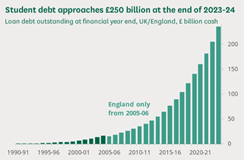
    Adjusting for average inflation at 2.5% over recent years, the total cost of the student loan programme now exceeds £250 billion in today’s money.

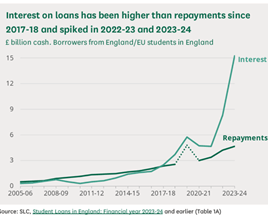
    Higher interest rates, particularly those implemented from September 2022, have sharply increased the burden of student debt. Interest added to outstanding loans soared to £8.3 billion and £15.3 billion in 2023-24 alone. In the latest year, the interest capitalised on student debt was three times the value of repayments made—demonstrating how repayments are failing to keep pace with even the cost of borrowing, let alone reducing the principal.-

    Advertisements

    By the min 2040’s, the government estimates this to rise to over £500 billion in today’s money. The truth that be simply taking an adjustment of 2,5% inflation, the tru figure will be in excess of £800 billion and I would expect this to be £1 trillion.

    Government Accounting and Debt Structure

    Current government accounting methods do not show the full scale of student loan costs within annual expenditure figures. Instead, these liabilities are largely kept off the balance sheet, appearing instead as a growing component of government debt and accruing interest payments.

    As of now, out of the UK’s £2,800 billion national debt, approximately £266 billion—or nearly 10%—is attributable to student loans. This means the annual interest on student debt alone is close to £10 billion (based on a 10% share of a £105 billion interest bill). Crucially, the total repayments from former students do not cover even this interest, let alone reduce the outstanding capital.

    Advertisements

    Long-Term Concerns

    This imbalance raises serious questions about the sustainability of the system. With current interest rates and repayment levels, a significant number of borrowers will never fully repay their loans. Inevitably, a large portion of this debt may have to be written off or absorbed by taxpayers in future—i.e. the very taxpayers who may have taken out student loans themselves.

    Proposed Solutions

    • Lower Student Loan Interest Rates: Align student loan rates with the Bank of England (BoE) base rate and retroactively recalculate past interest charges. Charging higher rates than the government itself can borrow at is neither fair nor economically rational.
    • Make Extra Payments Tax-Deductible: Allow any voluntary extra repayments to be deducted from taxable income. This would incentivise early repayment, especially among higher earners, and could, with a 50% take-up rate, add £5–10 billion annually to debt reduction efforts.
    • Simplify Earnings Thresholds: Introduce a uniform minimum earnings threshold of £25,000 for all borrowers, replacing the current array of thresholds which complicate repayment planning and administration.

    Assumptions and Next Steps

    This analysis is based on available public data, with some necessary assumptions regarding the average outstanding loan size and average age of borrowers. These figures will be refined as more information becomes available.

    Conclusion

    The current UK student loan system is unsustainable under present conditions. Without reform, the rising tide of student debt will eventually return to the public purse, impacting not just graduates but the entire taxpaying population. The proposed measures offer a starting point for meaningful change, with the aim of building a fairer and more financially robust system for future generations.

    Feedback and further suggestions are welcome—this is an issue that demands urgent and informed public debate.

  • Reforming Winter Fuel Allowance: A Fair Approach for All

    Reforming Winter Fuel Allowance: A Fair Approach for All

    Following the announcement this week, it looks like the Labour government is going to u turn on the Winter Fuel Allowance. My comments are therefore far more limited than they would been.

    It is not really a surprise given what a badly implemented policy it was and the way it affected the less well off pensioner. It beggars belief how the government and Rachel Reeves could have thought this was a good idea in the first place.

    I suppose the reason was, in their election promises, they said they would not put up income tax and national insurance, but said very little on many other issues. This gave them the opportunity to hit people in their pockets in other ways whilst keeping the facade of not going back on election promises. I wonder how that is working out for them! (no increase in national insurance, smash the gangs!)

    But at least now, they are going to backtrack.

    The question is to what extent they will roll back this policy? I expect a very limited increase will be announced in the autumn but it will not revert to previous levels of benefit. I also expect it to be complicated to manage causing further waste in Whitehall. We will have to see!

    So, if it was up to me, what would i do?

    Firstly, I would get on and announce the change, not wait until the autumn. Why wait? If the people in charge can’t come up with a plan and get on with implementation, they should not be in power.

    I worked in Civil Engineering for 35 years and knew that deferring a decision was the worst thing we could do. We had to quickly consider the situation and solutions, make a decision and get on with it and live with the consequences.

    Secondly, one of the injustices of this allowance , whilst it is to help the vulnerable with their winter fuel bill, it also helps the wealthy pensioners.

    So if we were to limit the payments, it would cause a significant amount of administration to means test the benefit. We want to make things simple.

    So what i would do, is make it a taxable benefit, so those who pay no tax , get 100% of the benefit. Those on basic taxation they get 80% of the allowance and those on the higher rates will only get 60% of 55% of the allowance.

    Doing this means all those getting the state pension would get the allowance included in their OAP payments and HMRC would sort the rest via tax code / tax returns. You do not need extra staff to administer the means testing of individuals.

    The above will cost an additional £1.3 billion when compared with 2024/25 (£311m) but save £0.5 billion when compared with 2023/24

    And how would I pay for this? Well, as stated in my earlier page on the triple lock, this payment would come out of the massive saving by scrapping the triple lock and just increasing pensions by inflation.

  • Why the UK Should Scrap the Pension Triple Lock.

    THE TRIPLE LOCK

    As many people are aware, the UK state pension increases by either, CPI, earnings or 2.5% minimum. This is great for the pensioner, and I will benefit from this when I get to 67. However, I am not sure that people understand how unfair it is on the younger, working age people who are going to get increasing levels of taxation imposed on them to cover the costs.

    Since the triple lock was introduced (2011), the state pension has increased by 80% whilst inflation has only increase by 55%.  Average earnings has increased by 58.8% just keeping ahead of inflation.

    So, all those below the state retirement age have been paying a higher and higher proportion of their wages / taxes to cover someone else’s state pension.

    In fact, if the triple lock continues, the state pension would continue to increase at a higher rate than peoples wages until such time, it becomes impossible to continue due to the size of the black hole in the government’s finances. Things have to change.

    To understand the scale of the problem, in 2025-26, the UK government is projected to spend approximately £145.6 billion  on the state pension which equates to £5100 per household per year.

    If the increase had been based upon inflation (CPI) alone, the government spending on the state pension would have been about £20 billion less per year.

    Over the period of time that the triple lock has been place, I estimate the triple lock has cost the country £120 billion extra (2011 to 2025) than it would have cost, had it been calculated by inflation alone.

    The problem is only getting bigger.

    The projected number of those of pensionable age in the UK will increase from the current 13.4 million to 15.6 million in 10 years, which in today’s terms will increase the bill by £26.34 billion (2.2 million x £11,973 per year)

    If the level of pension is increase over the next 10 years at the same level of the last 10 years, that will be an increase the cost of the state pension by a further £74 billion resulting in a total annual cost in 2035 of £245 billion.

    The country cannot afford this level of triple lock increase that, on average, is always going to be more than wages.

    Don’t get me wrong, I do not want the old and vulnerable to be without food and heat. (Winter fuel allowance to be covered on separate Blog) but many pensioners have other private / company pensions, meaning they are not living on state pension alone.

    The average personal pension size of someone in their 60’S is £190k which if taking an annuity at 67 would produce and income of over £15k (single life level no guarantee) That is not an insignificant amount, yet they are being increasingly supported by those who are working.

    It is reported that currently, 70% of pensioners receive income from private pensions.  This percentage is increasing due to auto-enrollment in pension schemes which means that, only 7% of those under 35 will relying on state pension alone. This gives ample opportunity   and time (42 years) to reduce this percentage.

    The other problem with the triple lock happened for the 2 years 2023/24 and 2034/25.

    In 2023/24, the pension was adjusted by 10.1% as it was higher than the wage increase of 5.54%. However, the year later, wage rises rose by 8.5%, basically because wages were increased due to the effects of inflation the previous year. —

    So the pension had the effect of the inflation of 2023/24 in both years. None of the political parties wanted to rock the boat as an election was coming up  and did not want to address the situation.

    My solution

    • Scrap the triple lock and just link State Pension Increases to Inflation. This should keep the status quo for pensioners so that they are no better or worse off due to inflation.
      • This would save £34 billion per year (in the year 2034/35) if the increase was based upon what happened over the last 10 years with a total saving over 10 years of £190 billion.
      • I hear in my head all those critics that say, well the last 10 years have been exceptional, due to covid and the effects of the Ukraine war on fuel costs, which I am inclined to agree with.
      • I estimate that if we exclude the extreme triple lock adjustment years, the saving would still be £18 billion or £79 billion over 10 years. The pensioners will still get increase covering inflation / cost of living so that they are no worse or better off. If they wish to be better off, they need to do that as an individual by having a job or making provision before retirement, as 70% of people already do and 93% of under 35’s do.
    • Do not allow opt out of Private Pension.
    • Self employed required to make pension provision and this must be detailed on annual tax return.
    • The pensions credit system remains as is, allowing a top up to pensions for those who fall short. Overtime as more people retire with some form of Personal Pension, the cost of this will fall.
    • Use some of this money to reinstate the Winter Fuel Payment to those whose income is below a certain level. Those high earning pensioners do not need it and should be excluded (A separate Blog on this subject will be done in due course) This would cost a max of £1,889 billion of the saving (£2.2 billion(2024 cost) minus 0.311 billion(2025 cost)

    Conclusion

    • All the Major parties should get together and agree on the removal of the Triple lock. However, I fear none of them have the bottle and there will always be one who will pledge to keep it on the hope it will get them into power.
    • However, I think if this is all explained in detail why we cannot continue, the vast majority of the pensioners will understand, after all, those with private pensions have all benefited from the tax breaks that have helped build up their pension pots.