Category: Stamp Duty

  • Stamp Duty, Main Residence, and Angel Ryner : A Call for Reform

    Stamp Duty, Main Residence, and Angel Ryner : A Call for Reform

    email = ifitwasup2me@hotmail.com

    Examining the complexities of property taxation and public trust in the light of recent controversy

    Introduction

    Stamp duty remains one of the most contentious aspects of property ownership and transfer in the United Kingdom. The rules around what constitutes a main residence, and the additional charges levied upon second homes, have seen both genuine confusion and, at times, alleged exploitation. In recent weeks, the case of Angel Ryner, a prominent public figure, has brought these issues to the fore—her reported declarations regarding her residences in Hove and Manchester have raised questions not only about the technicalities of stamp duty law, but also about the responsibilities of those in the public eye to act transparently and in good faith.

    Advertisements

    The Situation: Angel Ryner and Dual Residences

    To understand the current controversy, it is first necessary to lay out the facts as they have been reported. Angel Ryner, who owns a home in Manchester, has recently acquired a new property in Hove. Reports indicate that she has declared her Hove residence as her main home, thus avoiding the additional stamp duty that would ordinarily be due on the purchase of a second property. The UK’s stamp duty system imposes a surcharge on additional residential properties purchased by individuals, a measure intended to discourage speculative buying and to aid first-time buyers in a competitive market.

    However, complicating matters is the fact that Ryner has not sold her Manchester property, nor has she expressed any intention to do so. For many, the declaration of a new main residence would typically follow the sale of a previous home, or at least a clear move away from it. In Ryner’s case, speculation abounds—has she transferred ownership of her Manchester house to her children, perhaps via a gift or a trust, in order to sidestep the rules? Or has she, as some allege, made contradictory statements about her place(s) of residence, potentially claiming both as her main home in different contexts?

    Main Residence: Definitions and Dilemmas

    The concept of ‘main residence’ is pivotal in stamp duty calculations. HMRC guidance states that an individual’s main residence is the property where they spend most of their time, where their family lives, and where they are registered for things like voting and healthcare. Yet the rules leave room for subjective interpretation, and in cases involving multiple properties, determining which is the main residence can be fraught with ambiguity.

    In Ryner’s case, the Hove property is over 250 miles from her constituency, raising further questions about her connection to the community she represents. If she continues to own—and perhaps even occupy—the Manchester home, how can she credibly declare Hove as her main residence for stamp duty purposes? The lack of clarity is problematic not only for tax authorities but also for constituents who expect their elected representative to live amongst or close to them.

    Speculation and Legal Loopholes

    It is worth emphasising that, without direct evidence, any conclusions about Ryner’s intentions must remain speculative. Nonetheless, the possibilities are instructive. Transferring ownership of a property to children or placing it in a trust are legitimate means by which individuals can alter their stamp duty liabilities.

    Should Ryner have gifted her Manchester home to her children, she could then declare her new Hove residence as her sole main home, thereby avoiding the surcharge. Of course, such arrangements must be genuine and not simply paper exercises, as HMRC is empowered to investigate cases where the spirit of the law may have been breached.

    Yet, if Ryner has made public or official statements affirming both properties as her main residence, she risks not only legal repercussions but also significant damage to her reputation. Dual declarations would suggest a deliberate attempt to benefit from contradictory tax treatments, an act that would undermine public confidence and, some argue, should prompt her resignation.

    London Accommodation: A Red Herring?

    Further complicating the narrative is Ryner’s accommodation in London. However, given that she does not own the London property, and that living away from home is a requirement for many MPs and professionals working in the capital, this aspect is arguably less relevant to the stamp duty discussion. It is important to distinguish between owned and rented accommodation, and between personal and professional obligations. To focus too much on the London property risks distracting from the substantive issues around main residence and second home taxation.

    The Public Interest: Constituency and Representation

    The question of residence is not merely a fiscal matter. For Ryner’s constituents in Manchester, the knowledge that their MP’s primary home is hundreds of miles away is understandably disquieting. Representation implies not only formal duties but also a genuine connection to the locality. While parliamentary work may require frequent travel and periods spent elsewhere, a fundamental expectation remains: that an MP should understand and share the lived experience of those they serve. The perception that Ryner is no longer a local figure, but rather a distant administrator, is likely to fuel dissatisfaction and calls for accountability.

    Policy Recommendations: Reforming Stamp Duty

    Ryner’s situation shines a light on the need for reform. The stamp duty surcharge on second homes was introduced to curb property speculation and to make home ownership more accessible. However, the system’s reliance on the declaration of a ‘main residence’ is open to manipulation.

    One solution, as suggested in previous articles, is to levy stamp duty not simply on the purchase price of a new property, but on the difference between the sale value of the previous main residence and the new acquisition. In Ryner’s case, as she has not sold her Manchester house, she would be required to pay stamp duty on the full value of the Hove property. This approach would make it harder for individuals to avoid the surcharge by retaining ownership of multiple homes.

    To further address potential loopholes, a tiered surcharge could be introduced for cases where the value difference exceeds a set threshold—say, £500,000. Most house movers would not be affected, but those acquiring substantial second homes would face higher charges, reflecting their ability to pay and discouraging speculative investments.

    Inquiry and Accountability

    Given the public interest and the high profile of those involved, an inquiry into Ryner’s actions would be appropriate. Such an investigation should aim not only to establish the facts, but also to clarify the rules and recommend improvements. Expert advice will be crucial, both for navigating the legal complexities and for ensuring that future policies are robust, fair, and transparent.

    Conclusion

    The controversy surrounding Angel Ryner and her residential declarations underscores the urgent need to review and reform the UK’s stamp duty system. The current rules, while well-intentioned, are vulnerable to exploitation and fail to address the realities of modern property ownership. As public scrutiny intensifies, so too must the commitment of policymakers to ensure that taxation is equitable and that public representatives are held to the highest standards. Only then can trust be restored, not only in the tax system, but in the democratic institutions it supports.
    Advertisements

    Leave a comment

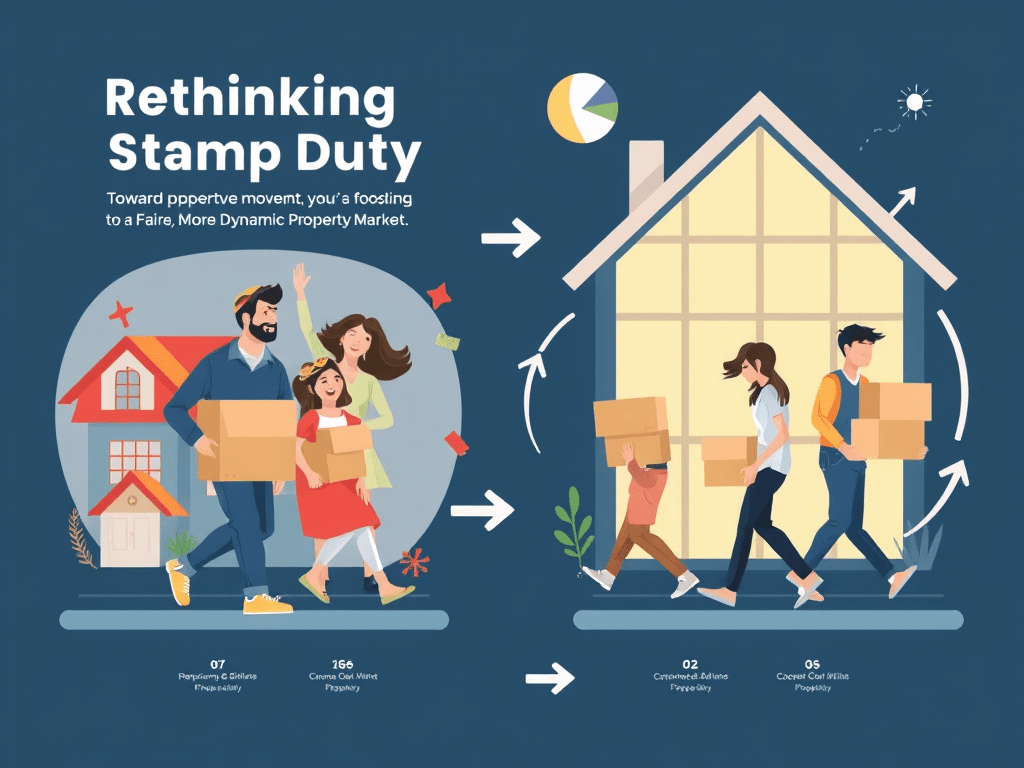
  • Stamp Duty – Pay on the difference – Rethinking Stamp Duty: Toward a Fairer, More Dynamic Property Market

    Stamp Duty – Pay on the difference – Rethinking Stamp Duty: Toward a Fairer, More Dynamic Property Market

    .

    Reading another article on how the Government is thinking of reforming Stamp Duty on Housing, I thought I would reiterate comments in a previous post, which think is a good, logical solution to stamp duty that would open up the housing market

    The Current Stamp Duty Landscape: Barriers to a Free Market

    Stamp duty has long been a sticking point for homeowners, buyers, and movers across the UK. While intended to generate government revenue, the present regime often acts as a block on the very dynamism needed for a healthy property market. In previous discussions, I highlighted the specific hurdles this tax creates—especially for the older generations, who, if able to move more freely, could release much-needed homes in popular areas for growing families.

    The rigidity of the current stamp duty regime means that those looking to downsize or relocate, perhaps to quieter, rural areas or simply to homes that better suit their needs, are often dissuaded by the financial penalty of an upfront, often considerable, stamp duty bill. Similarly, the tax can freeze out those who would otherwise consider moving for work or life changes, as they are faced with repeated payments for making necessary moves. Ultimately, this stifles the natural flow of the market, trapping people in homes that may no longer fit their circumstances.

    The New Proposal: An Ongoing Annual Tax

    One recently floated proposal suggests replacing the upfront stamp duty with an ongoing annual property charge—specifically, a tax of 0.54% per year applied to the value of any property over £500,000, but only on the amount exceeding that threshold. While this might seem progressive on the surface, it carries its own set of challenges and inequities.

    For one, this policy would disproportionately impact homeowners in the south of England, and especially in London, where property values regularly exceed the £500,000 mark even for relatively modest homes. By contrast, those in the north—myself included—are far less likely to be affected, simply due to the regional disparities in house prices. While this may seem like a boon for those of us outside the capital, the principle of fair taxation is paramount. A tax should be equitable, not geographically arbitrary.

    A New Stamp Duty Approach: Tax the Move, Not the Home

    To address these issues and unlock the property market’s potential, I propose a more dynamic, just, and effective approach: a stamp duty that applies only to the difference between the value of the property you sell and the one you buy.

    • If you “move up the ladder”—buying a more expensive home than the one you’re leaving—you pay stamp duty on the increase.
    • If you move sideways (buying at a similar price) or downsize (buying cheaper), you pay no stamp duty at all.
    • The tax would only kick in for homes over £250,000, helping first-time buyers and those with lower-priced properties avoid the tax entirely.

    A suggested rate of 5% applied to the difference would, in my view, generate at least as much, if not more, revenue for the government—precisely because it would remove the current chokepoints that suppress transaction volumes.

    Advertisements

    Breaking Down the Benefits

    • Encourages Downsizing: Older homeowners, no longer deterred by hefty stamp duty bills, would be freer to move to homes that suit their changing needs, releasing larger family homes into the market for the next generation.
    • Supports Mobility: Those whose careers require frequent moves would not be unfairly penalised by paying stamp duty multiple times on properties of similar value. Instead, tax would only apply when they actually “trade up.”
    • Boosts Market Fluidity: Removing these artificial blockers would likely increase the number of property transactions, stimulating the market and supporting related industries from removals to renovations.
    • Fairness Across Regions: By taxing only the value gained in a move, rather than the absolute price, the system becomes less vulnerable to regional price disparities. Taxpayers in high-value areas are not automatically penalised, and those in lower-value regions are not left out of the conversation.
    • First-Time Buyer Relief: Setting the threshold at £250,000 protects those entering the market for the first time, while ensuring the focus remains on higher value, higher-impact transactions.

    Practical Example

    Consider a family moving from a £500,000 house near a school to a £500,000 bungalow in the countryside. Under the current regime, they might pay as much as £15,000 in stamp duty—simply to move from one home of equal value to another. Under my proposal, they would pay nothing, as the change in value is zero. Alternatively, someone buying a second home for £500,000 without selling another property would pay 5% on £250,000 (the amount over the £250,000 threshold), amounting to £12,500.

    Conclusion: Unlocking the Market for All

    In summary, a stamp duty system based on the difference between what you sell and what you buy offers a fairer, more efficient, and economically sensible solution to the UK’s property tax puzzle. It encourages mobility, supports families at every stage of life, and reduces artificial barriers that clog up the market. Most importantly, it treats taxpayers across regions with greater equity.

    As the government considers the next phase of property tax reform, I urge policymakers to prioritise approaches that reward movement rather than punish it, ensuring that stamp duty is a catalyst for, rather than a barrier to, a more vibrant and accessible housing market for all.

    Leave a comment

  • Rethinking Stamp Duty: A Pathway to a More Dynamic Property Market

    Rethinking Stamp Duty: A Pathway to a More Dynamic Property Market

    Examining Proposed Reforms and Offering a Practical Alternative

    Introduction

    Stamp Duty has long been a controversial fixture in the UK’s housing landscape, provoking debate among policymakers, economists, and homeowners alike. Recent discussions, spurred by think tanks such as Onward, have reignited calls for reform, with some proposals hinting at a radical overhaul of how property transactions are taxed. However, many of these suggestions remain shrouded in ambiguity, leaving homeowners and prospective buyers uncertain about the potential impact on their financial futures.

    This article aims to cut through the prevailing haze, scrutinise the details where available, and offer a reasoned alternative that could invigorate the UK’s property market, making it more accessible and dynamic for all.

    Current Proposals: Clarity or Confusion?

    The Onward think tank, among others, has floated the idea of replacing the current Stamp Duty regime with a national proportional property tax, applicable to homes valued above £500,000. The rationale, they claim, is that such a change would “liberate” properties in the £250,000 to £500,000 bracket, presumably by reducing transactional friction and encouraging mobility within this critical segment of the market.

    Yet, a close look at these recommendations reveals an inherent vagueness. The specifics—how the proportional tax would be calculated, its administration, and the actual financial burden on different categories of homeowners—remain largely undefined. This makes it virtually impossible for individuals to gauge how the reforms would affect their own circumstances. If the goal is transparency and empowerment, then the current discourse falls short.

    The Persistent Blocker: The £500,000 Threshold

    One of the central flaws in the proposed system arises from the creation of a new threshold at £500,000. Far from removing market blockages, it merely shifts them. Imagine a homeowner wishing to move from a £450,000 property to one worth £550,000. Under the new regime, the £500,000 benchmark would act as a disincentive for those looking to trade up, as the leap in tax liability could be substantial. Homeowners with properties above £500,000 might be reluctant to sell, causing stagnation at the upper end of the market, much as the current Stamp Duty framework does at similar price points.

    This phenomenon is not merely theoretical. The property ladder—a term evoking the notion of gradual progression up the housing hierarchy—depends on the existence of manageable steps. When rungs are removed or made insurmountable by punitive taxation, mobility diminishes, trapping homeowners in properties that no longer suit their needs.

    The Case for Reform: Transaction Data and Market Realities

    Data cited by Onward, sourced from HM Revenue and Customs, paints a stark picture: for homes valued over £250,000, the average period between sales is now over 26 years. This lengthy tenure is indicative of a market where the cost of moving—primarily attributable to Stamp Duty—acts as a formidable deterrent. Rather than facilitating the fluid exchange of homes, the tax regime stifles activity, leading to inefficiencies and missed economic opportunities.

    It is not surprising, then, that households are reluctant to relocate every few years, especially when faced with the prospect of paying tens of thousands of pounds in tax simply for the privilege of moving. The result is a market characterised by inertia, with homeowners waiting decades to make a move that, under a more rational system, might occur far more frequently.

    A Fairer Alternative: Taxing the Difference

    Faced with this reality, it is worth considering an approach rooted in fairness and practicality. Rather than imposing a blanket charge on the entire value of the property being purchased, why not levy Stamp Duty solely on the difference between the sale price of the old home and the purchase price of the new one?

    For instance, suppose you sell your home for £450,000 and buy another for £550,000. Under this system, you would be liable for Stamp Duty only on the £100,000 difference, rather than on the full value of the new property. Such a proposal would free up the steps on the property ladder, allowing homeowners to move as their circumstances change—whether due to career shifts, family needs, or a desire to downsize—without incurring a prohibitive tax bill.

    Furthermore, for those moving to a similar level or downsizing, the financial burden would be minimised, perhaps reduced to a nominal fee of £2,500. This would ensure that only those genuinely “trading up” pay a proportionate tax, while others benefit from increased flexibility and reduced costs.

    Unlocking Market Mobility

    The principle here is simple: a system that encourages frequent, manageable transactions is preferable to one that penalises mobility and rewards inactivity. If Stamp Duty were calculated on the difference in price, more people would be able to move more often, invigorating the market and enabling the property ladder to function as intended.

    It is also likely that such a shift would result in increased overall revenue for the government. Rather than relying on large, sporadic payments from a handful of households, the tax base would be broadened, capturing smaller amounts from a larger pool of transactions. This is the essence of a healthy market: steady, sustainable activity rather than isolated windfalls.

    Real-Life Implications: The Downsizer’s Dilemma

    Consider the situation of homeowners whose children have left home, prompting a desire to relocate to a more suitable property, perhaps in a quieter area further from schools. Under the current regime, a move could trigger a Stamp Duty bill of £20,000 or more—a sum that many find impossible to justify. The result is a mismatch between housing needs and actual occupancy, with family homes kept by couples or individuals long after their utility has passed.

    A reformed system would make such transitions far more feasible, allowing people to downsize or move to properties better suited to their evolving needs without incurring a financial penalty. This would also help address broader issues of housing availability, as larger homes would be freed up for families who genuinely require them.

    The Virtue of Proportionality: More Transactions, More Revenue

    From an economic perspective, the proposal has further merit. The experience of other markets demonstrates that a “lesser amount from more people” can, over time, yield greater revenue than relying on “a larger amount from a few.” By removing the punitive aspects of Stamp Duty, the government could foster a culture of mobility, leading to more frequent sales, greater economic activity, and, ultimately, a more vibrant housing market.

    Conclusion: The Way Forward

    Stamp Duty, in its current form, acts as a drag on the UK property market, preventing homeowners from moving as their needs change and locking up valuable housing stock. While the proposals from think tanks such as Onward contain laudable intentions, their lack of clarity and reliance on arbitrary thresholds risk perpetuating the very problems they seek to solve.

    A system based on taxing the price difference between old and new properties offers a fairer, more flexible solution. It preserves the integrity of the property ladder, reduces barriers to movement, and stands to generate sustainable revenue through increased transaction frequency. For policymakers, the choice is clear: if the goal is to liberate the housing market, the pathway lies not in shifting blockages, but in removing them altogether.

    Ultimately, a reimagined Stamp Duty regime—simple, proportionate, and sensitive to the realities of homeowners’ lives—could be the key to unlocking a more mobile, equitable, and prosperous housing market for all.


    Leave a comment

  • Stamp duty on Housing is restricting the Housing Market in the UK

    I consider the biggest hinderance to the housing market is the middle band of stamp duty between £250 and £925k.

    Using myself as an example, I am lucky enough to have a nice 4 Bed house in a nice area in Cheshire. It is a good Neighbourhood with good schools, close motorways, train stations and airports. Ideal when you have a young family.

    The approx. value of this house is £550 to £600k

    Now, I have considered moving to a different part of the country, perhaps downsizing in terms of size but have a bigger garden, larger garage etc

    However, if I looked at a £600k house, it would cost me £20,000

    And if I chose to move further south closer to my grown-up family, where house prices are more expensive, the stamp duty increases significantly.  

    So, I and many of my generation,  who moved to an area of good schools 20 years ago, have now become a blocker to younger families who want to live in the area and are unable to do so as there are not enough houses on the market.

    The consequence are: –

    • that there are less children in the local schools residing in the local village. (I say village but with 7500 residents).  More children must travel. The consequence of which are children do not walking to school (health benefits) and more traffic.
    • there is a shortage of houses in areas they are needed
    • there is less tax revenue as less people moving.
    • less stimulus in the housing market and associated trades
    • the tax man gets no money out of me as I do not move.

    It can be seen from the statistics that the revenue on Stamp Duty has fallen from £11.7Bn in 2022/23 to £8.57Bn in 2023/24 and the number of house moves have fallen from 1.06 million to 0.872million over the same period. So we can see, the trend is down causing more of a shortage in the housing market.

    So. what would I do if it was up 2 me, I have 2 ideas.

    Option 1 – Changes to Stamp Duty Rates

    Any House between £150k and £1million would be subject to a 2.0 % levy. If the market stayed the same as 2023/44, this would reduce the tax take by 2.5Bn.

    However, I consider this will stimulate the market and increase the number of transactions. If this only increase to 2021 / 22 levels, there will be an increase the  number of transactions by 39% in the  under £1m price bracket.(yes that is the amount it has fallen in 2 years , number of transactions have fallen to 845,000 from 1,175,000)

    So, on the basis of this will stimulate the housing market in third and fourth time buyers sector, and the levels only reach 2021/22 levels, the tax take would be £3.552Bn, a shortfall of £1.167 Bn.

    In addition to the above, house prices have increased by 6% over the last 2 years  so the revenue will increase by £0.2Bn for houses under £1m and by 0.23Bn for those over £1m

    This gives  a total receipt of £4.0 Bn

    So, in theory, I am costing the country £ 0.7Bn. How am I going to pay for this.

    The government has promised 1.5 million new homes over 5 years which equates to 300,000 per year which would cover the 0.7Bn shortfall.

    So the above, in my opinion would be revenue neutral as it would stimulate the housing market sufficiently to offset the lowering of taxes.

    Option 2 – Pay on the difference

    This is the option I would prefer, and I think it is the fairest.

    The basis is that you only pay a %age on the difference in house value, so that you only  pay on the increase.

    If you sell your house for £400k and buy for £550k, you pay on the difference of £150k. I do not have any data on the difference, so I have just made an assessment.

    So based upon 1.2m transactions, that would generate at 5%, £9.3 Billion, more that recovered in 2023/24.

    The additional benefits of stimulating the housing market will be felt across all the building trades, from plumbing, extensions, patios, conservatories DIY etc as more and more people will want to improve their new homes. This will create more jobs and greater tax revenue.

    Leave a comment