Tag: news

  • Pay Increases vs Inflation in 2025: Who Really Benefits?

    Pay Increases vs Inflation in 2025: Who Really Benefits?

    A Critical Look at Government Claims and the Real Economic Impact

    Introduction

    In 2025, the government has asserted that rising pay combined with falling inflation is a win-win for everyone. However, a closer examination reveals a more complicated picture. With average pay rises of 6.6% in the public sector and 4.2% in the private sector, set against an October inflation rate of 3.6%, it is vital to assess whether these increases genuinely benefit workers, and to explore the broader implications for the economy.

    Advertisements

    Pay Rises in 2025: Public vs Private Sector

    The figures for 2025 paint a tale of two economies. Public sector workers have seen average pay increases of 6.6%, while their private sector counterparts have received an average 4.2% rise. At first glance, both groups may appear to be better off – their nominal pay packets have grown compared to the previous year.

    However, these headline numbers do not tell the full story.

    Inflation Context: The October 2025 Rate

    Inflation, the general rise in prices, stood at 3.6% in October 2025. This means that, on average, the cost of goods and services increased by 3.6% over the previous year. For a pay rise to deliver a real-terms increase in living standards, it needs to outpace inflation. Anything less, and workers may find their extra income is simply absorbed by higher prices.

    The Impact of Tax, National Insurance, and Pensions

    Most workers do not receive the full benefit of their pay increases. Standard deductions include income tax (20%), national insurance contributions (8%), and typical pension contributions (5%). Combined, these deductions reduce the headline pay rise by around 33%. In effect, only two-thirds of any pay increase actually reaches workers’ pockets.

    For example, a £1,000 nominal pay rise leaves just £670 after deductions. This significant reduction means that even a pay rise which appears healthy on paper may not be enough to keep pace with rising costs, especially for those in the private sector where increases are already more modest.

    Advertisements

    Public vs Private Sector: Who Gains, Who Loses?

    Once deductions and inflation are taken into account, the real-terms situation becomes clear. Private sector workers, with an average 4.2% pay rise, see their increase reduced to roughly 2.8% after deductions. Since this is lower than the 3.6% inflation rate, their real income has actually fallen – their pay does not stretch as far as it did last year.

    Public sector workers, on the other hand, fare slightly better. Their 6.6% average pay rise, reduced by one third, results in about a 4.4% net increase. After accounting for inflation, public sector workers enjoy a real-terms pay rise of around 0.8%. This is only possible because public sector pay is directly funded by the government, which can make policy decisions to support higher wage settlements.

    The Employer National Insurance Factor

    For private sector employers, pay rises are not just a matter of higher wages. They must also pay employer national insurance contributions on increased salaries, adding further costs. This additional expense can lead employers to restrict pay rises, limit hiring, or even reduce jobs. As a result, the private sector faces a double squeeze: rising costs and limited ability to pass on pay increases that match inflation.

    Economic Consequences: Shrinking Private Sector, Public Sector Pressures

    The uneven distribution of pay rises has wider economic implications. If private sector pay lags behind inflation, workers’ purchasing power drops, which can suppress consumer spending and slow economic growth. Fewer jobs or lower pay in the private sector also mean less tax revenue and higher welfare costs for the government.

    Conversely, sustained above-inflation pay rises in the public sector, funded by the government, raise questions about long-term sustainability. With public finances already under pressure, continued high wage settlements and generous pension commitments could strain budgets, potentially leading to higher taxes or cuts in services elsewhere.

    Summary and Conclusion

    The government’s claim that rising pay and falling inflation benefit everyone does not bear out under scrutiny. In 2025, private sector workers are losing out in real terms, as their take-home pay increases lag behind inflation after deductions. Public sector workers are better protected, but only because government funding has enabled pay rises that outpace inflation – a situation that may not be sustainable in the long run. We cannot keep increasing taxes on the private sector to cover the public sector. You will end up with no workers.

    The knock-on effects include increased pressure on private sector employers and potential job losses, alongside growing fiscal challenges for the public sector. In reality, the benefits of rising pay and falling inflation are unevenly distributed, and both employees and policymakers must recognise the complexity behind the headline figures if they are to make informed decisions about the country’s economic future.
     

    Advertisements

      Leave a comment

    • Minimum Wage Increases: A Hidden Tax on Businesses?

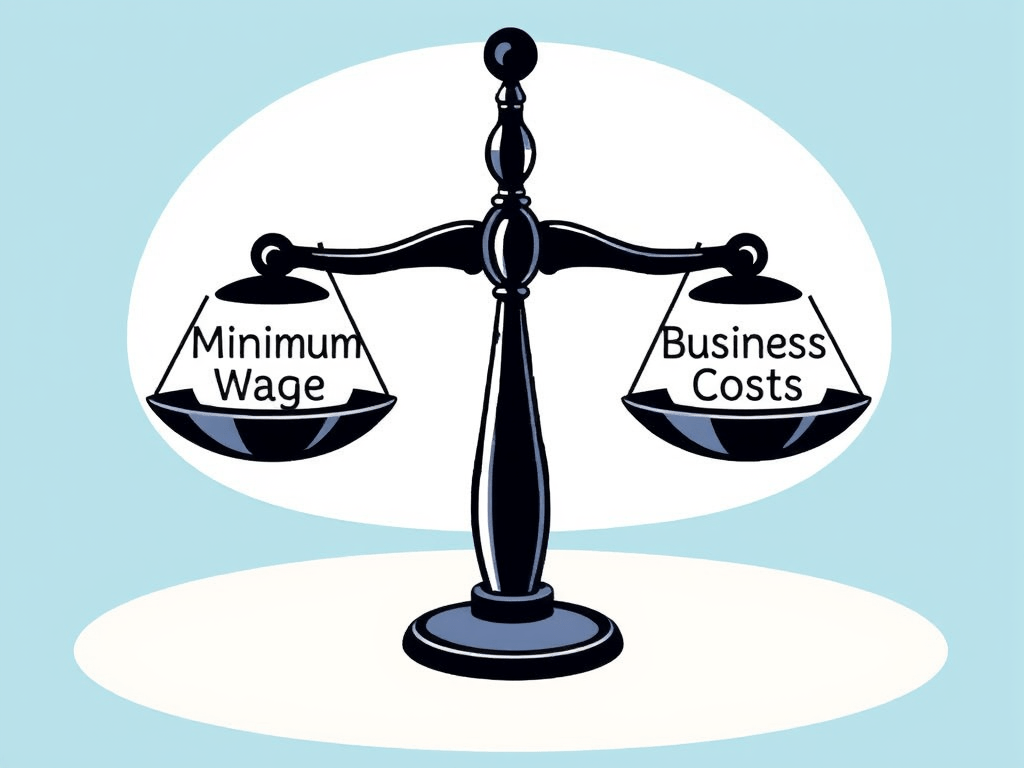
      Minimum Wage Increases: A Hidden Tax on Businesses?

      Analysing the Fiscal, Economic, and Policy Consequences of Recent Wage Mandates

      Introduction

      The minimum wage has long been a focal point of economic policy debates, with proponents arguing for its role in reducing inequality and critics warning of potential unintended consequences. Recent changes to the minimum wage structure and broader fiscal policies have reignited discussion over whether raising the minimum wage effectively operates as a tax hike on businesses. This article critically examines this argument, focusing on recent budget changes, the role of key policymakers, detailed wage increases, the true cost to employers, and the wider economic implications. The analysis is designed for business owners, policymakers, and the general public seeking an objective understanding of the issue.

      Advertisements

      Budget Changes and Policy: The Role of Rachel Reeves

      In the latest budget cycle, significant changes have been introduced affecting the financial landscape for businesses. Rachel Reeves, as Chancellor of the Exchequer, has played a pivotal role in shaping these policies, which include not only direct business tax increases but also indirect fiscal pressures through mandated wage hikes. The argument posits that by increasing the statutory minimum wage, the government imposes additional costs on employers, which function similarly to a tax: they are compulsory, unavoidable, and accrue to the benefit of the public purse through increased tax and National Insurance receipts.

      Details of Wage Increases: Over 21s and Under 21s

      Recent legislative changes have seen the minimum wage for workers over the age of 21 rise from £12.21 to £12.71 per hour, representing a significant year-on-year increase. For those under 21, the minimum wage has increased from £10.00 to £10.85 per hour, an increase of 8.5%.While these figures are intended to ensure a living wage and reduce income disparities, the immediate effect is a substantial increase in employment costs for businesses across sectors, particularly those with a high proportion of lower-waged staff.

      The True Cost to Businesses: Breakdown of Additional Employment Costs

      Advertisements

      For businesses, the cost of employing staff at the new minimum wage levels extends beyond the hourly rate. Employers are responsible for additional expenses such as National Insurance contributions, pension auto-enrolment, and, in some cases, apprenticeship levies. The cumulative impact of these direct and indirect costs can be substantial, particularly for small and medium-sized enterprises (SMEs). For example, a business employing 50 staff over the age of 21 on minimum wage will see annual wage costs increase by over £50,000, once employer contributions and associated costs are factored in. These increased costs mirror the financial burden of a direct tax hike, as businesses have little choice but to absorb them, reduce staffing levels, or pass costs onto consumers.

      Government Revenue Impact: Taxes, National Insurance, and Fiscal Effects

      One of the less-discussed consequences of rising minimum wages is the corresponding increase in government revenues. Higher wages translate into greater income tax and National Insurance contributions, both from employees and employers. This influx of revenue can help fund public services and reduce budget deficits. However, it also raises questions about the balance between social objectives and the financial viability of businesses, especially when wage increases are not matched by productivity gains or economic growth.

      Broader Economic Consequences: Unemployment, Reduced Revenues, and Increased Benefit Spending

      The broader economic effects of mandated wage increases are complex. Critics argue that higher employment costs may lead to reduced hiring, job losses, or a shift towards automation, particularly in sectors with thin profit margins. This can result in higher unemployment, lower overall business revenues, and increased government spending on unemployment benefits and social support. While the intention is to lift incomes, the risk is that abrupt or substantial wage hikes without corresponding economic growth may backfire, harming both businesses and workers in the long term.

      Growth vs. Mandated Increases: The Case for Growth-Driven Wage Policy

      There is a compelling argument that wage increases should be driven by sustainable economic growth rather than government mandates. When wages rise as a result of increased productivity and business expansion, the cost is offset by higher output and profitability. In contrast, mandated wage hikes can distort labour markets and impose additional burdens on businesses that are not matched by increased economic activity. A growth-driven approach encourages investment, innovation, and organic wage progression, aligning the interests of workers, employers, and the government.

      Advertisements

      Conclusion

      The recent minimum wage increases, viewed through a fiscal lens, can be seen as a form of indirect taxation on businesses. While the social objectives behind such policies are laudable, the true costs to employers, the increase in government revenues, and the potential for adverse economic consequences warrant careful consideration. Sustainable wage growth is best achieved through robust economic expansion and productivity improvements, rather than compulsory cost increases. Policymakers must weigh the benefits of higher wages against the risks of reduced employment opportunities and increased fiscal pressure on businesses, ensuring that future policies foster a healthy, dynamic economy for all stakeholders.


      Leave a comment

      Leave a comment

    • Rachel Reeves’ Licensing Oversight: Why the Focus Needs to Shift to Bigger Issues

      Rachel Reeves’ Licensing Oversight: Why the Focus Needs to Shift to Bigger Issues

      Advertisements

      Examining the Real Challenges Facing Britain Beyond Political Point-Scoring

      Rachel Reeves, the Shadow Chancellor, has found herself under scrutiny in recent days for failing to obtain a selective licence while letting out her house during her stay at Number 11. This incident, though perhaps an administrative oversight by her letting agent, has sparked a media and political storm. It is worth considering both the significance of her mistake and whether the attention it receives is proportionate, especially when set against the backdrop of the more pressing problems facing the country.

      Rachel Reeves’ Licensing Oversight

      The law requires landlords to obtain the appropriate selective licences when letting out property in certain areas. Rachel Reeves’ failure to comply with this regulation, regardless of whether it was her agent’s fault, constitutes a breach for which she should be held accountable. Just as an individual cannot plead ignorance if they fail to pay their TV licence, politicians are not above the law and must face the same penalties as ordinary citizens. If a fine is due, it should be paid, and the matter put to rest.

      However, critics have seized on this issue, making political hay rather than focusing on Reeves’ performance in her official capacity. Questions about whether she has paid the correct tax, stamp duty, or council tax are fair, but the intensity of the reaction from opposing parties raises the question of priorities. Is this truly the best use of Parliament’s time and energy?

      Advertisements

      Political Distraction: Missing the Bigger Picture

      The spectacle of politicians pouncing on minor infractions detracts from the serious issues that affect everyday Britons. Instead of fixating on individual mistakes, the opposition—and indeed all parties—should turn their attention to the broader challenges that impact quality of life across the country. Let us explore some of these pressing problems in detail.

      1. Boat Crossings: Weather as the Only Deterrent

      Illegal boat crossings across the Channel remain a contentious issue. So far this year, the most effective deterrent to these crossings appears to have been unfavourable weather conditions rather than government policy. This highlights a critical failure to introduce robust, humane, and effective measures to address the root causes of migration and manage the UK’s borders. Without a comprehensive strategy, the government risks ceding control to circumstance rather than policy, leaving both migrants and local communities in a state of perpetual uncertainty.

      2. The “Two In, One Out” Policy: A Questionable Approach

      The government’s “one in, one out” policy is not a solution to the countries problems as previously highlighted. It didn’t take a rocket scientist (I am not a Rocket Scientist) to predict that it was only a matter of time that those being deported would return on a Small Boat.

      3. Next Month’s Budget: Redefining the Working Class

      With the upcoming Budget, there is growing concern over the government’s definition of “working people,” now apparently set at those earning under £48,000 per year. This threshold risks excluding many who work overtime, hold multiple jobs, or strive to provide for their families. By narrowing the definition, the government could alienate middle-income earners who feel the squeeze of rising costs but do not qualify for targeted support. A more nuanced understanding of economic hardship is needed to ensure that policies address the realities of modern working life.

      4. Mounting Benefit Bills

      Britain’s welfare system is under immense strain, with benefit bills continuing to rise. This trend reflects both an increase in the cost of living and the persistent challenges faced by vulnerable populations. The debate surrounding benefits often devolves into arguments about dependency, but the underlying issues—such as low pay, insecure employment, and high housing costs—require thoughtful solutions. Reform efforts must focus on creating pathways out of poverty rather than simply cutting costs.

      5. Mounting Unemployment and Hidden Figures

      Official unemployment figures may not tell the whole story. There is growing suspicion that some individuals are counted as disabled rather than unemployed, masking the true scale of joblessness. In addition, the cost of Employers’ National Insurance (NI) is viewed by many as a deterrent to hiring, particularly within small businesses. For the working class, these factors combine to make stable employment harder to secure and sustain, undermining economic recovery and social cohesion.

      6. NHS Waiting Times and Systemic Strain

      The National Health Service (NHS) is facing unprecedented pressures, with waiting times at Accident & Emergency (A&E) departments reaching unacceptable levels. Personal experiences reveal that while frontline staff remain dedicated and compassionate, there are glaring issues with system coordination and management. As winter approaches, the situation is likely to deteriorate further, placing patients at risk and staff under unbearable strain. Addressing these challenges requires investment, innovation, and a willingness to rethink how healthcare is delivered.

      Advertisements

      +

      Conclusion: Refocus on What Matters

      Rachel Reeves’ licensing oversight deserves to be addressed in accordance with the law, but it is not a matter that warrants days of political grandstanding. The real work of opposition—and indeed government—should be to tackle the substantive issues that affect millions of Britons every day. From border security and regulatory reform to the cost of living, unemployment, and the future of the NHS, these are the challenges that demand our leaders’ attention. Only by focusing on what truly matters can politics begin to serve the people, rather than itself.

    • The Labour Government’s BRIT Card Proposal:Tackle immigration or Government Oversight

      The Labour Government’s BRIT Card Proposal:Tackle immigration or Government Oversight

      Labour’s proposed ‘BRIT Card’ aims to establish a mandatory digital ID for UK workers to combat illegal employment and immigration. However, concerns about costs, privacy, and effectiveness undermine public trust. Alternatives, such as enhancing the national insurance system and targeted enforcement, may offer more efficient solutions without significant disruption or expense.-

      -Analysing the Merits, Risks, and Alternatives to Mandatory Digital ID Cards

      Introduction: Labour’s BRIT Card and Its Stated Aims

      Recently, Labour leader Keir Starmer announced plans for a mandatory ‘BRIT Card’ identity card, intended to curb illegal working and deter illegal immigration. This digital ID would become a prerequisite for lawful employment in the UK, forming the centrepiece of Labour’s efforts to demonstrate robust control over the labour market and immigration system.

      While the government suggests that the proposal seeks to address long-standing concerns over illegal employment, the public are not convinced.

      Furthermore, there is significant questions regarding cost, effectiveness, privacy, and the necessity of a new ID system and what is  the true purpose.

      Current Identification Landscape in the UK

      At present, individuals in the UK can prove their identity and right to work using a variety of documents: passports, driving licences, biometric residence permits, and national insurance numbers. While most UK adults possess at least one of these forms of ID, a small yet notable minority—often the most vulnerable—do not.

      The government’s rationale for a universal digital ID is that it would eliminate ambiguity and standardise right-to-work checks. However, this overlooks the utility of existing IDs for the vast majority and the administrative burden on those without any such documentation.

      Passports and driving licences already function as widely accepted photo IDs, but they come with their own barriers: the cost of obtaining or renewing them can be prohibitive for low-income individuals, and not everyone drives or travels abroad. National insurance numbers, meanwhile, are essential for employment but currently lack a photo or biometric component, which limits their utility as a standalone proof of identity.

      Financial and Administrative Costs

      Implementing a new, mandatory identity system is no trivial expense. Previous government estimates for similar schemes, such as the scrapped ID card project of the 2000s, ran into billions of pounds. Even with advances in digital technology, initial outlays for infrastructure, IT systems, and public outreach would be substantial. Ongoing maintenance, cybersecurity, and support for those struggling with digital access would further increase costs. It is likely that the taxpayer would bear the brunt of these expenses, raising questions about value for money in a period of fiscal restraint.

      There are also indirect costs to consider: employers would need to update recruitment processes, train staff, and potentially invest in new verification technology. For individuals, especially those unfamiliar with digital systems, navigating registration could prove daunting.

      Advertisements

      Implementation and Effectiveness: Will the BRIT Card Work?

      The effectiveness of the BRIT Card hinges on comprehensive registration and consistent enforcement. Everyone of working age—citizens and migrants alike—would need to register, provide biometric data, and keep their details up to date. Yet, experience with government digital projects suggests that achieving universal compliance is highly challenging. Those liable to work illegally may simply avoid the system or find ways to circumvent it, such as using forged documents or working in the informal economy.

      Moreover, determined employers who currently flout right-to-work checks may be equally adept at sidestepping a new ID regime. The deterrent effect, therefore, risks being limited unless accompanied by a step-change in enforcement resources and penalties.

      Privacy, Digital Exclusion, and Data Security Concerns

      Centralising sensitive personal data in a single digital ID system raises profound privacy risks. The more data collected—biometric, personal, employment—the greater the consequences if that data is breached. Past incidents, both in the UK and abroad, demonstrate that no system is immune to hacking or accidental leaks.

      Digital exclusion is another pressing issue. Significant numbers of people—especially older adults, those with disabilities, or individuals lacking internet access—could struggle to register or maintain their digital ID. Ensuring equitable access would require costly support services and alternative registration methods, potentially undermining the efficiency arguments for a digital-first approach.

      Finally, there is the risk of ‘scope creep’: once a digital ID exists, the temptation to use it for other purposes—such as accessing public services, policing, or even voting—may grow, raising further civil liberties concerns.

      Advertisements

      Comparison to Existing Laws and Penalties

      UK employers are already legally obliged to check employees’ right to work, with substantial fines and potential criminal sanctions for non-compliance. The Home Office provides guidance and maintains a list of acceptable documents. While enforcement is sometimes criticised as patchy, the legislative framework is well-established. The BRIT Card, therefore, represents a new administrative layer rather than a fundamental legal shift.

      Crucially, the existing system allows for a degree of flexibility that could be lost with a rigid, one-size-fits-all digital ID requirement. For those with complex or unusual immigration circumstances, or those whose documents are in the process of being renewed, this could create real hardship.

      An Alternative: Enhancing the National Insurance System and Targeted Enforcement

      Rather than create an entirely new identity infrastructure, a more proportionate solution could involve modernising the existing national insurance (NI) system. By incorporating a secure photo ID or biometric element into NI numbers, the government could strengthen right-to-work checks without duplicating documentation requirements. Such an enhancement would leverage a system already embedded in the employment process and familiar to employers and workers alike.

      This approach should be paired with targeted, intelligence-led enforcement focusing on high-risk sectors and repeat offenders, instead of blanket bureaucracy. Investment in digital verification tools for employers and regular audits would further bolster compliance, while avoiding the pitfalls of a universal digital ID.

      What would this cost. Well, I would set up a task force of 400 HMRC investigators to chase down illegal workers which I estimate would cost £30million.  Both the individual and the employer would be fined. If they only found 5 illegal worker each and the employer was fines £15000 (the current law allows up to £45k for the first offence), this would cover the cost. However, since it is suggested, there are over 500,000 illegal workers in the UK, there is a potential of £22 Billion to recover.

      I personally would start the fine at £10,000 for businesses and £2500 for individuals. The reason for this is the smaller business would go out of business with a £45k fine, but £10k should be enough of a deterrent. Remember, both the employer and the employee are doing something illegal.

      Those foreign nationals without any right to stay would be sent home.


      Personal Perspective: A Flawed Solution in Search of a Problem?

      Labour’s BRIT Card proposal appears to be a politically expedient response to anxiety over immigration and illegal working. However, the costs—financial, administrative, and personal—seem disproportionate to the likely benefits. The risks to privacy and the spectre of digital exclusion cannot be ignored, especially when existing systems can be strengthened at lower cost and with less disruption.

      Public trust in government data handling is already fragile, and the creation of a new, centralised identity database risks eroding it further. Rather than pursue a grand new scheme, the government would do better to focus on pragmatic reforms to the national insurance system and smarter, more targeted enforcement.


      Advertisements

      Leave a comment

    • Reforming Pension Tax Relief for Fairness in the UK

      Reforming Pension Tax Relief for Fairness in the UK

      A critical look at the current system and proposals for a more balanced approach

      Tax credits offered on pension contributions are a cornerstone of retirement planning in the UK. The system is designed to incentivise individuals to set aside funds for their later years, with the added benefit of growing these savings in a tax-advantaged environment. While the principle is broadly applauded, the reality of how tax relief is distributed raises important questions of fairness, effectiveness, and sustainability. In this article, I explore the current structure, highlight what I see as its imbalances, and propose a series of reforms aimed at fostering a pension system that is fairer, simpler, and fit for purpose in the 21st century.

      The Current System: How Tax Credits for Pensions Work

      For the majority of savers, pension tax relief is granted ‘at source’—meaning that for every £80 a basic rate taxpayer contributes, the government adds £20 to make a total pension contribution of £100. Higher and additional rate taxpayers are entitled to claim back additional relief through their tax return: for a higher rate (40%) taxpayer, the total tax relief climbs to £40 per £100 contributed, and for additional rate payers, even higher.

      This means that for someone who contributes £600 to their pension fund, and who pays tax at the basic rate (20%), the government tops up their pension by £150, resulting in a total contribution of £750. By contrast, a higher earner can claim a refund that takes their £600 contribution up to £1,000—a £400 uplift, representing 66.6% of their own money, compared to 25% for the basic-rate taxpayer. This reflects the fact that higher earners pay more tax, but also creates a significant disparity in the value of the government’s support.

      A Question of Fairness

      This disparity has long been a subject of debate. The current structure means that those who are already well-off receive the largest tax subsidies for saving—an outcome that may seem at odds with the goals of a progressive tax system. While it is true that higher earners contribute more in tax overall, the pension system arguably magnifies their advantage.

      Consider that a higher-rate taxpayer could receive £400 in tax relief for every £600 they contribute, while a basic-rate taxpayer receives just £150 for the same contribution. Over a working lifetime, this difference is compounded, especially when combined with the power of investment growth and the ability of higher earners to contribute larger sums to their pensions.

      The Annual Allowance and High Earners

      Currently, there is a cap—known as the ‘annual allowance’—on the amount that can receive tax relief each year, set at £40,000. If someone were able to contribute the full £40,000, the basic rate tax relief would amount to £8,000, while a higher-rate taxpayer could claim up to £16,000 in relief.

      Salary sacrifice schemes add further complexity. These arrangements allow both employer and employee to make pension contributions before tax and National Insurance is deducted, resulting in both parties saving on NI contributions. For example, if employer and employee contribute a combined £40,000 via salary sacrifice, there is no income tax, and the employer saves 15% in National Insurance, while the employee saves their own NI contributions. This mechanism, which is especially attractive for high earners, further widens the gap between those at the top and bottom of the earnings ladder in terms of government-supported savings.

      The Power and Pitfalls of Compounding

      One of the greatest advantages of starting pension savings early is the impact of compound returns. Money invested in a pension grows not just from the returns on the original investment, but also from reinvested gains over time. This means that the earlier someone starts saving, the larger their pot is likely to be in retirement—even without making larger contributions.

      However, it is also true that for many people, earnings are lower earlier in their careers, and significant pension contributions become possible only as incomes rise. Thus, it is not merely the mechanics of tax relief, but the interaction between earnings, contributions, and compounding returns that shapes retirement outcomes.

      Advertisements

      Towards a Fairer System: Proposals for Reform

      Given that pension tax relief is, in effect, a form of public expenditure—costing the Treasury billions each year—there must be reasonable limits. Otherwise, there is a risk that these generous incentives primarily serve those who need them least, while failing to promote adequate pension saving among those on lower or middle incomes.

      Recognising the imbalances, I propose several reforms to the current system, with the twin aims of encouraging early and sustained pension saving while ensuring that the benefits of government support are more evenly distributed.

      1. Flat-Rate Tax Relief

      Rather than linking the rate of pension tax relief to an individual’s marginal income tax rate, I propose a flat rate of 25-30% for all taxpayers. This would mean everyone receives the same percentage uplift on their contributions, making the system simpler and fairer. Basic-rate taxpayers would receive a higher subsidy than they do today, while higher earners would see a reduction, but still benefit from a meaningful incentive to save.

      • Example: At a 30% flat rate, a £1,000 contribution attracts £300 in tax relief, regardless of income.

      2. Addressing Salary Sacrifice and Employer Contributions

      The current system allows significant savings via salary sacrifice, especially for companies and high earners. To address this, I would introduce an employer National Insurance charge of 12.5% on all sums paid into a pension via salary sacrifice. Simultaneously, I propose reducing the general employer NI rate from 15% to 12.5%. This would help to neutralise the cost for employers overall while removing an unintended subsidy favouring the highest earners. This will help simplify the national insurance system and for those who employ lower earners, would encourage job creation.

      3. Eliminating the £100k “Tax Trap”

      Currently, individuals lose their tax-free personal allowance on income between £100,000 and £125,140, resulting in an effective marginal tax rate of 60%. I would remove this taper, restoring universal access to the personal allowance and ensuring that everyone is treated the same by the tax system, regardless of their income.


      4. Lifetime Cap on Tax-Privileged Pension Benefits

      I suggest introducing a “lifetime tax relief allowance” for pensions, capped at £300,000 in today’s terms. Over a working life, this would allow an individual to receive up to £300,000 in government-funded tax relief, not an insignificant sum. This is based on a good target of a £1 million pension pot (30% of which would be tax relief), which is more than sufficient for a comfortable retirement for most people. Removing the current lifetime allowance on the pension pot itself would ensure that those who wish to save more can do so, but without further subsidy from the taxpayer.

      5. Reforming Inheritance Rules for Pensions

      I propose reinstating the ability to pass up to £1 million of pension wealth to one’s children free of inheritance tax, provided it is used to fund a pension for them. Any pension assets above this amount or not taken as a pension would be taxed at 20% upon death if not taken as a pension. This recognises the contribution of tax relief to the pension’s growth while ensuring a reasonable transfer of wealth.

      6. Fairness for Families and Partners

      Upon drawdown, I would allow pensioners to split their income with a spouse or long-term partner, recognising the reality that many partners (often women) take time out from the workforce to raise children or care for relatives, resulting in smaller pensions. The current system does not allow for easy redistribution of pension income within households, despite both partners often contributing equally to family finances.

      Balancing Generosity with Sustainability

      It is important to emphasise that pension tax relief is fundamentally a taxpayer-funded benefit. While incentivising pension savings is essential for both individuals and society, the system must not become a vehicle for the wealthy to accumulate disproportionate advantage at public expense. By setting clear and reasonable limits, applying relief at the same rate for everyone, and simplifying the rules, the system can be made more transparent and more inclusive.

      Conclusion: A Balanced Policy for the Future

      A reformed system, as outlined above, would preserve the incentive for all individuals to save for their retirement while reducing the disparities that currently favour higher earners. It would also recognise the shared responsibilities of employers, employees, and society as a whole in providing for old age, while ensuring the system remains affordable and sustainable in the long run.

      In summary, my proposals would:

      • Introduce a flat, universal rate of pension tax relief (25–30%)
      • Remove the £100k tax trap
      • Cap lifetime tax relief at £300,000 per individual
      • Adjust employer National Insurance to prevent salary sacrifice loopholes, while lowering the overall rate
      • Allow fairer inheritance of pension wealth up to £1 million
      • Permit spouses and long-term partners to share pension income upon drawdown

      These changes would create a pension system that is simpler, fairer, and more equitable—one that rewards early and consistent saving, supports families, and reflects the principles of a modern welfare state.


      Leave a comment

    • Stamp Duty, Main Residence, and Angel Ryner : A Call for Reform

      Stamp Duty, Main Residence, and Angel Ryner : A Call for Reform

      email = ifitwasup2me@hotmail.com

      Examining the complexities of property taxation and public trust in the light of recent controversy

      Introduction

      Stamp duty remains one of the most contentious aspects of property ownership and transfer in the United Kingdom. The rules around what constitutes a main residence, and the additional charges levied upon second homes, have seen both genuine confusion and, at times, alleged exploitation. In recent weeks, the case of Angel Ryner, a prominent public figure, has brought these issues to the fore—her reported declarations regarding her residences in Hove and Manchester have raised questions not only about the technicalities of stamp duty law, but also about the responsibilities of those in the public eye to act transparently and in good faith.

      Advertisements

      The Situation: Angel Ryner and Dual Residences

      To understand the current controversy, it is first necessary to lay out the facts as they have been reported. Angel Ryner, who owns a home in Manchester, has recently acquired a new property in Hove. Reports indicate that she has declared her Hove residence as her main home, thus avoiding the additional stamp duty that would ordinarily be due on the purchase of a second property. The UK’s stamp duty system imposes a surcharge on additional residential properties purchased by individuals, a measure intended to discourage speculative buying and to aid first-time buyers in a competitive market.

      However, complicating matters is the fact that Ryner has not sold her Manchester property, nor has she expressed any intention to do so. For many, the declaration of a new main residence would typically follow the sale of a previous home, or at least a clear move away from it. In Ryner’s case, speculation abounds—has she transferred ownership of her Manchester house to her children, perhaps via a gift or a trust, in order to sidestep the rules? Or has she, as some allege, made contradictory statements about her place(s) of residence, potentially claiming both as her main home in different contexts?

      Main Residence: Definitions and Dilemmas

      The concept of ‘main residence’ is pivotal in stamp duty calculations. HMRC guidance states that an individual’s main residence is the property where they spend most of their time, where their family lives, and where they are registered for things like voting and healthcare. Yet the rules leave room for subjective interpretation, and in cases involving multiple properties, determining which is the main residence can be fraught with ambiguity.

      In Ryner’s case, the Hove property is over 250 miles from her constituency, raising further questions about her connection to the community she represents. If she continues to own—and perhaps even occupy—the Manchester home, how can she credibly declare Hove as her main residence for stamp duty purposes? The lack of clarity is problematic not only for tax authorities but also for constituents who expect their elected representative to live amongst or close to them.

      Speculation and Legal Loopholes

      It is worth emphasising that, without direct evidence, any conclusions about Ryner’s intentions must remain speculative. Nonetheless, the possibilities are instructive. Transferring ownership of a property to children or placing it in a trust are legitimate means by which individuals can alter their stamp duty liabilities.

      Should Ryner have gifted her Manchester home to her children, she could then declare her new Hove residence as her sole main home, thereby avoiding the surcharge. Of course, such arrangements must be genuine and not simply paper exercises, as HMRC is empowered to investigate cases where the spirit of the law may have been breached.

      Yet, if Ryner has made public or official statements affirming both properties as her main residence, she risks not only legal repercussions but also significant damage to her reputation. Dual declarations would suggest a deliberate attempt to benefit from contradictory tax treatments, an act that would undermine public confidence and, some argue, should prompt her resignation.

      London Accommodation: A Red Herring?

      Further complicating the narrative is Ryner’s accommodation in London. However, given that she does not own the London property, and that living away from home is a requirement for many MPs and professionals working in the capital, this aspect is arguably less relevant to the stamp duty discussion. It is important to distinguish between owned and rented accommodation, and between personal and professional obligations. To focus too much on the London property risks distracting from the substantive issues around main residence and second home taxation.

      The Public Interest: Constituency and Representation

      The question of residence is not merely a fiscal matter. For Ryner’s constituents in Manchester, the knowledge that their MP’s primary home is hundreds of miles away is understandably disquieting. Representation implies not only formal duties but also a genuine connection to the locality. While parliamentary work may require frequent travel and periods spent elsewhere, a fundamental expectation remains: that an MP should understand and share the lived experience of those they serve. The perception that Ryner is no longer a local figure, but rather a distant administrator, is likely to fuel dissatisfaction and calls for accountability.

      Policy Recommendations: Reforming Stamp Duty

      Ryner’s situation shines a light on the need for reform. The stamp duty surcharge on second homes was introduced to curb property speculation and to make home ownership more accessible. However, the system’s reliance on the declaration of a ‘main residence’ is open to manipulation.

      One solution, as suggested in previous articles, is to levy stamp duty not simply on the purchase price of a new property, but on the difference between the sale value of the previous main residence and the new acquisition. In Ryner’s case, as she has not sold her Manchester house, she would be required to pay stamp duty on the full value of the Hove property. This approach would make it harder for individuals to avoid the surcharge by retaining ownership of multiple homes.

      To further address potential loopholes, a tiered surcharge could be introduced for cases where the value difference exceeds a set threshold—say, £500,000. Most house movers would not be affected, but those acquiring substantial second homes would face higher charges, reflecting their ability to pay and discouraging speculative investments.

      Inquiry and Accountability

      Given the public interest and the high profile of those involved, an inquiry into Ryner’s actions would be appropriate. Such an investigation should aim not only to establish the facts, but also to clarify the rules and recommend improvements. Expert advice will be crucial, both for navigating the legal complexities and for ensuring that future policies are robust, fair, and transparent.

      Conclusion

      The controversy surrounding Angel Ryner and her residential declarations underscores the urgent need to review and reform the UK’s stamp duty system. The current rules, while well-intentioned, are vulnerable to exploitation and fail to address the realities of modern property ownership. As public scrutiny intensifies, so too must the commitment of policymakers to ensure that taxation is equitable and that public representatives are held to the highest standards. Only then can trust be restored, not only in the tax system, but in the democratic institutions it supports.

      Advertisements

      Leave a comment

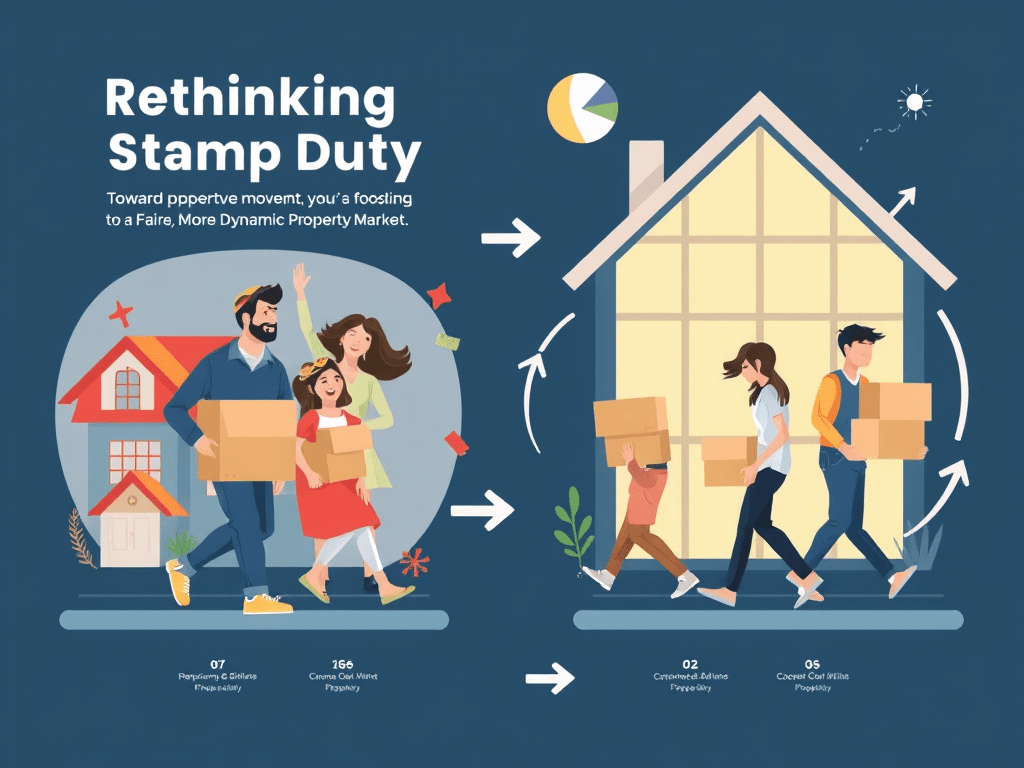
    • Rethinking Stamp Duty: A Pathway to a More Dynamic Property Market

      Rethinking Stamp Duty: A Pathway to a More Dynamic Property Market

      Examining Proposed Reforms and Offering a Practical Alternative

      Introduction

      Stamp Duty has long been a controversial fixture in the UK’s housing landscape, provoking debate among policymakers, economists, and homeowners alike. Recent discussions, spurred by think tanks such as Onward, have reignited calls for reform, with some proposals hinting at a radical overhaul of how property transactions are taxed. However, many of these suggestions remain shrouded in ambiguity, leaving homeowners and prospective buyers uncertain about the potential impact on their financial futures.

      This article aims to cut through the prevailing haze, scrutinise the details where available, and offer a reasoned alternative that could invigorate the UK’s property market, making it more accessible and dynamic for all.

      Current Proposals: Clarity or Confusion?

      The Onward think tank, among others, has floated the idea of replacing the current Stamp Duty regime with a national proportional property tax, applicable to homes valued above £500,000. The rationale, they claim, is that such a change would “liberate” properties in the £250,000 to £500,000 bracket, presumably by reducing transactional friction and encouraging mobility within this critical segment of the market.

      Yet, a close look at these recommendations reveals an inherent vagueness. The specifics—how the proportional tax would be calculated, its administration, and the actual financial burden on different categories of homeowners—remain largely undefined. This makes it virtually impossible for individuals to gauge how the reforms would affect their own circumstances. If the goal is transparency and empowerment, then the current discourse falls short.

      The Persistent Blocker: The £500,000 Threshold

      One of the central flaws in the proposed system arises from the creation of a new threshold at £500,000. Far from removing market blockages, it merely shifts them. Imagine a homeowner wishing to move from a £450,000 property to one worth £550,000. Under the new regime, the £500,000 benchmark would act as a disincentive for those looking to trade up, as the leap in tax liability could be substantial. Homeowners with properties above £500,000 might be reluctant to sell, causing stagnation at the upper end of the market, much as the current Stamp Duty framework does at similar price points.

      This phenomenon is not merely theoretical. The property ladder—a term evoking the notion of gradual progression up the housing hierarchy—depends on the existence of manageable steps. When rungs are removed or made insurmountable by punitive taxation, mobility diminishes, trapping homeowners in properties that no longer suit their needs.

      The Case for Reform: Transaction Data and Market Realities

      Data cited by Onward, sourced from HM Revenue and Customs, paints a stark picture: for homes valued over £250,000, the average period between sales is now over 26 years. This lengthy tenure is indicative of a market where the cost of moving—primarily attributable to Stamp Duty—acts as a formidable deterrent. Rather than facilitating the fluid exchange of homes, the tax regime stifles activity, leading to inefficiencies and missed economic opportunities.

      It is not surprising, then, that households are reluctant to relocate every few years, especially when faced with the prospect of paying tens of thousands of pounds in tax simply for the privilege of moving. The result is a market characterised by inertia, with homeowners waiting decades to make a move that, under a more rational system, might occur far more frequently.

      A Fairer Alternative: Taxing the Difference

      Faced with this reality, it is worth considering an approach rooted in fairness and practicality. Rather than imposing a blanket charge on the entire value of the property being purchased, why not levy Stamp Duty solely on the difference between the sale price of the old home and the purchase price of the new one?

      For instance, suppose you sell your home for £450,000 and buy another for £550,000. Under this system, you would be liable for Stamp Duty only on the £100,000 difference, rather than on the full value of the new property. Such a proposal would free up the steps on the property ladder, allowing homeowners to move as their circumstances change—whether due to career shifts, family needs, or a desire to downsize—without incurring a prohibitive tax bill.

      Furthermore, for those moving to a similar level or downsizing, the financial burden would be minimised, perhaps reduced to a nominal fee of £2,500. This would ensure that only those genuinely “trading up” pay a proportionate tax, while others benefit from increased flexibility and reduced costs.

      Unlocking Market Mobility

      The principle here is simple: a system that encourages frequent, manageable transactions is preferable to one that penalises mobility and rewards inactivity. If Stamp Duty were calculated on the difference in price, more people would be able to move more often, invigorating the market and enabling the property ladder to function as intended.

      It is also likely that such a shift would result in increased overall revenue for the government. Rather than relying on large, sporadic payments from a handful of households, the tax base would be broadened, capturing smaller amounts from a larger pool of transactions. This is the essence of a healthy market: steady, sustainable activity rather than isolated windfalls.

      Real-Life Implications: The Downsizer’s Dilemma

      Consider the situation of homeowners whose children have left home, prompting a desire to relocate to a more suitable property, perhaps in a quieter area further from schools. Under the current regime, a move could trigger a Stamp Duty bill of £20,000 or more—a sum that many find impossible to justify. The result is a mismatch between housing needs and actual occupancy, with family homes kept by couples or individuals long after their utility has passed.

      A reformed system would make such transitions far more feasible, allowing people to downsize or move to properties better suited to their evolving needs without incurring a financial penalty. This would also help address broader issues of housing availability, as larger homes would be freed up for families who genuinely require them.

      The Virtue of Proportionality: More Transactions, More Revenue

      From an economic perspective, the proposal has further merit. The experience of other markets demonstrates that a “lesser amount from more people” can, over time, yield greater revenue than relying on “a larger amount from a few.” By removing the punitive aspects of Stamp Duty, the government could foster a culture of mobility, leading to more frequent sales, greater economic activity, and, ultimately, a more vibrant housing market.

      Conclusion: The Way Forward

      Stamp Duty, in its current form, acts as a drag on the UK property market, preventing homeowners from moving as their needs change and locking up valuable housing stock. While the proposals from think tanks such as Onward contain laudable intentions, their lack of clarity and reliance on arbitrary thresholds risk perpetuating the very problems they seek to solve.

      A system based on taxing the price difference between old and new properties offers a fairer, more flexible solution. It preserves the integrity of the property ladder, reduces barriers to movement, and stands to generate sustainable revenue through increased transaction frequency. For policymakers, the choice is clear: if the goal is to liberate the housing market, the pathway lies not in shifting blockages, but in removing them altogether.

      Ultimately, a reimagined Stamp Duty regime—simple, proportionate, and sensitive to the realities of homeowners’ lives—could be the key to unlocking a more mobile, equitable, and prosperous housing market for all.


      Leave a comment

    • Reforming the House of Lords: Towards a Fairer and More Representative System- #House of lords, #Reform

      Reforming the House of Lords: Towards a Fairer and More Representative System- #House of lords, #Reform

      Evaluating the Current Structure and Proposing Proportional Representation for the Upper Chamber

      The House of Lords, as the United Kingdom’s unelected upper chamber, continuously finds itself at the centre of debates surrounding democracy, fairness, and representation. Recent calls, such as those by Nigel Farage for the inclusion of peers from minor parties, have reignited conversations about the legitimacy and composition of the Lords. With the current make-up reflecting historical patterns more than present-day electoral realities, questions arise about whether the system adequately serves the modern British populace.

      The Current Composition of the House of Lords

      At present, the House of Lords comprises approximately 830 members, distributed as follows:

      • Conservative: 285
      • Labour: 209
      • Crossbench: 181
      • Liberal Democrat: 76
      • Other: 79

      This structure is a byproduct of centuries of political evolution, with life peers, hereditary peers, and bishops all contributing to a complex tapestry of backgrounds and allegiances. However, the figures above highlight a significant imbalance. The numbers of Lords affiliated with major parties do not reflect recent election results or the popular vote, but are instead the outcome of decades of appointments, retirements, and the gradual reforms that have shaped the chamber.

      Is the System Fair?

      To answer whether the House of Lords is fair, one must first define what fairness in political representation means. In a representative democracy, fairness is often equated with proportionality—the idea that the distribution of seats should, in some way, mirror the distribution of public support as expressed in elections. By this benchmark, the House of Lords falls short.

      The Lords is not elected; its members are appointed, inherit their positions, or serve ex officio. This system has preserved valuable expertise and independence, especially among crossbenchers, but it also means that party-political appointees can entrench the dominance of established parties regardless of changes in public opinion. The current composition, therefore, is heavily skewed by historical results and does not adapt dynamically to the shifting political landscape.

      While Labour currently enjoys a substantial majority in the House of Commons, twice as many people in the last general election voted for other parties than for Labour. Yet, Labour’s dominance is cemented by first past the post election result  and does not accurately represent the current political preferences of the nation.

      Disconnection from the Popular Vote

      One of the most glaring issues with the House of Lords is its disconnection from the popular vote. The 2019 General Election saw the following approximate percentages:

      • Labour: 33.7%
      • Conservative: 23.7%
      • Reform (including Brexit Party): 14.29%
      • Liberal Democrat: 12.22%
      • Others (Green, SNP, Sinn Féin, etc.): 16.9%

      The Lords’ current makeup does not reflect these numbers in any meaningful way. For instance, minor parties such as the Reform, Greens and SNP have a negligible presence, despite receiving millions of votes nationally. This lack of proportionality is not only unfair to voters who support smaller parties but also undermines the diversity of perspectives necessary for thorough scrutiny and debate.

      The First Past the Post Shortcomings

      The UK’s First Past the Post electoral system already tends to exaggerate the dominance of the two main parties in the House of Commons. Applying a similar “winner-takes-all” logic to the appointment of Lords compounds this distortion. As it stands, a party can receive a plurality of votes and yet command a disproportionate influence in both chambers. The Lords, far from acting as a corrective or counterbalance, ends up reinforcing the inequities found in the Commons.

      Moreover, the presence of hereditary peers and life appointments means that the chamber evolves only slowly, if at all, in response to public sentiment. This inertia can breed disengagement and cynicism among voters, who may feel that their views are not just under-represented in government but ignored altogether.

      A Proposal for Proportional Representation in the Lords

      To realign the House of Lords with the principles of fairness and democracy, a radical reimagining is required. One solution would be to allocate seats in the Lords according to the proportion of the popular vote each party receives in the most recent general election. Under this model, appointments would be distributed as follows:

      • Labour: 33.7%
      • Conservative: 23.7%
      • Reform: 14.29%
      • Liberal Democrat: 12.22%
      • Other: 16.9%

      If the total number of Lords were reduced from 830 to 500, the seat allocation would be:

      • Labour: 169
      • Conservative: 119
      • Reform: 71
      • Liberal Democrat: 61
      • Other: 80

      In this scenario, each party leader would be responsible for appointing individuals to fill their party’s share of seats, following the result of each general election. This would ensure that the House of Lords reflects the current political climate and the electorate’s true preferences.

      Advantages of Proportional Representation

      Adopting proportional representation for the House of Lords offers several key benefits:

      • Enhanced Legitimacy: The Lords would finally gain a clear democratic mandate, improving public trust in its role and recommendations.
      • Diversity of Thought: Smaller parties and minority viewpoints would be guaranteed a voice, enriching debates and policy scrutiny.
      • Checks and Balances: The chamber could better hold the government to account, preventing dominance by a single party and ensuring robust challenge to ill-considered legislation.
      • Cost Savings: Reducing the number of peers from 830 to 500 would significantly cut the cost of the Lords—making it more efficient and less burdensome for taxpayers.
      • Dynamic Adaptation: By reassessing appointments after each election, the House would remain contemporary and responsive to shifts in public opinion.

      -Addressing Potential Criticisms

      Some critics may argue that proportional representation would turn the Lords into a “mini-Commons,” undermining its distinctiveness as a revising chamber. However, this can be mitigated by maintaining a proportion of crossbenchers or independent members, selected through an open and transparent process to bring in expertise from outside party politics.

      Others may worry that party leaders would simply stack the Lords with loyalists. To counteract this, an independent appointments commission could vet all nominees to ensure they meet standards of integrity, expertise, and independence of thought.

      Finally, the tradition-minded may mourn the loss of an ancient institution. Yet, the House of Lords has evolved many times over the centuries—from a bastion of hereditary privilege to a more modern, if imperfect, assembly. Reforming its composition would represent another step in its long adaptation to the needs of the British people.

      Advertisements

      Conclusion

      The House of Lords as currently constituted is a relic of a political past that no longer serves the needs of the United Kingdom. Moving towards proportional representation, reducing the overall number of peers, and empowering all segments of society to have a voice would bring the Lords closer in line with the democratic ideals it is meant to serve.

      Such reform would not only enhance the legitimacy and effectiveness of the Lords but would also ensure that no single party could dominate with just a minority of the vote—a flaw that currently undermines the very purpose of the upper chamber. As the country continues to grapple with questions of constitutional reform, the time is ripe for a bold, principled, and representative House of Lords: one that reflects the will of the people and the full spectrum of British society.

      Leave a comment

    • 280 migrants arrested, only 89 to be deported! Why?

      280 migrants arrested, only 89 to be deported! Why?

      I read today in the Daily Express that 280 migrants have been arrested in food delivery rider raids.

      About time something is started but that is not enough. The post goes onto say that 89 of these are set to be kicked out of the UK and that 59 may (I repeat may) lose their tax funded accommodation and support payment. The above really does not deal with the issues in any depth. Another sticking plaster.

      Advertisements

      Firstly, only deporting 89, They have come over here illegally and are working illegally. They have clearly committed 2 offences. 

      In another article on the same page, regarding the protester outside hotels, the government has been quoted as saying, we will never tolerate unlawful or violent behaviour. Whilst I agree with this, it is abundantly clear from the above that the government would and does tolerate unlawful behaviour, otherwise 280 migrants arrested would be deported.

      I have a saying that i use often,

      if you are going to have standards, make sure you have at least 2. (this is meant to be a joke but seems like the politicians consider it a rule)

      The next point is the removal of tax funded accommodation and support payment, what a pointless policy. If the government does this, what will the migrants do?  They will turn to crime.

      So what would I do

      It seems straight forward to me, as they have already committed 2 offences, they should be deported forthwith. We should have a fast-track process / court to deal with this. As the government said, we should not tolerate unlawful behaviour.

      Advertisements

      The illegal migrant issue is only getting worse, the country does not have the space to take all these migrants, approx. 1 million last year. There is not enough housing, the NHS does not have the capacity etc. The government finances (My taxes) cannot support the situation. As for the crimes that are being committed, you only need to have a look at the statistic (and understand them) and you should be extremely concerned.

      Leave a comment

    • April 2025 Employers’ National Insurance Changes: A Critical Analysis and Alternative Approach

      April 2025 Employers’ National Insurance Changes: A Critical Analysis and Alternative Approach

      How the Latest NI Reforms May Undermine Economic Growth, and What Should Be Done Instead

      Introduction

      From April 2025, UK employers face a significant shake-up in their National Insurance (NI) obligations. The government’s new policy will see the employer NI rate rise from 13.8% to 15%, while the threshold for employer contributions drops from £9,100 to £5,000 per year. This change, introduced despite pre-election assurances from the Labour Party against NI hikes, has sparked debates across the business and economic landscape. In this blog, I will critically examine the impact of these reforms, explore the projected financial implications, and offer an alternative path forward—one that better supports employment and economic expansion.

      The Policy Change: What’s Actually Happening?

      The two-pronged NI reform includes:

      • An increase in the employer’s NI rate from 13.8% to 15%—raising the cost for every pound earned above the threshold.
      • A dramatic reduction in the threshold at which employers begin to pay NI, from £9,100 to £5,000 per year—meaning many more jobs will now attract employer NI contributions.

      These measures will affect virtually every UK business, from small enterprises already struggling with rising costs, to larger firms with substantial payrolls. For many employers, this represents a double hit: higher rates, and a wider base of employee earnings subject to NI. The government’s stated aim is to boost Treasury revenue, but at what cost?

      Advertisements

      Promises Made and Broken: The Political Context

      It is impossible to ignore the political context surrounding these changes. Before the last general election, the Labour Party repeatedly promised not to increase National Insurance. Yet, the government has now implemented a policy that could be interpreted as a stealth tax on employment itself.

      Some will argue that the state needs revenue to fund public services, particularly in a time of fiscal pressure. Yet the method and timing of this change have raised alarms—not least because the increased burden falls squarely on the shoulders of employers, potentially undermining job creation and business growth at the very moment when the economy most needs them.

      Financial Impact: Where Will the Money Go?

      The government estimates the NI reform will raise between £23.8 and £25.7 billion over five years. However, this headline number requires a closer look. After accounting for the increased cost of public sector employer contributions—effectively money moving from one government pocket to another—the net revenue gain drops to between £19.1 and £20.6 billion over five years.

      But the story doesn’t end there. The rise in employer NI contributions will reduce company profits, which in turn means less corporation tax will be paid—potentially reducing government tax revenue by a further £5 billion over the same period. The real net gain, therefore, may be closer to £15 billion over five years, or just £3 billion per year.

      Is this the economic boost the government claims, or a short-sighted grab that risks long-term damage?

      The Cost to Business: Jobs and Investment at Stake

      By making it more expensive to employ staff, especially lower-paid workers, these changes could force many businesses to freeze hiring, cut jobs, or even reduce wages. At a time when the UK already faces significant economic headwinds—high inflation, flatlining productivity, and global competition—this policy risks compounding, rather than resolving, existing problems.

      Let’s put the numbers into perspective:

      • Reversing the NI changes would leave £4 billion with businesses—capital that could be used for investment, wage growth, or job creation.
      • This reversal could, by some estimates, save or create up to 160,000 jobs at an average salary of £25,000 per year.
      • Each of these jobs would bring in an estimated £3,977 per person per year in additional tax and NI, equating to £636 million annually.
      • Lower unemployment would reduce benefit payments by around £320 million, and increased consumer spending would generate another £160 million from VAT and other taxes.

      These calculations suggest that supporting business growth could deliver greater tax revenue, lower welfare costs, and stronger economic performance than a blunt NI hike.

      Unemployment and Economic Opportunity

      The UK has around 11 million people aged 16 to 64 not in work, including 1.6 million officially unemployed (about 4.4%). Policies should incentivise businesses to hire, not put up barriers. If employment could be nudged up—reducing the unemployment rate from 4.4% to 4%—this could create another 160,000 jobs and generate a further £1.1 billion for the Treasury.

      Instead, by increasing the tax on employment, the government is risking higher joblessness and missed opportunities for economic inclusion, particularly in sectors that already face labour shortages, such as construction.

      Advertisements

      Skills, Construction, and the Jobs of Tomorrow

      Where would new jobs come from if government policy encouraged, rather than discouraged, hiring? Construction is a prime example. The UK is facing a shortfall of skilled tradespeople, and ambitious targets—such as building 1.5 million new homes in five years—depend on training new workers and supporting apprenticeships.

      Yet, current policy seems at odds with these aims. Instead of investing in technical colleges and training, the government risks closing education facilities or failing to provide the infrastructure needed for workforce development.

      Employers need certainty and incentives to invest in people, not new taxes on every additional job.

      Alternative Approaches: Raising Revenue the Right Way

      If the aim is to raise government revenue, there are more balanced and honest methods than bluntly increasing employer NI. My alternative proposal would be:

      • Reversing the employer NI increase, keeping rates at 2024/25 levels—releasing £4 billion annually back into business.
      • Recognising that businesses seek growth, not simply profit, and that economic expansion itself will widen the tax base.
      • Incrementally improving tax revenue through job creation, reduced unemployment benefits, and higher consumer spending.
      • If further revenue is needed, modestly increase Employee NI for higher earners (for example, increasing rates from 2% to 4% on earnings above £50,000).

      Such a targeted approach would reverse the blanket NI reduction offered by the previous government. While it would mean higher contributions for those earning over £100,000, it would avoid penalising job creation and support a more progressive tax structure.

      The Smoke and Mirrors of Tax Politics

      Recent years have seen headline cuts to Employee NI—from 12%, to 10%, to 8%—with little change to personal allowances. Politicians have trumpeted tax cuts while allowing fiscal drag and stealth taxes to do much of the heavy lifting. It is time for greater transparency and honesty with the electorate.

      The reality is that everyone may have benefited from lower NI rates, but the distribution was regressive: the highest earners saved most, and the gap between rich and poor has widened. Asking higher earners to pay a little more, while supporting employment for all, is fairer and more economically sound.

      Summary and Conclusion

      In summary, if it were up to me, I would:

      • Reverse the Employers NI changes to encourage more hiring and job creation.
      • Raise Employee NI on higher earners, essentially reversing the previous government’s NI reductions for those on over £50,000 per year, so that only those earning over £100,000 are worse off than in 2023/24.
      • This approach could add £3-4 billion to government revenue and support the creation of up to 320,000 new jobs.

      Economic history shows that growth, not punitive taxation, is the best way to fund public services and support prosperity. The government should prioritise policies that incentivise employment, invest in skills, and create opportunities—rather than resorting to measures that risk stalling the recovery and undermining the UK’s long-term economic health.

      The debate over National Insurance is more than a technical tax discussion; it is about the future of the UK’s economy, the fate of millions of workers, and the principles of fairness and honesty in public policy. Let us hope that policymakers choose the path of growth, opportunity, and transparency in the years ahead.

      Leave a comment

    • Call me a Cynic – One in, One Out Migration Policy

      Call me a Cynic – One in, One Out Migration Policy

      Highlighting a Critical Flaw in the UK Government’s One-In, One-Out Migration Policy

      The Unintended Consequence of Repeated Channel Crossings

      The UK government’s “one in, one out” migration policy has been presented as a balanced approach to controlling immigration, aiming to deter unauthorized arrivals by stipulating that for each migrant arriving by irregular means – such as crossing the Channel – another will be deported, and in their place, the UK will take a migrant from a designated safe country. While this approach might, at first glance, appear to be a pragmatic solution, it contains a significant and problematic loophole that undermines its intended purpose.

      The Issue of Recurring Channel Crossings

      One of the fundamental flaws lies in the policy’s inability to address repeat attempts by the same individuals. Under the current framework, a migrant who is intercepted crossing the Channel is subject to deportation under the one in, one out scheme. However, once deported, there is little to prevent that individual from attempting to cross again. If they succeed, they once more qualify for deportation, and the cycle repeats.

      Each instance is treated as a separate “in”, and so the UK agrees to take another individual from abroad in exchange. In effect, a single determined migrant could, through multiple crossings and subsequent removals, trigger the acceptance of several other migrants into the UK – all while the original individual continues to reattempt entry.

      A Policy That Multiplies, Rather Than Resolves, the Problem

      The main intention behind the one in, one out policy is to create a disincentive for irregular migration and to keep numbers controlled. However, by allowing the same person to be counted multiple times, the policy risks inflating the number of migrants accepted into the UK in exchange for a single individual’s repeated actions. Instead of dealing with “one migrant, one solution”, the net result is a multiplication of arrivals.

      This loophole could be exploited not just by individuals, but by smuggling networks, who may encourage repeat attempts knowing that each new crossing has broader implications on accepted numbers. The UK’s willingness to take new arrivals in exchange for every individual intercepted, without addressing repeat offenders, creates a perverse incentive: the more times an individual tries, the more people are ultimately granted entry.

      So What would I do

      I would abandon this policy of one in, one out.

      We need a policy  that covers all aspects of Illegal Immigration, including specialised detention, clear rules on immediate deportation, specialist courts for quick processing of those working illegally or immigrants caught carrying out criminal offences.

      We need robust and quick deportation rules for immigrants that break our laws, with no appeal. If they are in our country, they should obey our laws.

      I believe which ever political party comes up with the most robust policy for the next election will win the next election. I know who is winning this one at the moment!

      Leave a comment

    • Solutions for Migrant Accommodation: Lessons from the Past

      Solutions for Migrant Accommodation: Lessons from the Past

      I talked about what i would do regarding illegal migrant accommodation in my last post.

      I came across a Vlog on Threads today by “bruceunfiltered” that highlighted this in detail.

      “Has everyone forgotten what we did 5 years ago. They actually built a 4000 bed hospital inside an exhibition centre in just 9 days. Military led, warehouse converted fully functional , no excuses.”

      Britain has 14 million sq feet of warehouse space so we have the capacity. As for the quality, if it was good enough for the our sick and elderly, it will be good enough for illegal immigrants,

      We should only provide adequate, not a luxury hotel.

      Check out whole Vlog on threads bruceunfiltered

      https://www.threads.com/@bruceunfiltered/post/DMsHkuSI04j?xmt=AQF0kJvOz9q_o9s-TKYy7mMgXBLz-OB0Une0-e_FxtmsBA

        Leave a comment

      • The Cost of Illegal Immigration to the British Taxpayer

        The Cost of Illegal Immigration to the British Taxpayer

        An Overview of Financial Impact and Migrant Numbers

        Introduction

        Illegal immigration has become a significant point of discussion within the United Kingdom, with concerns about its financial impact on public services and government budgets. This report aims to provide a clear overview of the estimated costs to the British taxpayer, specifically focusing on hotel accommodation, social benefits, NHS expenditure, and the scale of illegal immigration in recent years.

        Understanding Illegal Immigration

        Illegal immigration refers to the act of entering or residing in the UK without legal permission, which can encompass individuals who overstay their visas, enter clandestinely, or seek asylum but remain after a failed application. This group is distinct from those who arrive through legal migration channels or who have formal refugee status.

        Costs of Hotel Accommodation

        One of the most visible costs associated with illegal and asylum-related migration in recent years has been the use of hotels to house migrants awaiting resolution of their status. Due to a shortage of suitable accommodation and delays in processing, many individuals have been placed in hotels at significant cost.

        • It is estimated has reported that the cost of housing asylum seekers (which includes both legal and those with unresolved status) in hotels has reached over £8 million per day as of 2025.
        • This equates to roughly £2.84 billion per year spent on hotel accommodation alone.

        Benefits and Public Assistance

        Generally, illegal immigrants are not eligible for mainstream public benefits such as Universal Credit, housing benefit, or child benefit. However, those with pending asylum claims may receive a subsistence allowance and accommodation through the asylum support system.

        • Asylum seekers who are awaiting a decision are provided with basic support, amounting to around £45 per week per person, on top of accommodation.  Additional cost to taxpayer over £1Billion per year.
        • For those without recourse to public funds, only emergency assistance or support for children may be provided.
        • The overall expenditure on such support has increased in recent years, largely due to the rise in case backlogs.

        NHS Costs

        Healthcare costs related to illegal immigration are difficult to calculate precisely, as emergency care is provided to all individuals in the UK regardless of status, while non-urgent care is chargeable for undocumented migrants. However, enforcement of these charges is inconsistent, and some costs fall onto the NHS.

        • Estimates of the cost of NHS care for all visitors and temporary migrants (including illegal immigrants) are in the range of £300–£400 million per year, though only a portion of this is directly attributable to people without legal status.
        • Emergency care, maternity, and certain infectious disease treatments are provided free of charge to protect public health.

        Numbers of Illegal Immigrants

        Accurately quantifying the number of illegal immigrants is inherently challenging due to the nature of their status. However, several estimates and government data points exist.

        • In 2019, the Pew Research Center estimated there were between 800,000 and 1.2 million undocumented migrants living in the UK.
        • Since 2018, the number of people arriving in the UK by small boats across the English Channel has increased each year. In 2022 alone, over 45,000 people crossed in small boats.
        • Cumulatively, it is estimated that over 175,000 people have arrived via small boats since 2018.

        Asylum Grants

        The number of people granted asylum fluctuates each year, depending on application rates and government policy.

        • Over the past five years, approximately 80,000 individuals have been granted asylum or humanitarian protection in the UK.

        Illegal Migrants Working

        There is plenty of evidence that many illegal Migrants are working as fast food delivery riders. In this situation, not only are they not paying taxes, they are taking employment away from someone else.

        Summary

        • Hotel accommodation for migrants now costs the UK taxpayer over £4 billion per year.
        • Direct benefit payments to illegal immigrants are limited, but support for asylum seekers does represent a notable public expense, at least £1 Billion.
        • NHS expenditures for undocumented migrants are hard to pinpoint, but total costs for all visitors and temporary migrants is around £0.5 Billion annually.
        • The number of illegal immigrants in the UK is estimated to be between 800,000 and 1.2 million, that is over 1.5% of the population.  More significantly, that is 2.7% of the working age population.
        •  Small boat arrivals have surpassed 175,000 since 2018.
        • Over 80,000 people have been granted asylum in the last five years.

        Conclusion

        The country cannot continue to support the illegal migrants as it currently does. I should be remembered the word “illegal” ,these people should not be here. We should not tolerate illegal, let alone support it. The cost is at least £5 billion and is continuing to grow with the increase in migrants.

        So What would I do

        Well, we never tried Rwanda, so that is where I would start (or something similar). Any illegal immigrant would have a choice: return home or go to Rwanda for assessment. As they have come here illegally, they will not have permission to stay, so it’s straight to the airport.

        Illegal Immigrants would not be put up in Hotels.  I would utilise empty warehouses, or even build purpose made warehouse that could be equipped with basic facilities. I can already hear people commenting but this would be far better than the shanty town camp site we have seen in Europe / Calais. We should be providing “adequate”, not very comfortable hotels.

        Any companies employing “illegal” immigrants will be fined £10,000 for each occurrence, however it is caused. This should never happen, but it is clear the correct checks are not being done. There will be a fast track court to deal with this that will run 7 days per week with a simple threshold for guilt, have they worked without permission and has the company paid them. Furthermore, those who have been caught of illegal working are deported.

        The UK currently only spent £2 billion on border force. I would double this to provide a significant number of additional officers and administration. The Border force powers will be enhanced so that they can work closely with the police and have the same powers (arrest, search and seizure) but directed towards illegal immigration.

        Where would I get the money from? Well, I have come up with ways to save money in my other blogs but in this case, this will be an investment that will after a period of time, be offset by the saving in the illegal immigration cost.

        These actions may appear harsh to some, but we should not tolerate any illegal activity from foreign nationals, If you do not want to comply with the UK Laws, do not bother coming.

        France’s  President Macron  made a comment  that basically said the UK was a “soft touch.”. He is right and the government needs to deal with this. However, I have no confidence that this Labour government has the ability to take action.  So, we wait for another 4 years of matters getting worse causing the country to become more divided than ever.

        There is so much more that can be said on the subject and  I am sure further comments will be made in future.

          Leave a comment

        • Stamp duty on Housing is restricting the Housing Market in the UK

          I consider the biggest hinderance to the housing market is the middle band of stamp duty between £250 and £925k.

          Using myself as an example, I am lucky enough to have a nice 4 Bed house in a nice area in Cheshire. It is a good Neighbourhood with good schools, close motorways, train stations and airports. Ideal when you have a young family.

          The approx. value of this house is £550 to £600k

          Now, I have considered moving to a different part of the country, perhaps downsizing in terms of size but have a bigger garden, larger garage etc

          However, if I looked at a £600k house, it would cost me £20,000

          And if I chose to move further south closer to my grown-up family, where house prices are more expensive, the stamp duty increases significantly.  

          So, I and many of my generation,  who moved to an area of good schools 20 years ago, have now become a blocker to younger families who want to live in the area and are unable to do so as there are not enough houses on the market.

          The consequence are: –

          • that there are less children in the local schools residing in the local village. (I say village but with 7500 residents).  More children must travel. The consequence of which are children do not walking to school (health benefits) and more traffic.
          • there is a shortage of houses in areas they are needed
          • there is less tax revenue as less people moving.
          • less stimulus in the housing market and associated trades
          • the tax man gets no money out of me as I do not move.

          It can be seen from the statistics that the revenue on Stamp Duty has fallen from £11.7Bn in 2022/23 to £8.57Bn in 2023/24 and the number of house moves have fallen from 1.06 million to 0.872million over the same period. So we can see, the trend is down causing more of a shortage in the housing market.

          So. what would I do if it was up 2 me, I have 2 ideas.

          Option 1 – Changes to Stamp Duty Rates

          Any House between £150k and £1million would be subject to a 2.0 % levy. If the market stayed the same as 2023/44, this would reduce the tax take by 2.5Bn.

          However, I consider this will stimulate the market and increase the number of transactions. If this only increase to 2021 / 22 levels, there will be an increase the  number of transactions by 39% in the  under £1m price bracket.(yes that is the amount it has fallen in 2 years , number of transactions have fallen to 845,000 from 1,175,000)

          So, on the basis of this will stimulate the housing market in third and fourth time buyers sector, and the levels only reach 2021/22 levels, the tax take would be £3.552Bn, a shortfall of £1.167 Bn.

          In addition to the above, house prices have increased by 6% over the last 2 years  so the revenue will increase by £0.2Bn for houses under £1m and by 0.23Bn for those over £1m

          This gives  a total receipt of £4.0 Bn

          So, in theory, I am costing the country £ 0.7Bn. How am I going to pay for this.

          The government has promised 1.5 million new homes over 5 years which equates to 300,000 per year which would cover the 0.7Bn shortfall.

          So the above, in my opinion would be revenue neutral as it would stimulate the housing market sufficiently to offset the lowering of taxes.

          Option 2 – Pay on the difference

          This is the option I would prefer, and I think it is the fairest.

          The basis is that you only pay a %age on the difference in house value, so that you only  pay on the increase.

          If you sell your house for £400k and buy for £550k, you pay on the difference of £150k. I do not have any data on the difference, so I have just made an assessment.

          So based upon 1.2m transactions, that would generate at 5%, £9.3 Billion, more that recovered in 2023/24.

          The additional benefits of stimulating the housing market will be felt across all the building trades, from plumbing, extensions, patios, conservatories DIY etc as more and more people will want to improve their new homes. This will create more jobs and greater tax revenue.

          Leave a comment

        • Why the UK Should Scrap the Pension Triple Lock.

          THE TRIPLE LOCK

          As many people are aware, the UK state pension increases by either, CPI, earnings or 2.5% minimum. This is great for the pensioner, and I will benefit from this when I get to 67. However, I am not sure that people understand how unfair it is on the younger, working age people who are going to get increasing levels of taxation imposed on them to cover the costs.

          Since the triple lock was introduced (2011), the state pension has increased by 80% whilst inflation has only increase by 55%.  Average earnings has increased by 58.8% just keeping ahead of inflation.

          So, all those below the state retirement age have been paying a higher and higher proportion of their wages / taxes to cover someone else’s state pension.

          In fact, if the triple lock continues, the state pension would continue to increase at a higher rate than peoples wages until such time, it becomes impossible to continue due to the size of the black hole in the government’s finances. Things have to change.

          To understand the scale of the problem, in 2025-26, the UK government is projected to spend approximately £145.6 billion  on the state pension which equates to £5100 per household per year.

          If the increase had been based upon inflation (CPI) alone, the government spending on the state pension would have been about £20 billion less per year.

          Over the period of time that the triple lock has been place, I estimate the triple lock has cost the country £120 billion extra (2011 to 2025) than it would have cost, had it been calculated by inflation alone.

          The problem is only getting bigger.

          The projected number of those of pensionable age in the UK will increase from the current 13.4 million to 15.6 million in 10 years, which in today’s terms will increase the bill by £26.34 billion (2.2 million x £11,973 per year)

          If the level of pension is increase over the next 10 years at the same level of the last 10 years, that will be an increase the cost of the state pension by a further £74 billion resulting in a total annual cost in 2035 of £245 billion.

          The country cannot afford this level of triple lock increase that, on average, is always going to be more than wages.

          Don’t get me wrong, I do not want the old and vulnerable to be without food and heat. (Winter fuel allowance to be covered on separate Blog) but many pensioners have other private / company pensions, meaning they are not living on state pension alone.

          The average personal pension size of someone in their 60’S is £190k which if taking an annuity at 67 would produce and income of over £15k (single life level no guarantee) That is not an insignificant amount, yet they are being increasingly supported by those who are working.

          It is reported that currently, 70% of pensioners receive income from private pensions.  This percentage is increasing due to auto-enrollment in pension schemes which means that, only 7% of those under 35 will relying on state pension alone. This gives ample opportunity   and time (42 years) to reduce this percentage.

          The other problem with the triple lock happened for the 2 years 2023/24 and 2034/25.

          In 2023/24, the pension was adjusted by 10.1% as it was higher than the wage increase of 5.54%. However, the year later, wage rises rose by 8.5%, basically because wages were increased due to the effects of inflation the previous year. —

          So the pension had the effect of the inflation of 2023/24 in both years. None of the political parties wanted to rock the boat as an election was coming up  and did not want to address the situation.

          My solution

          • Scrap the triple lock and just link State Pension Increases to Inflation. This should keep the status quo for pensioners so that they are no better or worse off due to inflation.
            • This would save £34 billion per year (in the year 2034/35) if the increase was based upon what happened over the last 10 years with a total saving over 10 years of £190 billion.
            • I hear in my head all those critics that say, well the last 10 years have been exceptional, due to covid and the effects of the Ukraine war on fuel costs, which I am inclined to agree with.
            • I estimate that if we exclude the extreme triple lock adjustment years, the saving would still be £18 billion or £79 billion over 10 years. The pensioners will still get increase covering inflation / cost of living so that they are no worse or better off. If they wish to be better off, they need to do that as an individual by having a job or making provision before retirement, as 70% of people already do and 93% of under 35’s do.
          • Do not allow opt out of Private Pension.
          • Self employed required to make pension provision and this must be detailed on annual tax return.
          • The pensions credit system remains as is, allowing a top up to pensions for those who fall short. Overtime as more people retire with some form of Personal Pension, the cost of this will fall.
          • Use some of this money to reinstate the Winter Fuel Payment to those whose income is below a certain level. Those high earning pensioners do not need it and should be excluded (A separate Blog on this subject will be done in due course) This would cost a max of £1,889 billion of the saving (£2.2 billion(2024 cost) minus 0.311 billion(2025 cost)

          Conclusion

          • All the Major parties should get together and agree on the removal of the Triple lock. However, I fear none of them have the bottle and there will always be one who will pledge to keep it on the hope it will get them into power.
          • However, I think if this is all explained in detail why we cannot continue, the vast majority of the pensioners will understand, after all, those with private pensions have all benefited from the tax breaks that have helped build up their pension pots.

        • Finding Solutions to Political Issues in Britain

          Finding Solutions to Political Issues in Britain

          Having retired (early), I have more time on my hands to get annoyed at the news and politicians. (becoming a grumpy old man).

          I hear comments on the radio from people that just want to criticise with very few coming up with practical solutions that could work.

          As for the politicians, they just say the opposite of the others and I think their conduct on many occasions is poor and rude. These politicians should be held to the highest of standards but all too often, they fall short.

          Advertisements

          I have been waiting to see what Reform would have to say, given their increase in popularity. My concern is that they are slipping into the same old roll of telling the public what they want to here, without a credible financial plan on how this can be achieved. This week there was talk of increasing the personal tax allowance to £20k. Whilst we would all welcome it, where will the money come from and by when. We cannot complain about public services if we are not prepared to pay our taxes.

          Labour, with their large majority have made several major blunders including Winter fuel allowance, Employees NI and Inheritance tax on pensions and farms (I am not sure many people appreciate the consequences of this). Yes,they needed to control the spend and try and balance the budget, but I thinks they have gone about it the wrong way. I do not think the public will forgive them.

          As for the Conservatives, not sure what to say, they are in a state of flux, without identity and clear direction.

          The LibDems, they should sit in the centre, but they seem too bland.

          What we need is a party that will sit in the centre and take policies from both sides as it sees fit, but all the parties are too stuck in their ways. I wonder if any of the Parties have the capability to adapt over the coming years to put the “Great” back in Britain.

          Advertisements

          So, my Blog is to take some of the problems issues we have as a country and come up with workable solutions, I intend to explain my logic and as best i can have the financial basis for my proposals.

          The subjects that annoy me currently are

          • Winter Fuel Allowance
          • Increase in Employers National Insurance
          • Inheritance tax on Pension Pots.
          • Student loans.
          • Changes to non-dom status and the exodus of the wealthy
          • Stamp Duty on Housing
          • Paying For illegal Immigrants (Not genuine asylum seekers)
          • Politicians making statement that fall flat when confronted with reality “Smash the Gangs” etc

          So, I think I will comment on the above over the coming months and put forward my potential solutions that I would implement if it was up to me. (Ifitwasup2me).

          I would welcome constructive feedback to my comments and would alter my views based upon reasoned arguments.