Tag: personal-finance

  • Pay Increases vs Inflation in 2025: Who Really Benefits?

    Pay Increases vs Inflation in 2025: Who Really Benefits?

    A Critical Look at Government Claims and the Real Economic Impact

    Introduction

    In 2025, the government has asserted that rising pay combined with falling inflation is a win-win for everyone. However, a closer examination reveals a more complicated picture. With average pay rises of 6.6% in the public sector and 4.2% in the private sector, set against an October inflation rate of 3.6%, it is vital to assess whether these increases genuinely benefit workers, and to explore the broader implications for the economy.

    Advertisements

    Pay Rises in 2025: Public vs Private Sector

    The figures for 2025 paint a tale of two economies. Public sector workers have seen average pay increases of 6.6%, while their private sector counterparts have received an average 4.2% rise. At first glance, both groups may appear to be better off – their nominal pay packets have grown compared to the previous year.

    However, these headline numbers do not tell the full story.

    Inflation Context: The October 2025 Rate

    Inflation, the general rise in prices, stood at 3.6% in October 2025. This means that, on average, the cost of goods and services increased by 3.6% over the previous year. For a pay rise to deliver a real-terms increase in living standards, it needs to outpace inflation. Anything less, and workers may find their extra income is simply absorbed by higher prices.

    The Impact of Tax, National Insurance, and Pensions

    Most workers do not receive the full benefit of their pay increases. Standard deductions include income tax (20%), national insurance contributions (8%), and typical pension contributions (5%). Combined, these deductions reduce the headline pay rise by around 33%. In effect, only two-thirds of any pay increase actually reaches workers’ pockets.

    For example, a £1,000 nominal pay rise leaves just £670 after deductions. This significant reduction means that even a pay rise which appears healthy on paper may not be enough to keep pace with rising costs, especially for those in the private sector where increases are already more modest.

    Advertisements

    Public vs Private Sector: Who Gains, Who Loses?

    Once deductions and inflation are taken into account, the real-terms situation becomes clear. Private sector workers, with an average 4.2% pay rise, see their increase reduced to roughly 2.8% after deductions. Since this is lower than the 3.6% inflation rate, their real income has actually fallen – their pay does not stretch as far as it did last year.

    Public sector workers, on the other hand, fare slightly better. Their 6.6% average pay rise, reduced by one third, results in about a 4.4% net increase. After accounting for inflation, public sector workers enjoy a real-terms pay rise of around 0.8%. This is only possible because public sector pay is directly funded by the government, which can make policy decisions to support higher wage settlements.

    The Employer National Insurance Factor

    For private sector employers, pay rises are not just a matter of higher wages. They must also pay employer national insurance contributions on increased salaries, adding further costs. This additional expense can lead employers to restrict pay rises, limit hiring, or even reduce jobs. As a result, the private sector faces a double squeeze: rising costs and limited ability to pass on pay increases that match inflation.

    Economic Consequences: Shrinking Private Sector, Public Sector Pressures

    The uneven distribution of pay rises has wider economic implications. If private sector pay lags behind inflation, workers’ purchasing power drops, which can suppress consumer spending and slow economic growth. Fewer jobs or lower pay in the private sector also mean less tax revenue and higher welfare costs for the government.

    Conversely, sustained above-inflation pay rises in the public sector, funded by the government, raise questions about long-term sustainability. With public finances already under pressure, continued high wage settlements and generous pension commitments could strain budgets, potentially leading to higher taxes or cuts in services elsewhere.

    Summary and Conclusion

    The government’s claim that rising pay and falling inflation benefit everyone does not bear out under scrutiny. In 2025, private sector workers are losing out in real terms, as their take-home pay increases lag behind inflation after deductions. Public sector workers are better protected, but only because government funding has enabled pay rises that outpace inflation – a situation that may not be sustainable in the long run. We cannot keep increasing taxes on the private sector to cover the public sector. You will end up with no workers.

    The knock-on effects include increased pressure on private sector employers and potential job losses, alongside growing fiscal challenges for the public sector. In reality, the benefits of rising pay and falling inflation are unevenly distributed, and both employees and policymakers must recognise the complexity behind the headline figures if they are to make informed decisions about the country’s economic future.


    Advertisements

      Leave a comment

    • Reforming Pension Tax Relief for Fairness in the UK

      Reforming Pension Tax Relief for Fairness in the UK

      A critical look at the current system and proposals for a more balanced approach

      Tax credits offered on pension contributions are a cornerstone of retirement planning in the UK. The system is designed to incentivise individuals to set aside funds for their later years, with the added benefit of growing these savings in a tax-advantaged environment. While the principle is broadly applauded, the reality of how tax relief is distributed raises important questions of fairness, effectiveness, and sustainability. In this article, I explore the current structure, highlight what I see as its imbalances, and propose a series of reforms aimed at fostering a pension system that is fairer, simpler, and fit for purpose in the 21st century.

      The Current System: How Tax Credits for Pensions Work

      For the majority of savers, pension tax relief is granted ‘at source’—meaning that for every £80 a basic rate taxpayer contributes, the government adds £20 to make a total pension contribution of £100. Higher and additional rate taxpayers are entitled to claim back additional relief through their tax return: for a higher rate (40%) taxpayer, the total tax relief climbs to £40 per £100 contributed, and for additional rate payers, even higher.

      This means that for someone who contributes £600 to their pension fund, and who pays tax at the basic rate (20%), the government tops up their pension by £150, resulting in a total contribution of £750. By contrast, a higher earner can claim a refund that takes their £600 contribution up to £1,000—a £400 uplift, representing 66.6% of their own money, compared to 25% for the basic-rate taxpayer. This reflects the fact that higher earners pay more tax, but also creates a significant disparity in the value of the government’s support.

      A Question of Fairness

      This disparity has long been a subject of debate. The current structure means that those who are already well-off receive the largest tax subsidies for saving—an outcome that may seem at odds with the goals of a progressive tax system. While it is true that higher earners contribute more in tax overall, the pension system arguably magnifies their advantage.

      Consider that a higher-rate taxpayer could receive £400 in tax relief for every £600 they contribute, while a basic-rate taxpayer receives just £150 for the same contribution. Over a working lifetime, this difference is compounded, especially when combined with the power of investment growth and the ability of higher earners to contribute larger sums to their pensions.

      The Annual Allowance and High Earners

      Currently, there is a cap—known as the ‘annual allowance’—on the amount that can receive tax relief each year, set at £40,000. If someone were able to contribute the full £40,000, the basic rate tax relief would amount to £8,000, while a higher-rate taxpayer could claim up to £16,000 in relief.

      Salary sacrifice schemes add further complexity. These arrangements allow both employer and employee to make pension contributions before tax and National Insurance is deducted, resulting in both parties saving on NI contributions. For example, if employer and employee contribute a combined £40,000 via salary sacrifice, there is no income tax, and the employer saves 15% in National Insurance, while the employee saves their own NI contributions. This mechanism, which is especially attractive for high earners, further widens the gap between those at the top and bottom of the earnings ladder in terms of government-supported savings.

      The Power and Pitfalls of Compounding

      One of the greatest advantages of starting pension savings early is the impact of compound returns. Money invested in a pension grows not just from the returns on the original investment, but also from reinvested gains over time. This means that the earlier someone starts saving, the larger their pot is likely to be in retirement—even without making larger contributions.

      However, it is also true that for many people, earnings are lower earlier in their careers, and significant pension contributions become possible only as incomes rise. Thus, it is not merely the mechanics of tax relief, but the interaction between earnings, contributions, and compounding returns that shapes retirement outcomes.

      Advertisements

      Towards a Fairer System: Proposals for Reform

      Given that pension tax relief is, in effect, a form of public expenditure—costing the Treasury billions each year—there must be reasonable limits. Otherwise, there is a risk that these generous incentives primarily serve those who need them least, while failing to promote adequate pension saving among those on lower or middle incomes.

      Recognising the imbalances, I propose several reforms to the current system, with the twin aims of encouraging early and sustained pension saving while ensuring that the benefits of government support are more evenly distributed.

      1. Flat-Rate Tax Relief

      Rather than linking the rate of pension tax relief to an individual’s marginal income tax rate, I propose a flat rate of 25-30% for all taxpayers. This would mean everyone receives the same percentage uplift on their contributions, making the system simpler and fairer. Basic-rate taxpayers would receive a higher subsidy than they do today, while higher earners would see a reduction, but still benefit from a meaningful incentive to save.

      • Example: At a 30% flat rate, a £1,000 contribution attracts £300 in tax relief, regardless of income.

      2. Addressing Salary Sacrifice and Employer Contributions

      The current system allows significant savings via salary sacrifice, especially for companies and high earners. To address this, I would introduce an employer National Insurance charge of 12.5% on all sums paid into a pension via salary sacrifice. Simultaneously, I propose reducing the general employer NI rate from 15% to 12.5%. This would help to neutralise the cost for employers overall while removing an unintended subsidy favouring the highest earners. This will help simplify the national insurance system and for those who employ lower earners, would encourage job creation.

      3. Eliminating the £100k “Tax Trap”

      Currently, individuals lose their tax-free personal allowance on income between £100,000 and £125,140, resulting in an effective marginal tax rate of 60%. I would remove this taper, restoring universal access to the personal allowance and ensuring that everyone is treated the same by the tax system, regardless of their income.


      4. Lifetime Cap on Tax-Privileged Pension Benefits

      I suggest introducing a “lifetime tax relief allowance” for pensions, capped at £300,000 in today’s terms. Over a working life, this would allow an individual to receive up to £300,000 in government-funded tax relief, not an insignificant sum. This is based on a good target of a £1 million pension pot (30% of which would be tax relief), which is more than sufficient for a comfortable retirement for most people. Removing the current lifetime allowance on the pension pot itself would ensure that those who wish to save more can do so, but without further subsidy from the taxpayer.

      5. Reforming Inheritance Rules for Pensions

      I propose reinstating the ability to pass up to £1 million of pension wealth to one’s children free of inheritance tax, provided it is used to fund a pension for them. Any pension assets above this amount or not taken as a pension would be taxed at 20% upon death if not taken as a pension. This recognises the contribution of tax relief to the pension’s growth while ensuring a reasonable transfer of wealth.

      6. Fairness for Families and Partners

      Upon drawdown, I would allow pensioners to split their income with a spouse or long-term partner, recognising the reality that many partners (often women) take time out from the workforce to raise children or care for relatives, resulting in smaller pensions. The current system does not allow for easy redistribution of pension income within households, despite both partners often contributing equally to family finances.

      Balancing Generosity with Sustainability

      It is important to emphasise that pension tax relief is fundamentally a taxpayer-funded benefit. While incentivising pension savings is essential for both individuals and society, the system must not become a vehicle for the wealthy to accumulate disproportionate advantage at public expense. By setting clear and reasonable limits, applying relief at the same rate for everyone, and simplifying the rules, the system can be made more transparent and more inclusive.

      Conclusion: A Balanced Policy for the Future

      A reformed system, as outlined above, would preserve the incentive for all individuals to save for their retirement while reducing the disparities that currently favour higher earners. It would also recognise the shared responsibilities of employers, employees, and society as a whole in providing for old age, while ensuring the system remains affordable and sustainable in the long run.

      In summary, my proposals would:

      • Introduce a flat, universal rate of pension tax relief (25–30%)
      • Remove the £100k tax trap
      • Cap lifetime tax relief at £300,000 per individual
      • Adjust employer National Insurance to prevent salary sacrifice loopholes, while lowering the overall rate
      • Allow fairer inheritance of pension wealth up to £1 million
      • Permit spouses and long-term partners to share pension income upon drawdown

      These changes would create a pension system that is simpler, fairer, and more equitable—one that rewards early and consistent saving, supports families, and reflects the principles of a modern welfare state.


      Leave a comment

    • Stamp Duty, Main Residence, and Angel Ryner : A Call for Reform

      Stamp Duty, Main Residence, and Angel Ryner : A Call for Reform

      email = ifitwasup2me@hotmail.com

      Examining the complexities of property taxation and public trust in the light of recent controversy

      Introduction

      Stamp duty remains one of the most contentious aspects of property ownership and transfer in the United Kingdom. The rules around what constitutes a main residence, and the additional charges levied upon second homes, have seen both genuine confusion and, at times, alleged exploitation. In recent weeks, the case of Angel Ryner, a prominent public figure, has brought these issues to the fore—her reported declarations regarding her residences in Hove and Manchester have raised questions not only about the technicalities of stamp duty law, but also about the responsibilities of those in the public eye to act transparently and in good faith.

      Advertisements

      The Situation: Angel Ryner and Dual Residences

      To understand the current controversy, it is first necessary to lay out the facts as they have been reported. Angel Ryner, who owns a home in Manchester, has recently acquired a new property in Hove. Reports indicate that she has declared her Hove residence as her main home, thus avoiding the additional stamp duty that would ordinarily be due on the purchase of a second property. The UK’s stamp duty system imposes a surcharge on additional residential properties purchased by individuals, a measure intended to discourage speculative buying and to aid first-time buyers in a competitive market.

      However, complicating matters is the fact that Ryner has not sold her Manchester property, nor has she expressed any intention to do so. For many, the declaration of a new main residence would typically follow the sale of a previous home, or at least a clear move away from it. In Ryner’s case, speculation abounds—has she transferred ownership of her Manchester house to her children, perhaps via a gift or a trust, in order to sidestep the rules? Or has she, as some allege, made contradictory statements about her place(s) of residence, potentially claiming both as her main home in different contexts?

      Main Residence: Definitions and Dilemmas

      The concept of ‘main residence’ is pivotal in stamp duty calculations. HMRC guidance states that an individual’s main residence is the property where they spend most of their time, where their family lives, and where they are registered for things like voting and healthcare. Yet the rules leave room for subjective interpretation, and in cases involving multiple properties, determining which is the main residence can be fraught with ambiguity.

      In Ryner’s case, the Hove property is over 250 miles from her constituency, raising further questions about her connection to the community she represents. If she continues to own—and perhaps even occupy—the Manchester home, how can she credibly declare Hove as her main residence for stamp duty purposes? The lack of clarity is problematic not only for tax authorities but also for constituents who expect their elected representative to live amongst or close to them.

      Speculation and Legal Loopholes

      It is worth emphasising that, without direct evidence, any conclusions about Ryner’s intentions must remain speculative. Nonetheless, the possibilities are instructive. Transferring ownership of a property to children or placing it in a trust are legitimate means by which individuals can alter their stamp duty liabilities.

      Should Ryner have gifted her Manchester home to her children, she could then declare her new Hove residence as her sole main home, thereby avoiding the surcharge. Of course, such arrangements must be genuine and not simply paper exercises, as HMRC is empowered to investigate cases where the spirit of the law may have been breached.

      Yet, if Ryner has made public or official statements affirming both properties as her main residence, she risks not only legal repercussions but also significant damage to her reputation. Dual declarations would suggest a deliberate attempt to benefit from contradictory tax treatments, an act that would undermine public confidence and, some argue, should prompt her resignation.

      London Accommodation: A Red Herring?

      Further complicating the narrative is Ryner’s accommodation in London. However, given that she does not own the London property, and that living away from home is a requirement for many MPs and professionals working in the capital, this aspect is arguably less relevant to the stamp duty discussion. It is important to distinguish between owned and rented accommodation, and between personal and professional obligations. To focus too much on the London property risks distracting from the substantive issues around main residence and second home taxation.

      The Public Interest: Constituency and Representation

      The question of residence is not merely a fiscal matter. For Ryner’s constituents in Manchester, the knowledge that their MP’s primary home is hundreds of miles away is understandably disquieting. Representation implies not only formal duties but also a genuine connection to the locality. While parliamentary work may require frequent travel and periods spent elsewhere, a fundamental expectation remains: that an MP should understand and share the lived experience of those they serve. The perception that Ryner is no longer a local figure, but rather a distant administrator, is likely to fuel dissatisfaction and calls for accountability.

      Policy Recommendations: Reforming Stamp Duty

      Ryner’s situation shines a light on the need for reform. The stamp duty surcharge on second homes was introduced to curb property speculation and to make home ownership more accessible. However, the system’s reliance on the declaration of a ‘main residence’ is open to manipulation.

      One solution, as suggested in previous articles, is to levy stamp duty not simply on the purchase price of a new property, but on the difference between the sale value of the previous main residence and the new acquisition. In Ryner’s case, as she has not sold her Manchester house, she would be required to pay stamp duty on the full value of the Hove property. This approach would make it harder for individuals to avoid the surcharge by retaining ownership of multiple homes.

      To further address potential loopholes, a tiered surcharge could be introduced for cases where the value difference exceeds a set threshold—say, £500,000. Most house movers would not be affected, but those acquiring substantial second homes would face higher charges, reflecting their ability to pay and discouraging speculative investments.

      Inquiry and Accountability

      Given the public interest and the high profile of those involved, an inquiry into Ryner’s actions would be appropriate. Such an investigation should aim not only to establish the facts, but also to clarify the rules and recommend improvements. Expert advice will be crucial, both for navigating the legal complexities and for ensuring that future policies are robust, fair, and transparent.

      Conclusion

      The controversy surrounding Angel Ryner and her residential declarations underscores the urgent need to review and reform the UK’s stamp duty system. The current rules, while well-intentioned, are vulnerable to exploitation and fail to address the realities of modern property ownership. As public scrutiny intensifies, so too must the commitment of policymakers to ensure that taxation is equitable and that public representatives are held to the highest standards. Only then can trust be restored, not only in the tax system, but in the democratic institutions it supports.

      Advertisements

      Leave a comment

    • Stamp Duty – Pay on the difference – Rethinking Stamp Duty: Toward a Fairer, More Dynamic Property Market

      Stamp Duty – Pay on the difference – Rethinking Stamp Duty: Toward a Fairer, More Dynamic Property Market

      .

      Reading another article on how the Government is thinking of reforming Stamp Duty on Housing, I thought I would reiterate comments in a previous post, which think is a good, logical solution to stamp duty that would open up the housing market

      The Current Stamp Duty Landscape: Barriers to a Free Market

      Stamp duty has long been a sticking point for homeowners, buyers, and movers across the UK. While intended to generate government revenue, the present regime often acts as a block on the very dynamism needed for a healthy property market. In previous discussions, I highlighted the specific hurdles this tax creates—especially for the older generations, who, if able to move more freely, could release much-needed homes in popular areas for growing families.

      The rigidity of the current stamp duty regime means that those looking to downsize or relocate, perhaps to quieter, rural areas or simply to homes that better suit their needs, are often dissuaded by the financial penalty of an upfront, often considerable, stamp duty bill. Similarly, the tax can freeze out those who would otherwise consider moving for work or life changes, as they are faced with repeated payments for making necessary moves. Ultimately, this stifles the natural flow of the market, trapping people in homes that may no longer fit their circumstances.

      The New Proposal: An Ongoing Annual Tax

      One recently floated proposal suggests replacing the upfront stamp duty with an ongoing annual property charge—specifically, a tax of 0.54% per year applied to the value of any property over £500,000, but only on the amount exceeding that threshold. While this might seem progressive on the surface, it carries its own set of challenges and inequities.

      For one, this policy would disproportionately impact homeowners in the south of England, and especially in London, where property values regularly exceed the £500,000 mark even for relatively modest homes. By contrast, those in the north—myself included—are far less likely to be affected, simply due to the regional disparities in house prices. While this may seem like a boon for those of us outside the capital, the principle of fair taxation is paramount. A tax should be equitable, not geographically arbitrary.

      A New Stamp Duty Approach: Tax the Move, Not the Home

      To address these issues and unlock the property market’s potential, I propose a more dynamic, just, and effective approach: a stamp duty that applies only to the difference between the value of the property you sell and the one you buy.

      • If you “move up the ladder”—buying a more expensive home than the one you’re leaving—you pay stamp duty on the increase.
      • If you move sideways (buying at a similar price) or downsize (buying cheaper), you pay no stamp duty at all.
      • The tax would only kick in for homes over £250,000, helping first-time buyers and those with lower-priced properties avoid the tax entirely.

      A suggested rate of 5% applied to the difference would, in my view, generate at least as much, if not more, revenue for the government—precisely because it would remove the current chokepoints that suppress transaction volumes.

      Advertisements

      Breaking Down the Benefits

      • Encourages Downsizing: Older homeowners, no longer deterred by hefty stamp duty bills, would be freer to move to homes that suit their changing needs, releasing larger family homes into the market for the next generation.
      • Supports Mobility: Those whose careers require frequent moves would not be unfairly penalised by paying stamp duty multiple times on properties of similar value. Instead, tax would only apply when they actually “trade up.”
      • Boosts Market Fluidity: Removing these artificial blockers would likely increase the number of property transactions, stimulating the market and supporting related industries from removals to renovations.
      • Fairness Across Regions: By taxing only the value gained in a move, rather than the absolute price, the system becomes less vulnerable to regional price disparities. Taxpayers in high-value areas are not automatically penalised, and those in lower-value regions are not left out of the conversation.
      • First-Time Buyer Relief: Setting the threshold at £250,000 protects those entering the market for the first time, while ensuring the focus remains on higher value, higher-impact transactions.

      Practical Example

      Consider a family moving from a £500,000 house near a school to a £500,000 bungalow in the countryside. Under the current regime, they might pay as much as £15,000 in stamp duty—simply to move from one home of equal value to another. Under my proposal, they would pay nothing, as the change in value is zero. Alternatively, someone buying a second home for £500,000 without selling another property would pay 5% on £250,000 (the amount over the £250,000 threshold), amounting to £12,500.

      Conclusion: Unlocking the Market for All

      In summary, a stamp duty system based on the difference between what you sell and what you buy offers a fairer, more efficient, and economically sensible solution to the UK’s property tax puzzle. It encourages mobility, supports families at every stage of life, and reduces artificial barriers that clog up the market. Most importantly, it treats taxpayers across regions with greater equity.

      As the government considers the next phase of property tax reform, I urge policymakers to prioritise approaches that reward movement rather than punish it, ensuring that stamp duty is a catalyst for, rather than a barrier to, a more vibrant and accessible housing market for all.

      Leave a comment

    • Rethinking Stamp Duty: A Pathway to a More Dynamic Property Market

      Rethinking Stamp Duty: A Pathway to a More Dynamic Property Market

      Examining Proposed Reforms and Offering a Practical Alternative

      Introduction

      Stamp Duty has long been a controversial fixture in the UK’s housing landscape, provoking debate among policymakers, economists, and homeowners alike. Recent discussions, spurred by think tanks such as Onward, have reignited calls for reform, with some proposals hinting at a radical overhaul of how property transactions are taxed. However, many of these suggestions remain shrouded in ambiguity, leaving homeowners and prospective buyers uncertain about the potential impact on their financial futures.

      This article aims to cut through the prevailing haze, scrutinise the details where available, and offer a reasoned alternative that could invigorate the UK’s property market, making it more accessible and dynamic for all.

      Current Proposals: Clarity or Confusion?

      The Onward think tank, among others, has floated the idea of replacing the current Stamp Duty regime with a national proportional property tax, applicable to homes valued above £500,000. The rationale, they claim, is that such a change would “liberate” properties in the £250,000 to £500,000 bracket, presumably by reducing transactional friction and encouraging mobility within this critical segment of the market.

      Yet, a close look at these recommendations reveals an inherent vagueness. The specifics—how the proportional tax would be calculated, its administration, and the actual financial burden on different categories of homeowners—remain largely undefined. This makes it virtually impossible for individuals to gauge how the reforms would affect their own circumstances. If the goal is transparency and empowerment, then the current discourse falls short.

      The Persistent Blocker: The £500,000 Threshold

      One of the central flaws in the proposed system arises from the creation of a new threshold at £500,000. Far from removing market blockages, it merely shifts them. Imagine a homeowner wishing to move from a £450,000 property to one worth £550,000. Under the new regime, the £500,000 benchmark would act as a disincentive for those looking to trade up, as the leap in tax liability could be substantial. Homeowners with properties above £500,000 might be reluctant to sell, causing stagnation at the upper end of the market, much as the current Stamp Duty framework does at similar price points.

      This phenomenon is not merely theoretical. The property ladder—a term evoking the notion of gradual progression up the housing hierarchy—depends on the existence of manageable steps. When rungs are removed or made insurmountable by punitive taxation, mobility diminishes, trapping homeowners in properties that no longer suit their needs.

      The Case for Reform: Transaction Data and Market Realities

      Data cited by Onward, sourced from HM Revenue and Customs, paints a stark picture: for homes valued over £250,000, the average period between sales is now over 26 years. This lengthy tenure is indicative of a market where the cost of moving—primarily attributable to Stamp Duty—acts as a formidable deterrent. Rather than facilitating the fluid exchange of homes, the tax regime stifles activity, leading to inefficiencies and missed economic opportunities.

      It is not surprising, then, that households are reluctant to relocate every few years, especially when faced with the prospect of paying tens of thousands of pounds in tax simply for the privilege of moving. The result is a market characterised by inertia, with homeowners waiting decades to make a move that, under a more rational system, might occur far more frequently.

      A Fairer Alternative: Taxing the Difference

      Faced with this reality, it is worth considering an approach rooted in fairness and practicality. Rather than imposing a blanket charge on the entire value of the property being purchased, why not levy Stamp Duty solely on the difference between the sale price of the old home and the purchase price of the new one?

      For instance, suppose you sell your home for £450,000 and buy another for £550,000. Under this system, you would be liable for Stamp Duty only on the £100,000 difference, rather than on the full value of the new property. Such a proposal would free up the steps on the property ladder, allowing homeowners to move as their circumstances change—whether due to career shifts, family needs, or a desire to downsize—without incurring a prohibitive tax bill.

      Furthermore, for those moving to a similar level or downsizing, the financial burden would be minimised, perhaps reduced to a nominal fee of £2,500. This would ensure that only those genuinely “trading up” pay a proportionate tax, while others benefit from increased flexibility and reduced costs.

      Unlocking Market Mobility

      The principle here is simple: a system that encourages frequent, manageable transactions is preferable to one that penalises mobility and rewards inactivity. If Stamp Duty were calculated on the difference in price, more people would be able to move more often, invigorating the market and enabling the property ladder to function as intended.

      It is also likely that such a shift would result in increased overall revenue for the government. Rather than relying on large, sporadic payments from a handful of households, the tax base would be broadened, capturing smaller amounts from a larger pool of transactions. This is the essence of a healthy market: steady, sustainable activity rather than isolated windfalls.

      Real-Life Implications: The Downsizer’s Dilemma

      Consider the situation of homeowners whose children have left home, prompting a desire to relocate to a more suitable property, perhaps in a quieter area further from schools. Under the current regime, a move could trigger a Stamp Duty bill of £20,000 or more—a sum that many find impossible to justify. The result is a mismatch between housing needs and actual occupancy, with family homes kept by couples or individuals long after their utility has passed.

      A reformed system would make such transitions far more feasible, allowing people to downsize or move to properties better suited to their evolving needs without incurring a financial penalty. This would also help address broader issues of housing availability, as larger homes would be freed up for families who genuinely require them.

      The Virtue of Proportionality: More Transactions, More Revenue

      From an economic perspective, the proposal has further merit. The experience of other markets demonstrates that a “lesser amount from more people” can, over time, yield greater revenue than relying on “a larger amount from a few.” By removing the punitive aspects of Stamp Duty, the government could foster a culture of mobility, leading to more frequent sales, greater economic activity, and, ultimately, a more vibrant housing market.

      Conclusion: The Way Forward

      Stamp Duty, in its current form, acts as a drag on the UK property market, preventing homeowners from moving as their needs change and locking up valuable housing stock. While the proposals from think tanks such as Onward contain laudable intentions, their lack of clarity and reliance on arbitrary thresholds risk perpetuating the very problems they seek to solve.

      A system based on taxing the price difference between old and new properties offers a fairer, more flexible solution. It preserves the integrity of the property ladder, reduces barriers to movement, and stands to generate sustainable revenue through increased transaction frequency. For policymakers, the choice is clear: if the goal is to liberate the housing market, the pathway lies not in shifting blockages, but in removing them altogether.

      Ultimately, a reimagined Stamp Duty regime—simple, proportionate, and sensitive to the realities of homeowners’ lives—could be the key to unlocking a more mobile, equitable, and prosperous housing market for all.


      Leave a comment

    • Not saving enough for our pensions or saving too much that our pension will be taxed when we die

      Not saving enough for our pensions or saving too much that our pension will be taxed when we die

      How comical! – When will the Government get their act together?

      Rachel Reeves previously announced that, from 2027, peoples pension pots will now be included in Inheritance Calculations. Basically taxing your Pension Savings.

      Now the government says people are not saving enough.

      So why do they expect people to save to pensions if they are going to tax you when you die.

      I am not sure many people fully appreciate the consequences of the Government Policy change that included Pension Pots on Inheritance tax calculations.

      If you have a House, a Pension Pot , some savings , a car etc with a combined value £500,000, as an individual, your estate will be taxed on the excess. Given the average house price in London is £675k and assuming it is in joint names, £337k is used up, leaving £163k in savings and private pensions and other assets. The average pension pot at retirement age is over £310k according to “Nuts About Money” and with a little amount of saving, the average person in London will be paying inheritance tax. Put another way, over 50% of London home owners will pay Inheritance Tax.

      Even taking the average house price in the UK plus the average pension pot, the Inheritance tax of £500,000 will be exceeded for the average person at the point of retirement.

      So how do the Government expect to encourage people to save for their pensions knowing that even a modest pension pot is going to be taxed when they die.

      Over the years, I saved hard to ensure i had enough of a pension pot to cover myself and my wife in old age, with the hope/ plan that there would be money left over to fund my children’s pension. However, with the changes the Government has made, this could now be taxed at up to 67%. (see Money Weeks article dated 3rd June 2025 by Katie Williams. Having done what governments have wanted me to do over the years, having kept within the tax rules to ensure no inheritance tax was due, my children will now have to pay inheritance tax. This sucks.

      I have been conned into saving in a Pension envelope only to have it taxed at a greater level than the benefit i received in tax refunds. So why save.

      It seems that the only answer is to spend it and if i run out of money, I suppose the government will give be benefits!!!

      This just confirms to me is that this Government is out of touch and does not understand the consequences of its policy changes, (just like the NI change)

      So what would i do-

      I would allow any unused pension fund to be passed on as a Pension. I would set this limit at , what was the Lifetime allowance for pensions, £1,000,000.

      This unused pension would not be included in the Inheritance tax allowance.

      However, i would include a Tax charge of 10% for any pension passed down up to £1m, as I recognise we need to raise some taxes. Over £1m, i would tax at 20%. My justification for this is that the Pension Pots have benefitted from at least 20% tax relief.

      It becomes a little bit more complicated when we come to final Salary schemes. They have benefitted from tax relief over the years but it is not clear as to what the Fund size is worth against an individual. So for this would calculate the fund size is 20x the annual pension and the provider would then pay 10% of this.

      I believe this will encourage a multi generations pension culture, that over the years will result in less reliance on the state (which means the tax payers)

      I estimate that this would generate at least £5-10Bn plus it would encourage multi generational saving for retirement.

      Leave a comment

    • Should the UK ISA Allowance Be Reduced to Promote Fairness?

      Should the UK ISA Allowance Be Reduced to Promote Fairness?

      Currently, the ISA allowance is £20,000 per year, that allows someone to save up £20k and the returns from these investments are Tax Free, be it stocks and shares or cash.

      Approximately 1.8 million of the UK population use the full £20k allowance and most / i would say all are higher tax earners. The reason i say this is that i do not believe anyone earning under £50 per year could save £20k per year, i.e 50 % of their total take home pay.

      This allowance therefore, disproportionately benefits the wealthy as most people do not have that level of disposable income to save £20k per year. The figures show that the majority of those with ISA’s save less that 5k per year, according to AJBell.

      Advertisements

      The result of this policy is that the rich get richer but only as a consequence of they having money, they do not earn this extra benefit.

      So what I would do

      I would reduce the allowance £10k. This would result in approximately 1.8 billion of investments being outside the ISA envelope per year generating £0.72 Bn of tax in the first year. For each subsequent years it would increase by 0.72 Bn so after 5 years, it would be producing £3.6 Bn of revenue. This does not include the added value associated with compounding and those on 45% tax.

      This would only affect less than 5% of the population.

      I am not for taxing the wealthy for the sake of it, but I think the tax system should be fair across the board. With this situation, I think the ISA rate disproportionately benefits the wealthy.

      I would also limit the value able to be held in an ISA.

      Did you know that:-

      There are nearly 5,000 ISA millionaires in the UK, according to recent government data. This number has been steadily increasing, with a near 10-fold increase since 2016. The number of ISA millionaires has risen significantly in recent years, with a substantial increase from 450 in 2016 to nearly 5,000 today. 

      The average ISA millionaire has a portfolio worth around £1.4 million, according to Aberdeen Group plc

      Advertisements

      The top 25 ISA investors hold an average of nearly £9 million each.  This means that these individuals receive over £0.5million per year tax free!!

      So what i would do here is limit the value of ISA initially to a maximum of £1m. Whilst this would increase revenue by a relative modest amount in terms of government taxation, £50m, it would be a fair way to raise taxes on unearned income.

      I would also have an allowance of ISA that you can pass over to your children that is not subject to inheritance Tax. That will be dealt with separately when I cover inheritance tax, in particular with the inclusion of your pension pot inheritance tax calculations from 2027, which i think is totally unfair.

      Leave a comment

      Advertisements
    • Stamp duty on Housing is restricting the Housing Market in the UK

      I consider the biggest hinderance to the housing market is the middle band of stamp duty between £250 and £925k.

      Using myself as an example, I am lucky enough to have a nice 4 Bed house in a nice area in Cheshire. It is a good Neighbourhood with good schools, close motorways, train stations and airports. Ideal when you have a young family.

      The approx. value of this house is £550 to £600k

      Now, I have considered moving to a different part of the country, perhaps downsizing in terms of size but have a bigger garden, larger garage etc

      However, if I looked at a £600k house, it would cost me £20,000

      And if I chose to move further south closer to my grown-up family, where house prices are more expensive, the stamp duty increases significantly.  

      So, I and many of my generation,  who moved to an area of good schools 20 years ago, have now become a blocker to younger families who want to live in the area and are unable to do so as there are not enough houses on the market.

      The consequence are: –

      • that there are less children in the local schools residing in the local village. (I say village but with 7500 residents).  More children must travel. The consequence of which are children do not walking to school (health benefits) and more traffic.
      • there is a shortage of houses in areas they are needed
      • there is less tax revenue as less people moving.
      • less stimulus in the housing market and associated trades
      • the tax man gets no money out of me as I do not move.

      It can be seen from the statistics that the revenue on Stamp Duty has fallen from £11.7Bn in 2022/23 to £8.57Bn in 2023/24 and the number of house moves have fallen from 1.06 million to 0.872million over the same period. So we can see, the trend is down causing more of a shortage in the housing market.

      So. what would I do if it was up 2 me, I have 2 ideas.

      Option 1 – Changes to Stamp Duty Rates

      Any House between £150k and £1million would be subject to a 2.0 % levy. If the market stayed the same as 2023/44, this would reduce the tax take by 2.5Bn.

      However, I consider this will stimulate the market and increase the number of transactions. If this only increase to 2021 / 22 levels, there will be an increase the  number of transactions by 39% in the  under £1m price bracket.(yes that is the amount it has fallen in 2 years , number of transactions have fallen to 845,000 from 1,175,000)

      So, on the basis of this will stimulate the housing market in third and fourth time buyers sector, and the levels only reach 2021/22 levels, the tax take would be £3.552Bn, a shortfall of £1.167 Bn.

      In addition to the above, house prices have increased by 6% over the last 2 years  so the revenue will increase by £0.2Bn for houses under £1m and by 0.23Bn for those over £1m

      This gives  a total receipt of £4.0 Bn

      So, in theory, I am costing the country £ 0.7Bn. How am I going to pay for this.

      The government has promised 1.5 million new homes over 5 years which equates to 300,000 per year which would cover the 0.7Bn shortfall.

      So the above, in my opinion would be revenue neutral as it would stimulate the housing market sufficiently to offset the lowering of taxes.

      Option 2 – Pay on the difference

      This is the option I would prefer, and I think it is the fairest.

      The basis is that you only pay a %age on the difference in house value, so that you only  pay on the increase.

      If you sell your house for £400k and buy for £550k, you pay on the difference of £150k. I do not have any data on the difference, so I have just made an assessment.

      So based upon 1.2m transactions, that would generate at 5%, £9.3 Billion, more that recovered in 2023/24.

      The additional benefits of stimulating the housing market will be felt across all the building trades, from plumbing, extensions, patios, conservatories DIY etc as more and more people will want to improve their new homes. This will create more jobs and greater tax revenue.

      Leave a comment

    • UK Student Loan Time Bomb – Needs to Change

      UK Student Loan Time Bomb – Needs to Change

      Analysis and Recommendations on UK Student Debt and Interest Payments

      Challenges, Current Situation, and Potential Reforms

      The issue of student debt in the UK has become both a financial and political challenge, with implications not only for graduates, but for the national balance sheet and future taxpayers as well. Recent figures and trends underscore the mounting scale of the problem.

      The Scale of the Challenge

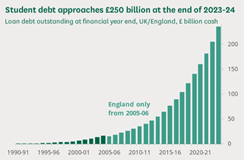
      Adjusting for average inflation at 2.5% over recent years, the total cost of the student loan programme now exceeds £250 billion in today’s money.

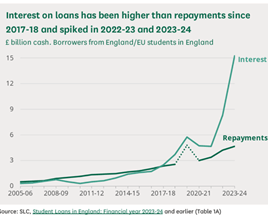
      Higher interest rates, particularly those implemented from September 2022, have sharply increased the burden of student debt. Interest added to outstanding loans soared to £8.3 billion and £15.3 billion in 2023-24 alone. In the latest year, the interest capitalised on student debt was three times the value of repayments made—demonstrating how repayments are failing to keep pace with even the cost of borrowing, let alone reducing the principal.-

      Advertisements

      By the min 2040’s, the government estimates this to rise to over £500 billion in today’s money. The truth that be simply taking an adjustment of 2,5% inflation, the tru figure will be in excess of £800 billion and I would expect this to be £1 trillion.

      Government Accounting and Debt Structure

      Current government accounting methods do not show the full scale of student loan costs within annual expenditure figures. Instead, these liabilities are largely kept off the balance sheet, appearing instead as a growing component of government debt and accruing interest payments.

      As of now, out of the UK’s £2,800 billion national debt, approximately £266 billion—or nearly 10%—is attributable to student loans. This means the annual interest on student debt alone is close to £10 billion (based on a 10% share of a £105 billion interest bill). Crucially, the total repayments from former students do not cover even this interest, let alone reduce the outstanding capital.

      Advertisements

      Long-Term Concerns

      This imbalance raises serious questions about the sustainability of the system. With current interest rates and repayment levels, a significant number of borrowers will never fully repay their loans. Inevitably, a large portion of this debt may have to be written off or absorbed by taxpayers in future—i.e. the very taxpayers who may have taken out student loans themselves.

      Proposed Solutions

      • Lower Student Loan Interest Rates: Align student loan rates with the Bank of England (BoE) base rate and retroactively recalculate past interest charges. Charging higher rates than the government itself can borrow at is neither fair nor economically rational.
      • Make Extra Payments Tax-Deductible: Allow any voluntary extra repayments to be deducted from taxable income. This would incentivise early repayment, especially among higher earners, and could, with a 50% take-up rate, add £5–10 billion annually to debt reduction efforts.
      • Simplify Earnings Thresholds: Introduce a uniform minimum earnings threshold of £25,000 for all borrowers, replacing the current array of thresholds which complicate repayment planning and administration.

      Assumptions and Next Steps

      This analysis is based on available public data, with some necessary assumptions regarding the average outstanding loan size and average age of borrowers. These figures will be refined as more information becomes available.

      Conclusion

      The current UK student loan system is unsustainable under present conditions. Without reform, the rising tide of student debt will eventually return to the public purse, impacting not just graduates but the entire taxpaying population. The proposed measures offer a starting point for meaningful change, with the aim of building a fairer and more financially robust system for future generations.

      Feedback and further suggestions are welcome—this is an issue that demands urgent and informed public debate.

    • Reforming Winter Fuel Allowance: A Fair Approach for All

      Reforming Winter Fuel Allowance: A Fair Approach for All

      Following the announcement this week, it looks like the Labour government is going to u turn on the Winter Fuel Allowance. My comments are therefore far more limited than they would been.

      It is not really a surprise given what a badly implemented policy it was and the way it affected the less well off pensioner. It beggars belief how the government and Rachel Reeves could have thought this was a good idea in the first place.

      I suppose the reason was, in their election promises, they said they would not put up income tax and national insurance, but said very little on many other issues. This gave them the opportunity to hit people in their pockets in other ways whilst keeping the facade of not going back on election promises. I wonder how that is working out for them! (no increase in national insurance, smash the gangs!)

      But at least now, they are going to backtrack.

      The question is to what extent they will roll back this policy? I expect a very limited increase will be announced in the autumn but it will not revert to previous levels of benefit. I also expect it to be complicated to manage causing further waste in Whitehall. We will have to see!

      So, if it was up to me, what would i do?

      Firstly, I would get on and announce the change, not wait until the autumn. Why wait? If the people in charge can’t come up with a plan and get on with implementation, they should not be in power.

      I worked in Civil Engineering for 35 years and knew that deferring a decision was the worst thing we could do. We had to quickly consider the situation and solutions, make a decision and get on with it and live with the consequences.

      Secondly, one of the injustices of this allowance , whilst it is to help the vulnerable with their winter fuel bill, it also helps the wealthy pensioners.

      So if we were to limit the payments, it would cause a significant amount of administration to means test the benefit. We want to make things simple.

      So what i would do, is make it a taxable benefit, so those who pay no tax , get 100% of the benefit. Those on basic taxation they get 80% of the allowance and those on the higher rates will only get 60% of 55% of the allowance.

      Doing this means all those getting the state pension would get the allowance included in their OAP payments and HMRC would sort the rest via tax code / tax returns. You do not need extra staff to administer the means testing of individuals.

      The above will cost an additional £1.3 billion when compared with 2024/25 (£311m) but save £0.5 billion when compared with 2023/24

      And how would I pay for this? Well, as stated in my earlier page on the triple lock, this payment would come out of the massive saving by scrapping the triple lock and just increasing pensions by inflation.